


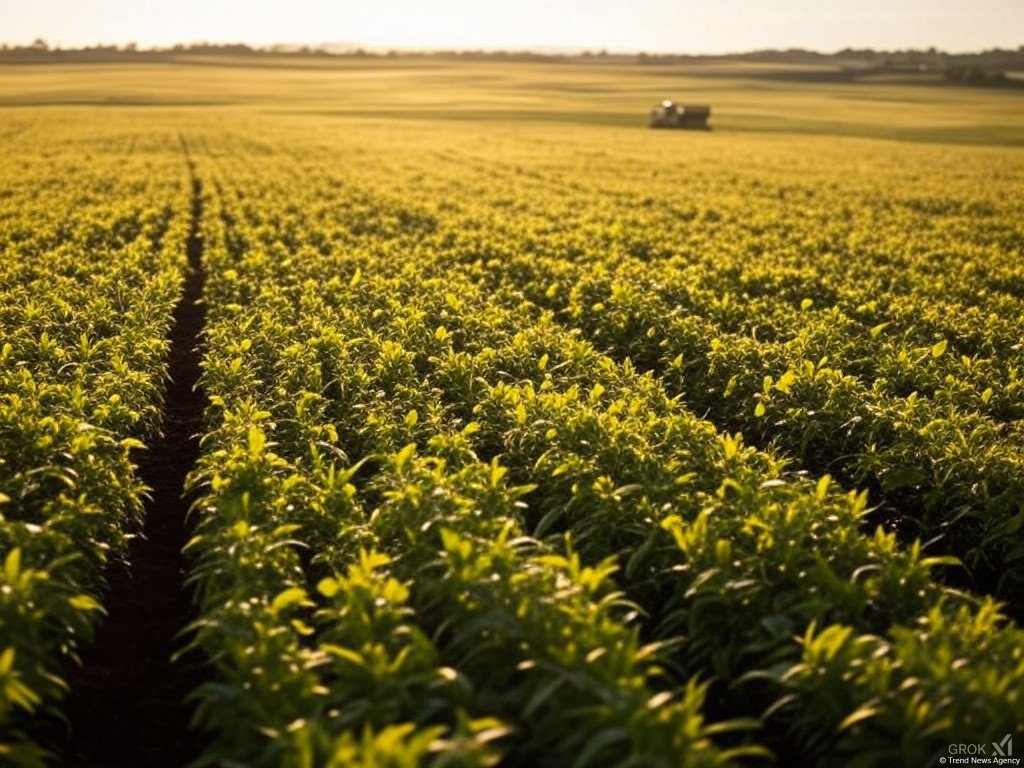

BISHKEK, Kyrgyzstan, February 3. The Ministry of Agriculture of Kyrgyzstan has developed a new method for the rapid assessment of pasture conditions across the country, Trend reports via the press service of the ministry.
A dedicated methodological guide has been introduced to enable timely and accurate evaluation of pastureland quality.
The main assessment indicators include the condition of vegetation cover, signs of land degradation, and the spread of weeds and shrubs, as well as the degree of soil stoniness. Assessing a single pasture plot takes approximately 30-40 minutes and allows specialists to determine its condition with a high level of accuracy.
Research findings indicate that the pastures of the Susamyr Valley are generally in good condition and are classified as areas with rich forage vegetation. At the same time, certain sections have shown active spread of the caragana shrub (altygana), an issue that was initially raised by local residents.
Experts have tested both chemical and mechanical methods to control the shrub. On fenced and level areas, the use of low-toxicity glyphosate-based herbicides has produced positive results. After the removal of caragana, forage vegetation remains intact and, provided the pasture is given a rest period, recovers within one year. A mechanical approach is also applied, involving uprooting the shrubs followed by the sowing of perennial grasses.
The ministry emphasized that measures to combat caragana are implemented selectively and without harming the ecosystem. Ensuring the dominance of forage grasses on pastures is essential, as caragana restricts free livestock grazing and poses safety risks. Work in this area will continue to preserve pasture resources and prevent further degradation.
Stay up-to-date with more news on Trend News Agency's WhatsApp channel



