


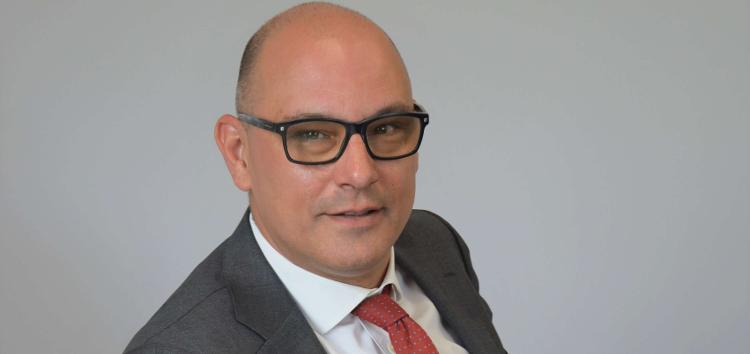

BAKU, Azerbaijan, February 17. Four years ago, the EBRD’s annual investments in Tajikistan’s real sector typically amounted to around 22 million euro, and this figure has quadrupled since, Head of the European Bank for Reconstruction and Development (EBRD) Resident Office in Tajikistan, Holger Wiefel, told Trend in an exclusive interview.
According to him, the EBRD supports government initiatives aimed at strengthening the national economy and enhancing the country’s competitiveness.
"We have jointly identified priority areas for Tajikistan, where financial resources and knowledge will be particularly valuable. They are reflected in our 5-year strategy for the country approved by the EBRD’s shareholders last year," he said.
Holger Wiefel noted that the Bank is also exploring opportunities in new sectors, including telecommunications, media, technology, and natural resources.
"The EBRD is actively promoting the development of clean and renewable energy sources. We would like to commend the government for drafting Tajikistan’s new investment legislation and strategy, recently approved by the President. Our Bank did a lot of preparatory work for the Dushanbe Invest-2025 forum, which attracted a lot of international attention. Trade missions of foreign embassies based in Dushanbe remained very busy throughout 2025 as well," EBRD Head of Tajikistan said.
He separately drew attention to the World Bank’s report "Tools of Transformation: Boosting Productivity Growth in Europe and Central Asia".
"According to this recent study, improving the country’s investment climate could boost FDI inflows by up to 80 per cent, equivalent to $1.5-2 billion annually. It highlights that Tajikistan has strong untapped potential for increasing its trade volume," Holger Wiefel concluded.
At the same time, Holger Wiefel emphasized that the EBRD will invest in renewable energy projects and promote energy efficiency measures across various sectors, strengthening Tajikistan's capacity to adapt to climate challenges.
"I have already mentioned our newly approved country strategy for Tajikistan. It covers all the areas, which offer a significant growth potential. First of all, we are talking about renewable energy, resources, and energy efficiency," he said.
Furthermore, Wiefel noted that the bank will also finance investments in transport infrastructure to enhance regional and domestic connectivity, supporting trade and economic integration.
"It will also promote digital infrastructure development to modernize the economy and improve service delivery. Our plan is to work with municipalities across Tajikistan to improve the delivery and sustainability of urban services, including water supply and urban transport," Wiefel delineated.
He further stated that the bank will continue its fruitful cooperation with partner banks to enhance the competitiveness of local firms and expand access to financial services, particularly for small and medium-sized enterprises.
He emphasized that the EBRD supports the development of public-private partnerships and private sector initiatives in Tajikistan, adding that public-private partnerships (PPPs) in Tajikistan are still in their nascent stages and will require further alignment of international best practices with national legal frameworks.
"The EBRD is actively assisting the country in exploring PPP opportunities, particularly in the transport and green energy sectors. The first renewable energy projects, including the initial renewable energy auctions, are expected to commence this year," stated Holger Wiefel.
Moreover, he emphasized that Tajikistan has requested EBRD’s support to enhance investment in its raw materials sector and to modernize its broadband infrastructure.
"The Tajik authorities have asked for our assistance in improving the investment appeal of the country’s critical raw materials industries and in financing the expansion of broadband capacity. These are areas where PPP solutions could be particularly effective," the Head of the EBRD Resident Office in Tajikistan added.
At the same time, Holger Wiefel emphasized that the EBRD's 38 million euro sovereign loan will help finance the modernization of a 49-kilometer section of the Dangara to Guliston road in Tajikistan, as well as the construction of charging infrastructure for electric vehicles, adding that this road, built in the 1930s as part of a major international highway, is an important link between the north and south of the Khatlon region - an area that generates more than 53% of Tajikistan’s agricultural output and is home to 35% of the country’s population.
"This project will turn the current single-carriageway category II road into a dual-carriageway category I road, significantly increasing the road’s capacity and shortening delivery times for cargo across the Khatlon region and beyond, thereby stimulating trade. This project will be supported by an 83.5 million euro grant provided by the Asian Development Bank," he said.
Answering a question on how current and planned EBRD projects contribute to sustainable economic growth and regional integration, he emphasized that the launch of all six hydroelectric units of the Qairokkum hydropower plant (QHPP) in November 2025 marked the completion of a major renewables project in Tajikistan.
"Rehabilitation measures at QHPP, which provides electricity to 500,000 people in the Sughd province, included concrete dam works and the installation of hydraulic steel components, turbines, and electromechanical equipment. As a result, the plant’s installed capacity has increased from 126 MW to 174 MW. The upgrade introduced innovative climate-resilience measures, enabling the plant to cope with the expected impact of climate change on the country’s hydrological systems," he said.
The director concluded that the implementation of these upgrades was supported by a $196 million financing package organized by the EBRD.
Meanwhile, Holger Wiefel said that Tajikistan's successful cooperation with international organizations, such as the approval of the World Bank's budget support program and the current International Monetary Fund's Policy Coordination Instrument program, is an important factor in the country's medium-term growth prospects.
"I would like to refer you to the latest EBRD’s Regional Economic Prospects report, where we forecasted Tajikistan’s economy to grow by 7% in 2025 and 5.7% in 2026 on the back of ongoing investments in priority infrastructure," he said.
Wiefel noted that the EBRD shares the World Bank’s view that Tajikistan can better utilize its labor force through improved efficiency in labor markets, more flexible work arrangements, and enhanced collaboration between educational institutions and businesses.
"When paired with creating a more favorable environment for investment, such structural changes have the potential to significantly increase productivity and drive sustained economic expansion. Similarly, we share the IMF’s view that comprehensive reforms focused on strengthening the governance of Tajikistan will be essential to maintaining robust economic growth in the coming years," he added.
He further emphasized that key reform priorities include enhancing transparency and oversight of state-owned enterprises, bolstering anti-corruption measures, and strengthening institutional accountability.
Clear governance frameworks and transparent policymaking are vital to creating a favorable business climate. These improvements will enable private sector investment to drive job creation and unleash the economy's full long-term potential," he concluded.



