


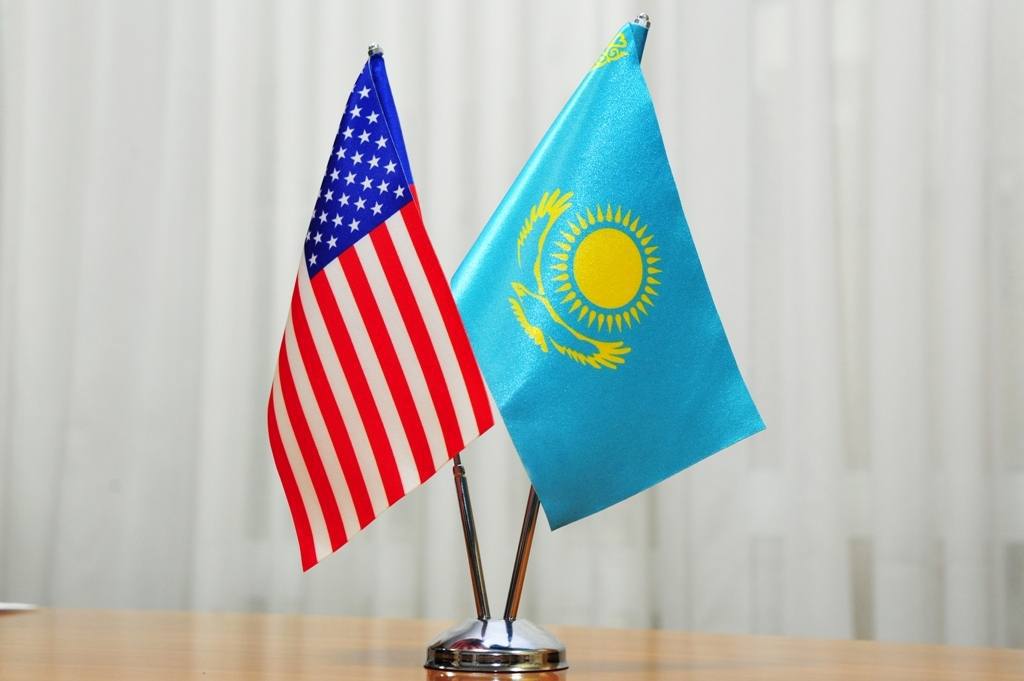

ASTANA, Kazakhstan, February 23. In recent years, Kazakhstan’s cooperation with the United States in the mining sector has developed along a model where access to mineral deposits is increasingly linked to commitments to build processing capacities within the country.
During the ministerial conference on critical minerals held in
Washington in February 2026, the Kazakh delegation, headed by
Foreign Minister Yermek Kosherbayev, announced Kazakhstan's
commitment to supply 20 of the 60 raw materials identified by the
U.S. Geological Survey (USGS). These materials will be provided as
finished products to meet the needs of strategic sectors within the
global economy.
Both sides are now pivoting their focus from mere extraction to the
creation of higher value-added products. American businesses can
seize this opportunity to diversify their supply sources in light
of trade restrictions with China. Meanwhile, Kazakhstan stands to
benefit by attracting investment into its processing industry.
According to the Ministry of Foreign Affairs of Kazakhstan, the country’s mineral resource base includes over 5,000 deposits, with an estimated value in the tens of trillions of dollars. Kazakhstan ranks first in the world in proven reserves of zinc, tungsten, and barite; second in silver, lead, and chromite; third in copper and fluorite; fourth in molybdenum; and sixth in gold. The country also has significant oil and gas reserves, ranking ninth globally in confirmed oil reserves, eighth in coal, and second in uranium.
These figures position Kazakhstan to become a strategic supplier of critical raw materials for U.S. high-tech industries, ranging from aerospace to semiconductor manufacturing.
A key factor in strengthening these ties was the Memorandum of Understanding on Critical Minerals Cooperation between Kazakhstan and the U.S., signed in November 2025. This agreement, a trailblazer in Central Asia, paves the way for boosting processing capacities in Kazakhstan, facilitating technology transfer, and opening doors for Kazakh products in the U.S. market.
In February 2026, the Samruk-Kazyna Fund announced that its portfolio company JSC Tau-Ken Samruk, together with Cove Kaz Capital Group LLC (part of the U.S. Cove Capital portfolio), signed a package of transactional documents – a Sale and Purchase Agreement (SPA) and a Founding Agreement (FA) – for a strategic investment project in critical minerals. The project envisions establishing a high-tech tungsten deep-processing facility in Kazakhstan based on the North Katpar and Upper Kairakty deposits. Cove Capital committed to investing at least $1.1 billion in the project.
At the same time, another U.S. company, Blackboxstocks Inc., announced that its merger target, REalloys Inc., signed a series of non-binding strategic partnership agreements with Kazakhstan’s AltynGroup. The partnership seeks to lock in a steady stream of rare earth materials from Kazakhstan for REalloys’ processing and manufacturing hubs in North America, catering to the demands of the U.S. defense sector.
The agreement ensures a preliminary offtake from AltynGroup’s
Kokbulak project—a vast site spanning 127,000 sq. km in the
Karaganda and Kostanay regions. This dynamic location, boasting
more than 350 million tons of iron ore reserves, is set to provide
REalloys with a premium concentrate of byproducts.
The concentrate, derived from iron ore tails (enrichment waste),
boasts a well-rounded array of both light and heavy rare earth
elements, featuring terbium and dysprosium among them.
Blackboxstocks Inc. anticipates that more offtake contracts for
heavy rare earth metals sourced from Kazakh raw materials will be
finalized in the coming year.
The use of American technology will allow the scaling of rare earth extraction and processing, critical for the U.S. defense, semiconductor, and energy sectors.
Continuous logistics for Kazakh exports to the U.S. is expected to be ensured by the development of the Trans-Caspian International Transport Route (TITR or Middle Corridor). Washington views this corridor as a key artery linking Central Asian production centers with European and North American markets. A significant element of strengthening the Middle Corridor is the “Trump Route for International Peace and Prosperity” (TRIPP) initiative—a transit corridor about 43 km long, created with U.S. mediation. The blueprint lays out the creation of TRIPP Development Company, which will hold the reins to execute the project for 49 years, with Yerevan handing over 74% of the company’s shares to Washington while keeping a 26% stake for itself.
The backbone of Kazakhstan’s transport connectivity is bolstered by significant domestic infrastructure improvements. U.S. support includes contracts with American corporation Wabtec worth $4 billion for modernizing the locomotive fleet and implementing digital railway systems.
Overall, Kazakhstan-U.S. cooperation in critical minerals is evolving from simple mining and ore exports to joint development of processing facilities and long-term supply contracts for finished products. Kazakhstan gains investment, technology, new jobs, and infrastructure development, while the U.S. secures stable access to strategic raw materials and supply diversification. The partnership’s resilience is further strengthened by the development of transport corridors, including the Middle Corridor and TRIPP, ensuring reliable delivery of Kazakh products to European and North American markets.



