


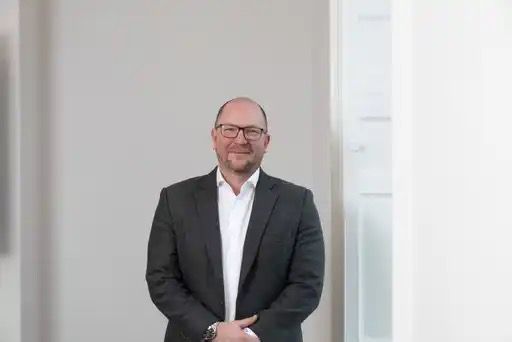

BAKU, Azerbaijan, March 6. UK's Benoy was involved in the early stages of the New Tashkent Masterplan and is currently exploring opportunities related to specific assets across the region, Tom Cartledge, CEO and owner of Benoy, told Trend, commenting on the outcomes of a recent meeting with Uzbekistan’s Foreign Minister Bakhtiyor Saidov.
“Our work spans both masterplan-scale development and the architecture of individual buildings, so we can engage at either level,” Cartledge said.
According to him, the meeting focused on modern urban development priorities, including the New Tashkent project, regional masterplanning, as well as transport and tourism infrastructure.
“Those strategic priorities align closely with what we have been working on across Central Asia over the past fifteen years, so this discussion was a natural continuation of existing conversations rather than an entirely new direction,” he noted.
Commenting on Benoy’s potential role in the development of New Tashkent, Cartledge said the company focuses on the spaces where people actually spend their time and on how a city feels to live in and move through.
“When you look at the scale of a project like New Tashkent, it is essential that development delivers on the city’s ambitions while preserving its cultural identity and ensuring that it remains connected to its history, rather than becoming simply a collection of new infrastructure,” he said.
Speaking about the approaches and international best practices the company could bring to the modernization of transport and tourism infrastructure, Cartledge noted that Benoy would rely on its global experience.
“As an international practice, we draw on the depth of experience gained from projects in more than 40 countries. The most valuable thing we can offer is not a universal formula, but an honest understanding of what has and has not worked elsewhere. We bring those lessons to the specific conditions of Uzbekistan,” he said.
Cartledge added that the company works across a wide range of sectors, including transport and transit-oriented development, mixed-use projects, offices, retail, residential, and leisure infrastructure.
“The real challenge lies in how these functions connect. People do not simply visit buildings-they go somewhere for a purpose. Designing that coherence into a place from the outset is where we concentrate most of our effort,” he concluded.
Meanwhile, the New Tashkent project is a large-scale urban development initiative aimed at building a new administrative and residential district east of the current capital. The city is planned to cover about 20,000 hectares and accommodate up to 2 million residents in several development phases.
The project envisages the relocation of a number of government institutions, alongside the construction of business districts, residential complexes, social infrastructure, parks, and public spaces. The masterplan also prioritizes modern transport systems, transit-oriented development, and green urban planning solutions, with a significant share of the area allocated to green zones and water infrastructure.



