


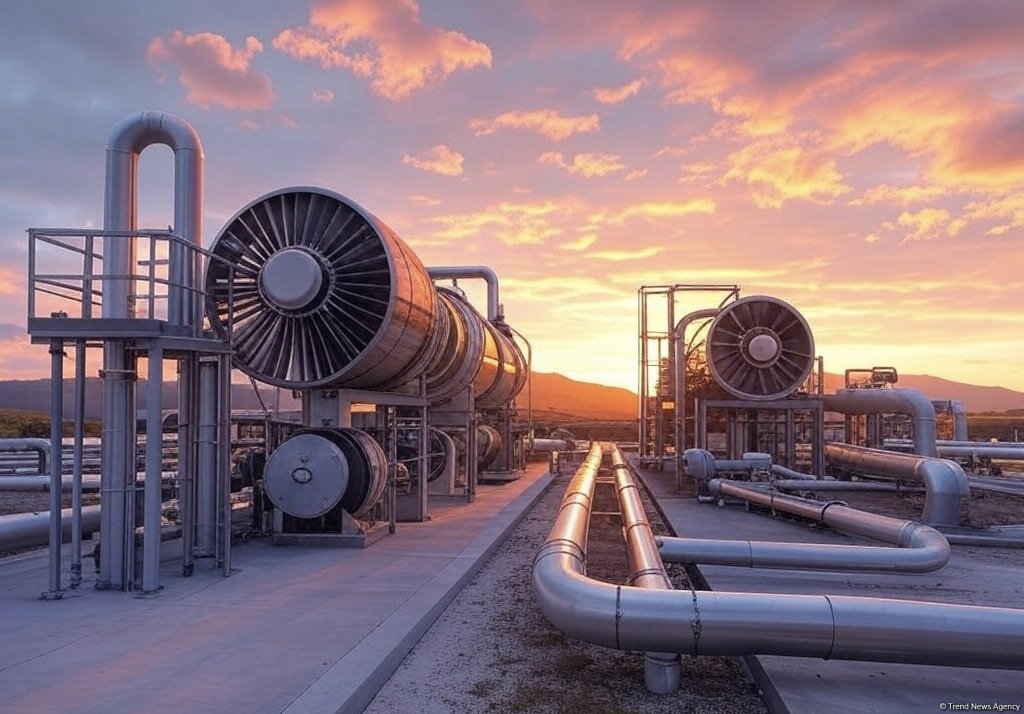

BAKU, Azerbaijan, January 20. The launch of natural gas supplies from Azerbaijan to Albania via the Trans Adriatic Pipeline (TAP) has marked an important milestone for Albania’s energy sector, a country that until now had virtually no access to pipeline gas and relied heavily on hydropower.
Initial deliveries of around 0.16 billion cubic meters per year are not yet having a significant impact on Albania’s overall energy balance, but they are seen as strategically important. The supplies lay the groundwork for the development of domestic gas infrastructure and help reduce the vulnerability of the energy system to climate and seasonal factors, including fluctuations in river water levels.
Albania traditionally generates most of its electricity from hydropower plants, making its energy system highly sensitive to droughts. In recent years, such risks have repeatedly led to increased electricity imports and higher prices. Access to natural gas is viewed by Albanian authorities as a way to diversify the energy mix and improve system resilience.
One of the first practical steps in this direction has been the gasification project in the Albanian city of Korca, implemented with the participation of the State Oil Company of Azerbaijan (SOCAR). The project involves the creation of a distribution network to supply social facilities, including schools and medical institutions, as well as residential areas. In the long term, it is expected to support regional economic development and reduce dependence on more expensive and less environmentally friendly fuels.
The significance of Azerbaijani gas, however, goes beyond bilateral relations. TAP is part of the Southern Gas Corridor, an infrastructure route designed to deliver Caspian gas to Southeast Europe. As the European Union (EU) seeks to reduce dependence on a limited number of suppliers, this route is gaining additional geopolitical and economic importance.
SOCAR is already using various gas supply models in the region, including so-called virtual gasification, which is applied in North Macedonia and Bulgaria. These models make it possible to supply gas to industrial and municipal consumers even in the absence of a developed national gas transmission network, although scaling them up requires further investment and regulatory support.
For Albania, the next major challenge will be developing domestic infrastructure, including the construction of distribution networks and potential underground gas storage facilities. Without these elements, increasing import volumes and connecting new cities and industrial zones will remain limited. Funding these initiatives continues to be a significant challenge, especially considering budget limitations and the push for a greener future.
At the regional level, expanded gas supplies contribute to the development of cross-border interconnections and could support economic integration in the Western Balkans. Analysts note, however, that the long-term role of natural gas will depend on the pace of decarbonization and EU climate policy, creating uncertainty for new infrastructure projects.
Albania’s interest in renewable energy initiatives and regional integration, including electricity transmission projects such as the Black Sea energy cable, reflects the country’s intention not to rely on a single energy source. In this context, cooperation with Azerbaijan is seen as part of a broader diversification strategy rather than a replacement for other directions.
Overall, Azerbaijani gas is emerging for Albania and neighboring countries not as a solution to all energy challenges, but as a tool for reducing risks and increasing the flexibility of energy systems. Its long-term role will depend on how successfully the region balances the development of gas infrastructure with energy transition goals and integration into the broader European market.
Stay up-to-date with more news on Trend News Agency's WhatsApp channel



