


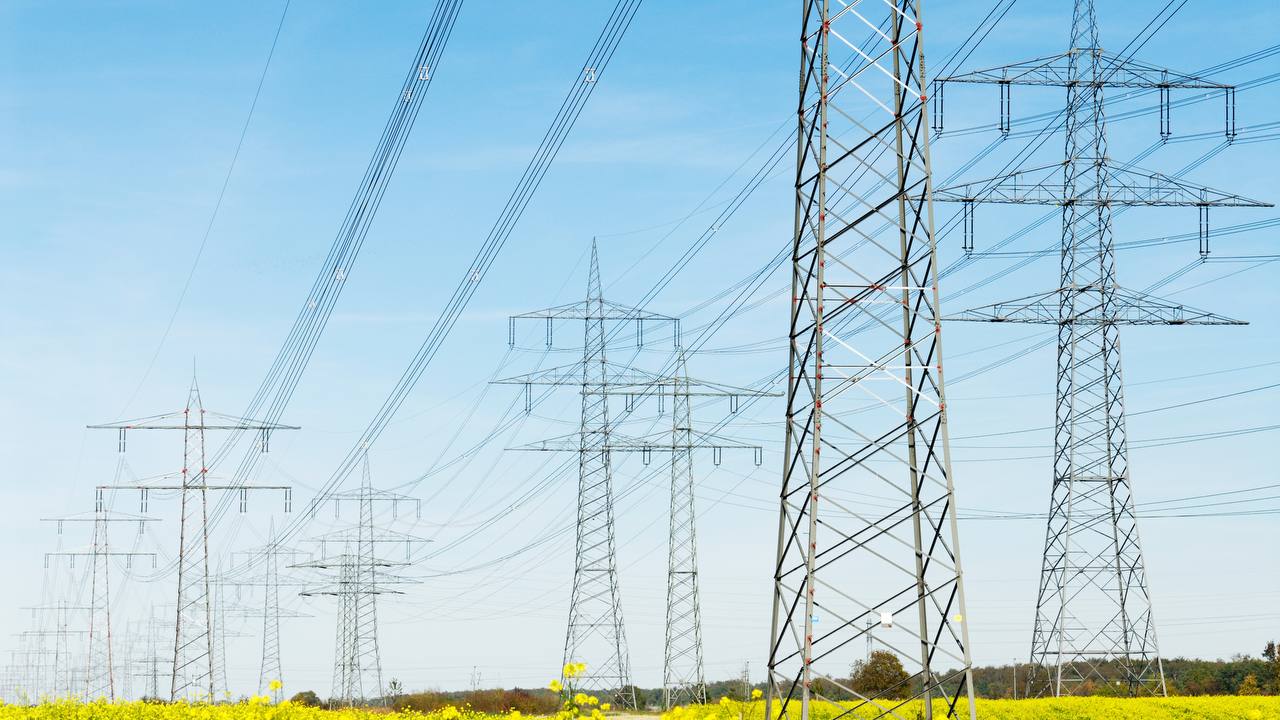
BAKU, Azerbaijan, January 26. With electricity demand on the rise and the global energy market in a bit of a tailspin, Kazakhstan is rolling up its sleeves to build a sustainable generation system that can truly meet the country’s needs.
The government has set a goal to ensure the economy is fully supplied with electricity by the first quarter of 2027, eliminating its status as an energy-deficient country. By 2029, Kazakhstan aims to reach a stable power surplus, enabling it to export excess electricity.
According to the Ministry of Energy, in 2025, electricity generation totaled 123.1 billion kWh, while consumption was 124.6 billion kWh. Over the year, total installed capacity increased from 25.3 GW to 26.7 GW. Coal-fired plants still dominate generation, accounting for 51.4% of total production.
The country's energy strategy is built around the principle of diversification. Kazakhstan seeks to balance the use of significant fossil fuel reserves while slowly but surely embracing greener, low-carbon technologies.
Despite the global trend of decarbonization, coal remains a key element of Kazakhstan's energy security. With reserves of approximately 33 billion tons, which, at current consumption levels, are sufficient for more than 300 years, this resource remains the foundation of base-load generation. In a speech at the National Kurultai, President of Kazakhstan Kassym-Jomart Tokayev emphasized the need to designate the development of coal generation as a national project. The Ministry of Energy has already started its development. The project involves the introduction of 7.6 GW of new capacity based on "clean coal" technologies, which minimize environmental impact.
Gas generation, which accounted for 25.6% of the energy balance in 2025, is considered a critical component of the energy system. With its own gas reserves, Kazakhstan has faced rising imports in recent years. In 2025, the import of gas increased by 18%, reaching 4.5 billion cubic meters. In response to this challenge, the state aims to expand its resource base. According to Tokayev, the potential of natural gas should be enhanced through the exploration and development of new fields. Currently, the national company QazaqGaz is implementing a large-scale geological exploration program on 14 subsoil sites, with a preliminary resource estimate of approximately 515 billion cubic meters of gas. In the medium term, the project portfolio is set to grow to 30 sites, boasting a resource estimate of around 1.7 trillion cubic meters, which should keep the domestic demand well in the green.
At the same time, the renewable energy sector is showing steady growth. In 2025, the share of renewable energy sources (RES) in total electricity generation reached 7%, up from 6.43% in 2024. Electricity production increased by 13.7%, reaching 8,621.5 million kWh. The total installed capacity of "green" facilities reached 3,537 MW. The main contribution came from wind power plants, with a capacity of 1,908.95 MW and a generation of 5,380.2 million kWh; solar plants—1,312.61 MW and 2,042.6 million kWh; and small hydropower plants—313.7 MW and 1,195.9 million kWh. Biogas generation remains a niche segment. As of January 2026, 162 RES facilities were operating in the country with a total installed capacity of 3.5 gigawatts. This includes 67 wind farms, 49 solar power plants, 43 hydropower plants, and 3 biogas power stations. In 2025, 9 new RES facilities were commissioned, with a total capacity of 503 MW, including 5 wind farms (387 MW), 3 solar power plants (90 MW), and 1 hydropower plant (26 MW). In total, Kazakhstan plans to implement over 8 GW of RES capacity by 2035.
Moreover, a key element for the long-term sustainability of the energy balance is the construction of the first nuclear power plant near Lake Balkhash. The project is being implemented with the participation of Rosatom. The pouring of the first concrete is expected in 2029. The NPP is viewed as a fundamental source of generation capable of meeting the needs of industrial growth, which cannot be fully covered by the variable output of wind and solar power plants.
Overall, Kazakhstan is transitioning from a model focused primarily on the operation of old capacities to the formation of a multi-component energy system. Coal generation continues to be the bedrock, bolstered by the swift growth of the gas sector, the broadening of renewable energy sources, and the groundwork being laid for the eventual rollout of nuclear generation in the long haul. The execution of these strategies, which encompasses bringing new coal capacities online and tapping into gas resources, will not only wipe out the existing shortfall of 1.5 billion kWh but also open the door to export opportunities.
In the coming years, the development of the energy sector will depend on the pace of new capacity construction, the availability of gas resources, and the ability of the energy system to accommodate the growing share of RES. In the long term, the key factor for stability will be the nuclear power plant project, the timelines and parameters of which will directly influence the country’s future energy balance.



