


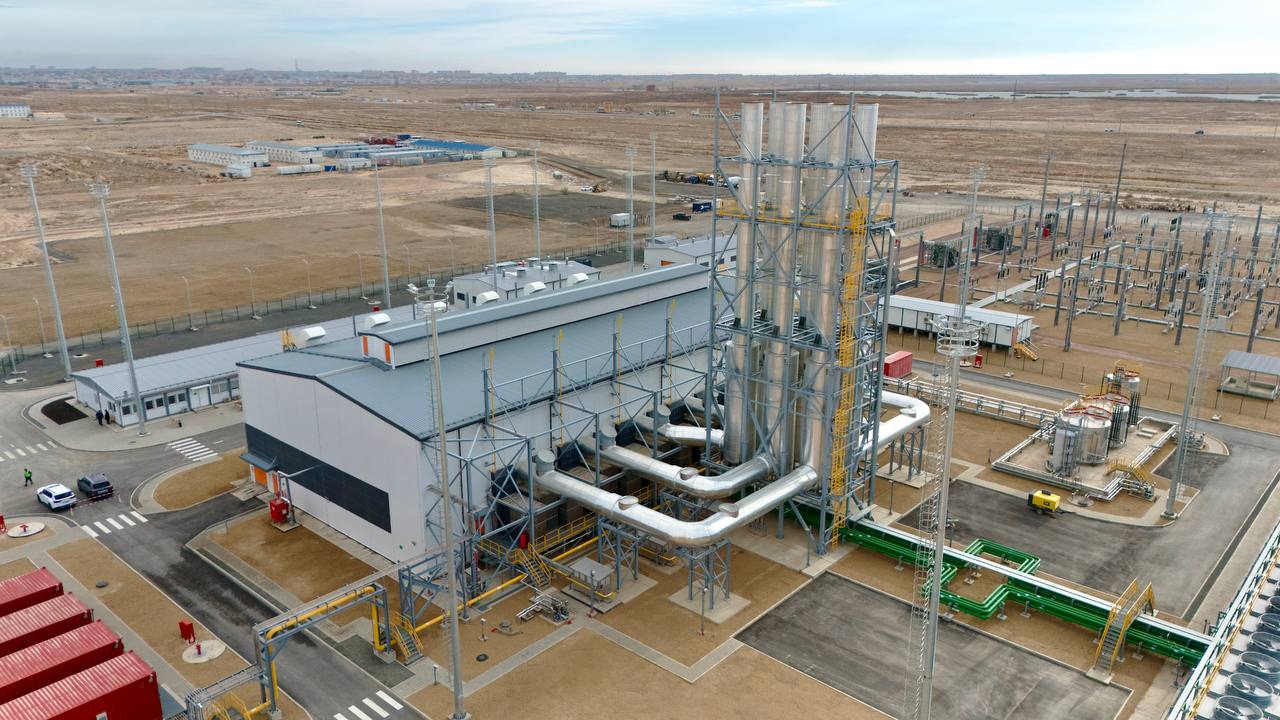

BAKU, Azerbaijan, November 26. The commissioning of a 120 MW gas-fired power plant in Zhanaozen on November 24, 2026, marked another milestone in the development of Kazakhstan's first hybrid energy complex of its kind in the country and Central Asia, combining solar, wind and gas generation. With a total capacity of 247 MW, the project is being implemented by national company KazMunayGas (KMG) in partnership with Italy's Eni. It is designed to improve the reliability of electricity supplies to industrial facilities in the Mangystau region while expanding the use of renewable energy sources.
The significance of the initiative extends beyond the construction of a single power facility. It demonstrates how conventional and renewable generation can be integrated into a single system capable of providing a stable electricity supply to industrial consumers.
The hybrid power complex comprises a 50 MW solar power plant, a 120 MW gas-fired plant and a 77 MW wind farm. The first facility was commissioned in September 2025, while the gas-fired plant began commercial electricity generation in July 2026 and was officially inaugurated on November 24. Construction of the wind farm is scheduled for completion, with commissioning planned for 2027.
The project's key feature is the complementary role of its three sources of generation. Solar and wind facilities produce electricity from renewable sources, while the gas-fired plant provides balancing capacity. It can offset fluctuations in renewable generation and help maintain a stable electricity supply when solar or wind output declines.
This is particularly important for an industrial region. Manufacturing facilities require uninterrupted electricity supplies, while relying exclusively on weather-dependent renewable sources can create additional challenges. Combining renewables with controllable gas-fired generation makes it possible to address both requirements.
Since the start of commercial operations, the gas-fired plant has generated more than 26 million kWh of electricity. The solar facility has produced around 93 million kWh since its launch.
Once the entire complex reaches its designed capacity, renewable sources are expected to account for around 35% of its electricity generation. The project therefore does not envisage replacing conventional generation, but rather creating a more diversified energy model in which gas ensures system reliability while solar and wind increase the share of clean energy.
The project has also included the construction of a substation and a 110 kV transmission line. This infrastructure will be used to transmit electricity to the grid and integrate the wind farm once it becomes operational.
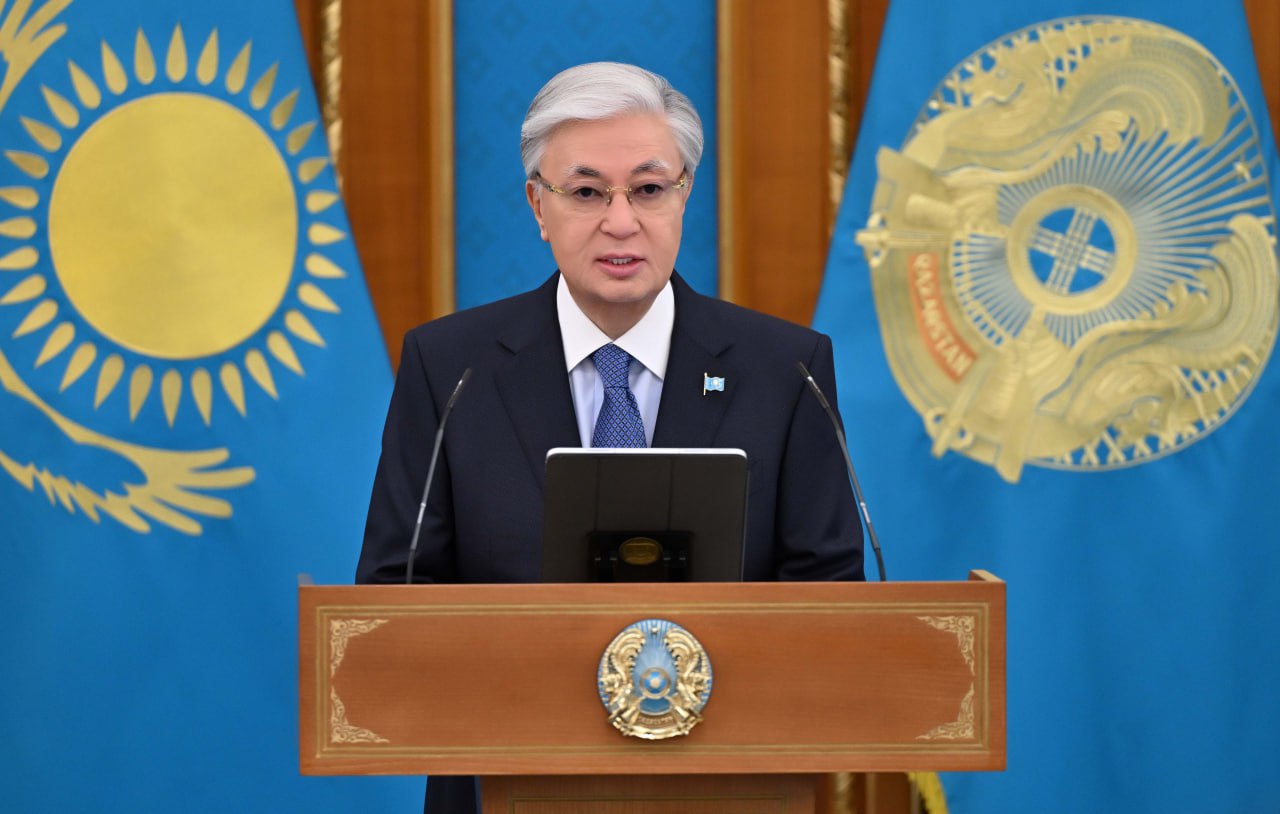
The development of the hybrid energy complex in Zhanaozen forms part of Kazakhstan President Kassym-Jomart Tokayev's broader strategy to modernize the country's energy infrastructure, attract foreign investment and expand the use of renewable energy sources.
An important milestone was the signing of an agreement on the principles of joint project implementation between KazMunayGas and Eni in Astana on June 8, 2023, in Tokayev's presence. The initiative is in line with the priorities outlined by Tokayev, including energy diversification, economic decarbonization and the achievement of carbon neutrality.
During a meeting with Eni Chief Operating Officer Guido Brusco in Rome on January 19, 2024, Tokayev highly praised the company's wind and solar energy projects in the Aktobe and Turkestan regions, with a combined capacity of 150 MW. The parties also discussed Eni's plans to build a gas processing plant, a hybrid power complex with a capacity of around 250 MW in the Mangystau region, and other areas of investment cooperation.
Speaking at the Kazakhstan-Italy investment roundtable in Rome on the same day, Tokayev emphasized the importance of Italian companies to Kazakhstan's energy sector and expressed interest in further expanding cooperation.
"More than 80% of Kazakhstan's oil is exported to Europe, meeting around 10% of the EU's needs. I would like to express my gratitude to Italy, Kazakhstan's long-standing and reliable energy partner. We highly value the contribution of Italy's flagship company Eni to Kazakhstan's economy. Kazakhstan offers extensive opportunities in oil and gas exploration. We are adopting the world's best practices to discover significant deposits. We also invite Italian companies to participate in oil and gas sector services," he said.
This position reflects Kazakhstan's broader approach to cooperation with Eni: its engagement with the company extends beyond the conventional oil and gas industry to include renewable energy development, new generation capacity and advanced technological solutions.
"In 2024, we began construction on the 250 MW Hybrid Renewables-Gas Power Plant in Zhanaozen, Mangystau Region. This project combines advanced renewable energy plants, developed with Plenitude, Eni’s subsidiary, and a gas power plant to ensure stable electricity production," an Eni told Trend in an exclusive interview.
The source also noted that the approach is consistent with Eni's decarbonization strategy and reflects the company's commitment to introducing innovative technologies to support a low-carbon future in the Mangystau region. Eni said it continues to focus on renewable energy and reducing carbon dioxide emissions in Kazakhstan, while leaving open the possibility of expanding its initiatives to other Central Asian countries.
In January 2025, KazMunayGas Chairman of the Management Board Askhat Khasenov briefed President Tokayev on progress in the construction of the 247 MW hybrid power complex. The project was advancing as part of the head of state's consistent efforts to promote the country's energy cooperation with international partners. This underscores the strategic importance of attracting advanced technologies and developing new generation capacity for Kazakhstan.
One of the project's main expected outcomes is improved electricity supply reliability for KMG's production facilities in the Mangystau region, including OzenMunayGas JSC and KazGPP LLP.
As Trend reported earlier, Eni's Head of Central Asia, Seger Hoytink, said at the 31st International Conference and Exhibition "Oil and Gas of Turkmenistan" (OGT 2026) in Ashgabat that the project was designed to address unstable electricity supplies in the region by combining solar, wind and gas generation.
This is particularly important for the oil and gas sector in the Mangystau region, where the reliability of energy infrastructure is directly linked to the continuity of production processes. Having its own generation complex will provide KMG facilities with an additional source of electricity and strengthen the resilience of their power supply.
Mangystau Region Governor Nurdaulet Kilybay also linked the project to Kazakhstan's broader energy development goals.
"One of the important tasks set before us by the head of state is to ensure a surplus of energy resources in Kazakhstan by 2029. Today's hybrid power plant is one of the key projects contributing to this objective," he said at the inauguration ceremony.
According to Kilybay, the project will also help attract investment, create jobs and introduce modern technologies in the region.
A total of 77 permanent jobs are expected to be created once all three facilities are fully operational. The project will also help develop technical expertise in operating and maintaining power facilities that use different sources of generation.
Its potential significance, however, extends beyond the Mangystau region. If the complex demonstrates the effectiveness of the chosen model, Zhanaozen's experience could be used in developing similar projects in other parts of Kazakhstan.
The Zhanaozen project also broadens the scope of Kazakhstan's cooperation with Eni. The Italian company has already been involved in renewable energy projects in the country. In particular, the Badamsha-1 and Badamsha-2 wind farms, with a combined installed capacity of 96 MW, have been built in the Aktobe region. Construction of a 50 MW solar power plant is also underway in the Turkestan region.
What sets the Zhanaozen project apart is its integration of renewable energy sources with gas-fired generation within a single complex. This model takes into account the needs of the industrial sector, which requires not only cleaner electricity but also a predictable and reliable supply.
The possibility of applying a similar approach in other regions of Kazakhstan has already been considered as part of cooperation between Eni and the Samruk-Kazyna fund. The complex's operating results could therefore also inform future investment decisions in the country's energy sector.
At the same time, the project's effectiveness can only be fully assessed once the wind farm is commissioned and the entire complex reaches full capacity. Key indicators will include actual electricity output, the contribution of each generation source, operating economics and the extent of actual emissions reductions.
For now, the commissioning of the gas-fired plant marks another important stage in the project, with two of its three facilities already operational. The next step will be the launch of wind generation in 2027.
Ultimately, the Zhanaozen complex could become more than an additional source of electricity for KMG's industrial facilities. It could also serve as a practical example of how Kazakhstan can combine conventional energy with renewable sources, strengthen the reliability of electricity supplies and gradually reshape its generation mix


