


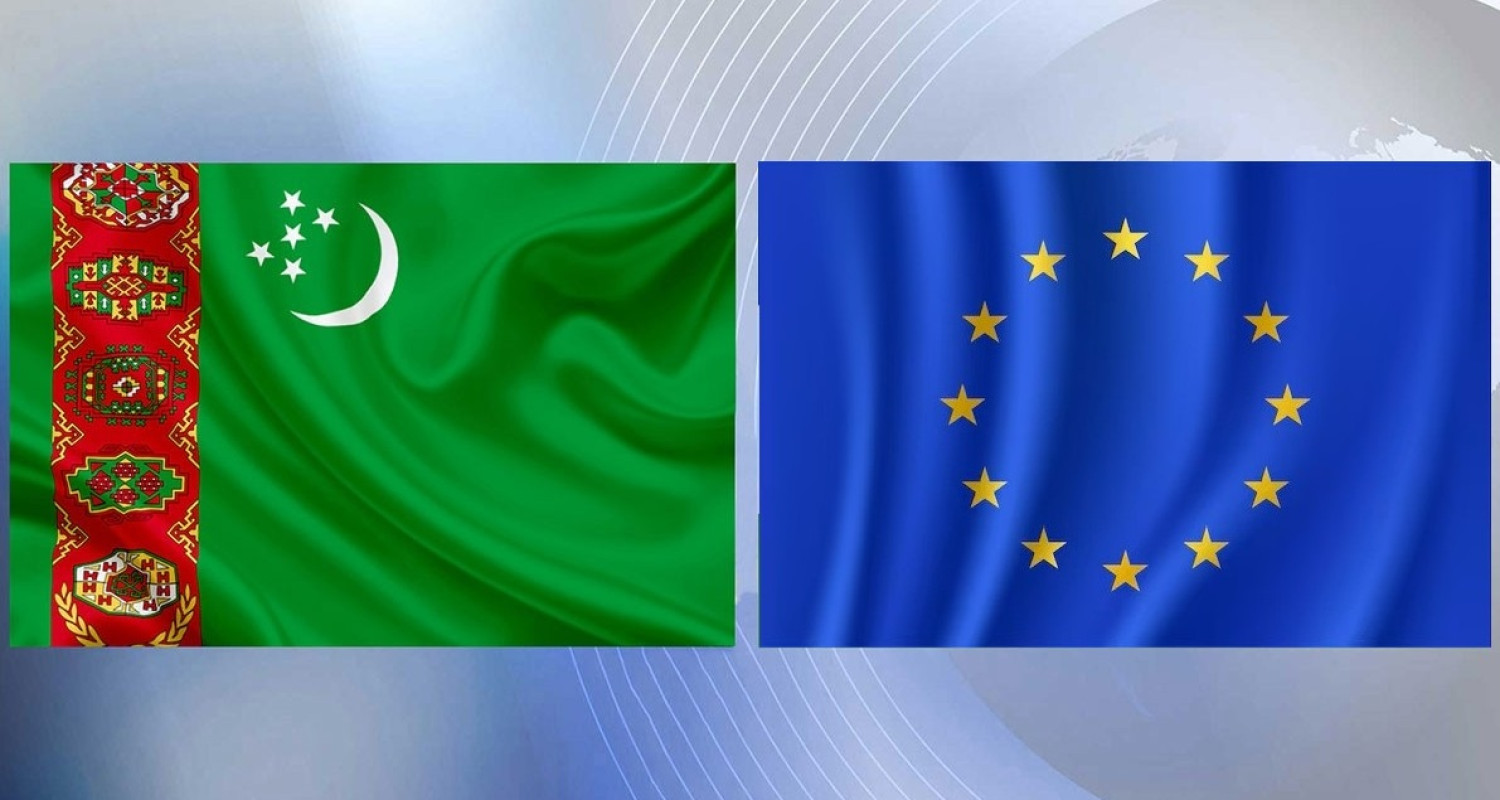

BAKU, Azerbaijan, February 21. Over the past year, the European Union has been compelled to develop its own policies in response to the growing global instability. Economic and geopolitical trends are placing increasing strain on Europe’s internal markets and external relations, while the priorities of the EU and the U.S. in areas such as trade, investment, and foreign policy are diverging, creating new challenges for transatlantic relations.
In this evolving context, European leaders are increasingly emphasizing the importance of strategic autonomy and enhancing the EU’s independence. In her address to the European Parliament in January 2026, European Commission President Ursula von der Leyen highlighted the necessity for Europe to establish its own levers of influence, including a robust economy, a unified single market, and genuine defense capabilities. This stance underscores Brussels’ commitment to strengthening decision-making autonomy and diversifying partnerships to mitigate external risks.
Due to global political and economic instability, the Eurozone economy is projected to slow down in 2025-2027 compared to global growth rates. According to the IMF’s January update of the World Economic Outlook 2026, Eurozone GDP growth amounted to 1.4% in 2025, is expected to be 1.3% in 2026, and recover to 1.4% in 2027. These growth rates differ from the global trend, with world GDP projected at 3.3% in both 2025 and 2026.
Amid the economic slowdown in the Eurozone, the European Union is increasingly prioritizing its trade and investment relations with China. A press release issued after the 25th EU-China Summit, held in Beijing on July 24, 2025, underscored Brussels' commitment to deepening cooperation with China, focusing on fostering a "balanced and mutually beneficial economic relationship grounded in fairness and reciprocity," and achieving tangible progress in areas of shared interest.
As the EU works to diversify traditional maritime trade routes, the development of the Trans-Caspian International Transport Route (Middle Corridor), linking China, Central Asia, the Caspian Sea, the South Caucasus, and Europe, is gaining significance. While political dialogue with Kazakhstan continues to progress, EU initiatives concerning Turkmenistan are beginning to take on more concrete form. Turkmenistan’s strategic location, nestled between Uzbekistan, Iran, and the Caspian Sea, positions it as a key player in integrating Eurasian supply chains and enhancing connectivity between Central Asia and European markets.
At the same time, Turkmenistan is actively developing its transport infrastructure, including the modernization of railways and highways, as well as expanding the capacities of the Turkmenbashi seaport on the Caspian. The port serves as a key logistics hub, handling container and general cargo traffic towards Azerbaijan and onward through the South Caucasus to Europe. Notably, in February, President Serdar Berdimuhamedov established the Ministry of Automobile Roads on the basis of the former State Agency for Road Construction Management. The ministry was created to modernize the country’s road infrastructure and enhance the efficiency of the transport system.
Since the beginning of 2026, a series of meetings has been held involving high-ranking officials of both the EU and its individual member states. In February alone, more than ten joint events with Turkmenistan took place. Notable examples include the meeting of representatives of five Central Asian countries with the German government under the Z5+1 initiative in Berlin on February 11, a joint briefing on Turkmenistan-EU cooperation held on February 17 in Ashgabat, and increasingly frequent meetings of Turkmenistan’s Ambassador to Brussels, Sapar Palvanov, with European officials, during which he emphasized that “developing ties with the EU remains a priority of the country’s foreign policy in 2026.” Additionally, a Turkmenistan-European Union business forum is scheduled to take place in Ashgabat on March 26, 2026.
Thus, against the backdrop of the EU’s efforts to diversify external economic ties and strengthen strategic autonomy, Turkmenistan is gradually gaining a more prominent role in Brussels’ regional partnership configuration.
The development of the Trans-Caspian route, the modernization of Turkmenistan’s transport infrastructure, and the strengthening of political dialogue are collectively creating a favorable environment for expanding practical cooperation between Ashgabat and the EU. This includes initiatives in trade and investment, particularly those linked to China. These efforts reflect the broader transformation of Europe’s external economic priorities in response to the shifting geopolitical and economic landscape.



