



BAKU, Azerbaijan, March 4. The launch of military airstrikes by the U.S. and Israel on Iran on February 28, and Iran's retaliatory strikes on U.S. military bases in the Gulf countries and Israel on the same day, caused oil prices to rise rapidly in the global market. As a result, the average price of a crude oil barrel has grown by 10%, reaching around $80.
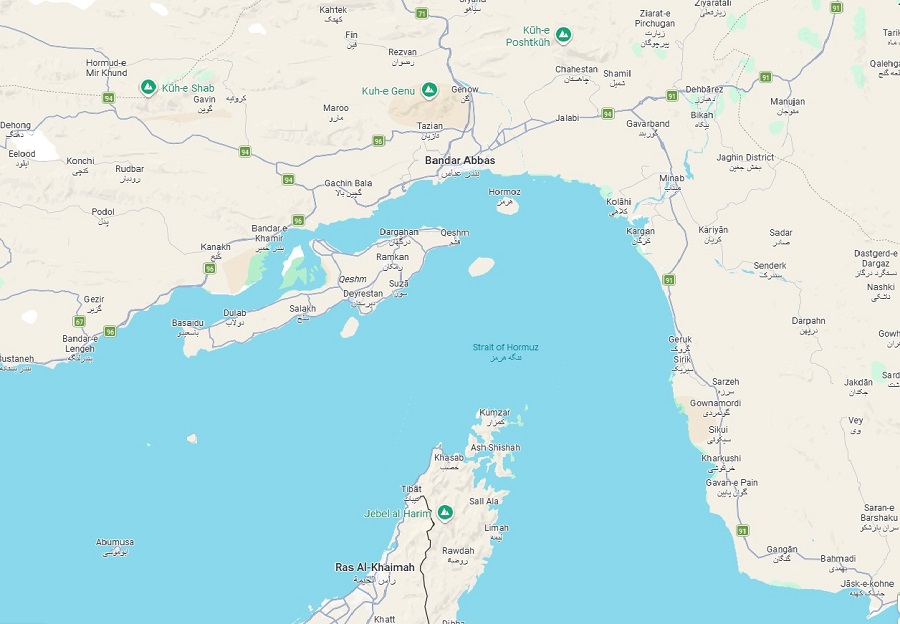
One of the main reasons for the growth in the global market price of crude oil is the risks arising in the transportation of crude oil and hydrocarbons from the Gulf countries, which provide approximately 20% of the world's energy. The exit point from the Gulf countries to the world markets is the Strait of Hormuz, which is always in the spotlight. Iran is located to the north of this strait, which is approximately 39 kilometers wide, and the UAE and Oman are located to the south. The Iranian side has currently strengthened security measures in the strait and is imposing restrictions on the passage of some tankers with various arguments.
On March 2, Iranian Ambassador to Azerbaijan Mojtaba Demirchilou said at a press conference in Baku that Iran had not closed the Strait and that measures had been taken to address environmental issues with several tankers attempting to pass through the route. He also warned that Iran can take different steps if the situation continues.
On the other hand, General Ebrahim Jabari, advisor to the commander-in-chief of Iran’s Islamic Revolutionary Guard Corps (IRGC), made a harsher statement. He said that if Iran’s security is threatened, oil transportation through the Strait can be blocked, and in that case, the price of oil can rise from $80 to $200.
Against the backdrop of these statements, it is likely that Iran has significant control over the passages in the Strait of Hormuz and that tougher decisions could be made as tensions rise.
The main oil suppliers – Saudi Arabia, the UAE, Kuwait, Iraq, and Iran – export crude oil through the Strait of Hormuz. In the event of a closure of the Strait, the access of oil produced in the Gulf to world markets could be severely limited. Most of the crude oil is exported through the Strait of Hormuz to Asian markets. Countries such as China, Japan, India, and South Korea meet the majority of their oil needs from this region.
At the same time, the Strait of Hormuz is of strategic importance not only for crude oil but also for LNG shipments. In particular, a large part of the liquefied natural gas produced by Qatar is exported to Asian markets via this route. A full or partial closure of the Strait can cause severe turbulence in energy markets, energy shortages in major producing countries, and serious disruptions in the global supply chain.
The restrictions that have arisen in the Strait of Hormuz over the past three days have had a serious impact on the price of crude oil on the global market. This suggests that if the process continues, additional price increases may be observed against the background of a decrease in supply. This can strengthen global inflationary pressures and create an additional burden, especially on the economies of countries dependent on energy imports.



