


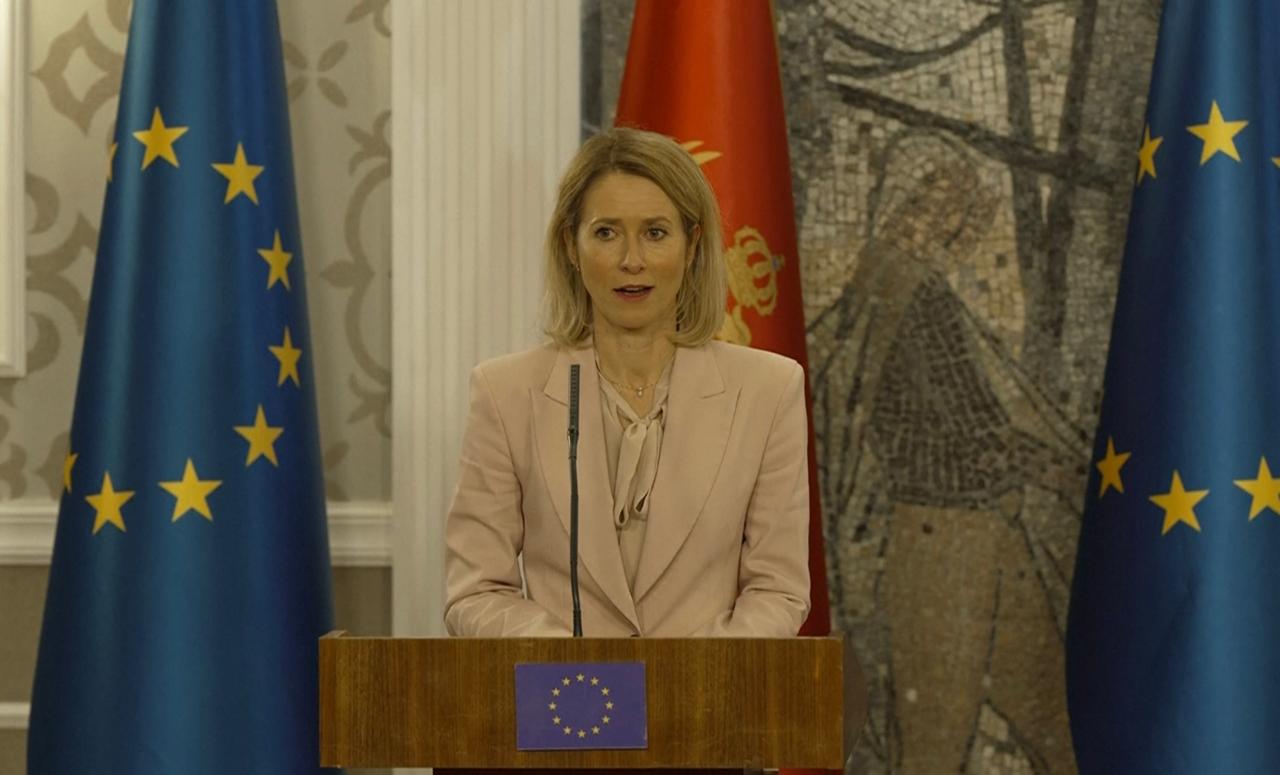
BAKU, Azerbaijan, February 13. A weakening of accountability in the rules-based world order presents a critical challenge for global governance, European Commission Vice-President Kaja Kallas said during the Munich Security Conference, Trend reports.
Kaja Kallas reflected on the origins of the rules-based international order.
“I would take a step back and think why this world order was put in place first time. And it was done so there wouldn't be any wars. If you think about League of Nations after the First World War, it didn't work because there was a war. Then after the Second World War, we had the United Nations so that there wouldn't be any wars. And now we are here. We have a lot of wars going on,” she said.
Kallas warned that the erosion of the rules-based system risks leading to greater instability. She noted that major international crises have historically led to the development of international law, but said further reform is now necessary.
“Now, every time we have had these big international crises, we have seen that we have also developed the international law further. League of Nations didn't have the elements that the United Nations had. And now we have to look into the future,” she said.
According to Kallas, the key missing element in today’s system is accountability.
“And one thing that is missing, I think, is accountability. Everybody signs up to the United Nations Charter. The principles are there. But what happens if somebody breaches those principles? The accountability is clearly not working,” she said.
She criticized the current functioning of international institutions.
“The Security Council is not working the way it was meant to be. The United Nations is not reflecting the world as it currently is,” she noted.
Kallas concluded by calling for efforts to modernize global governance structures, emphasizing that most countries support a rules-based order.
“We have to use this opportunity to really develop this world forward because the majority of the countries in the world want rules-based order, want some kind of rules to govern the way we talk, the way we interact with each other,” she said.



