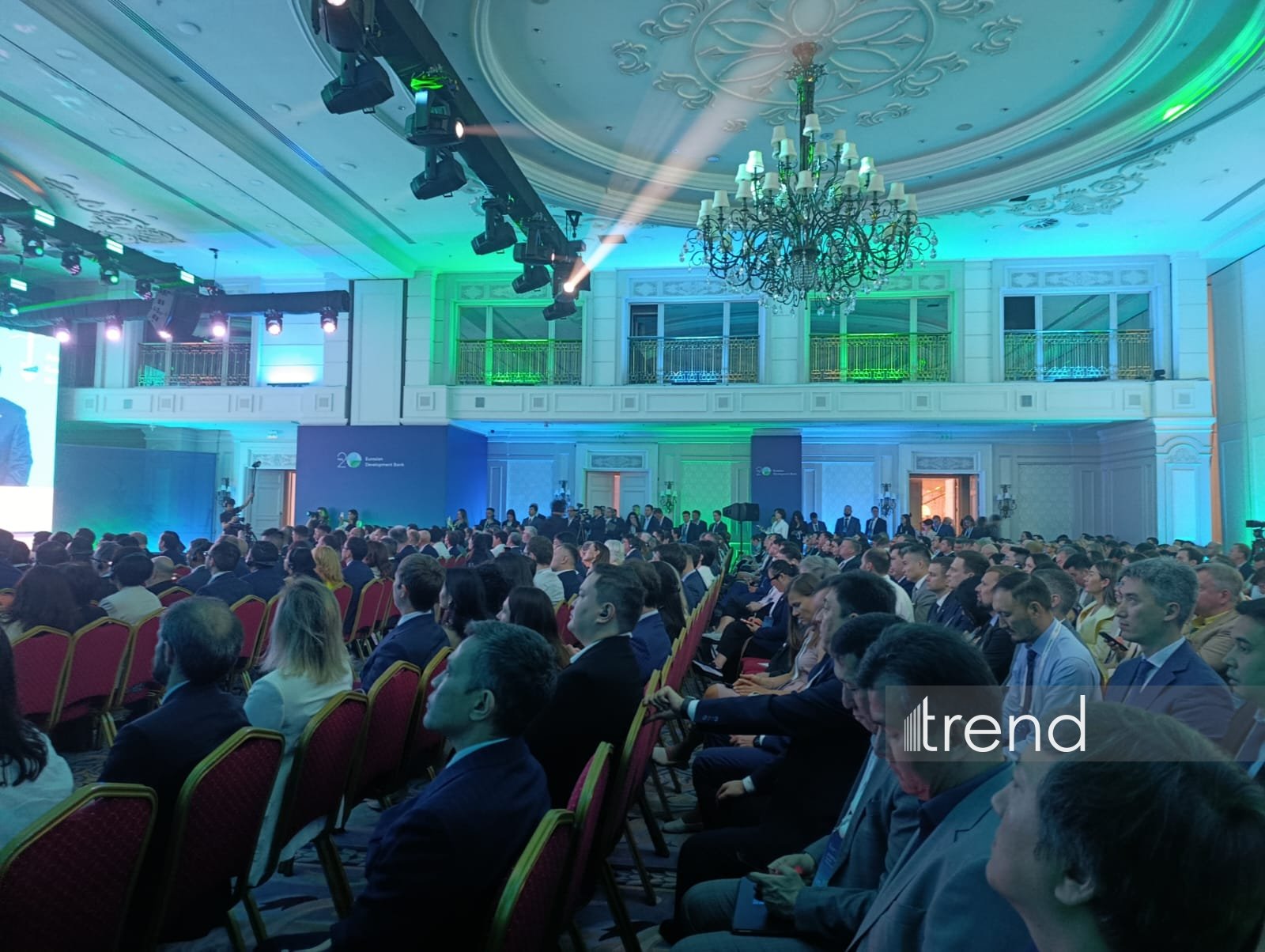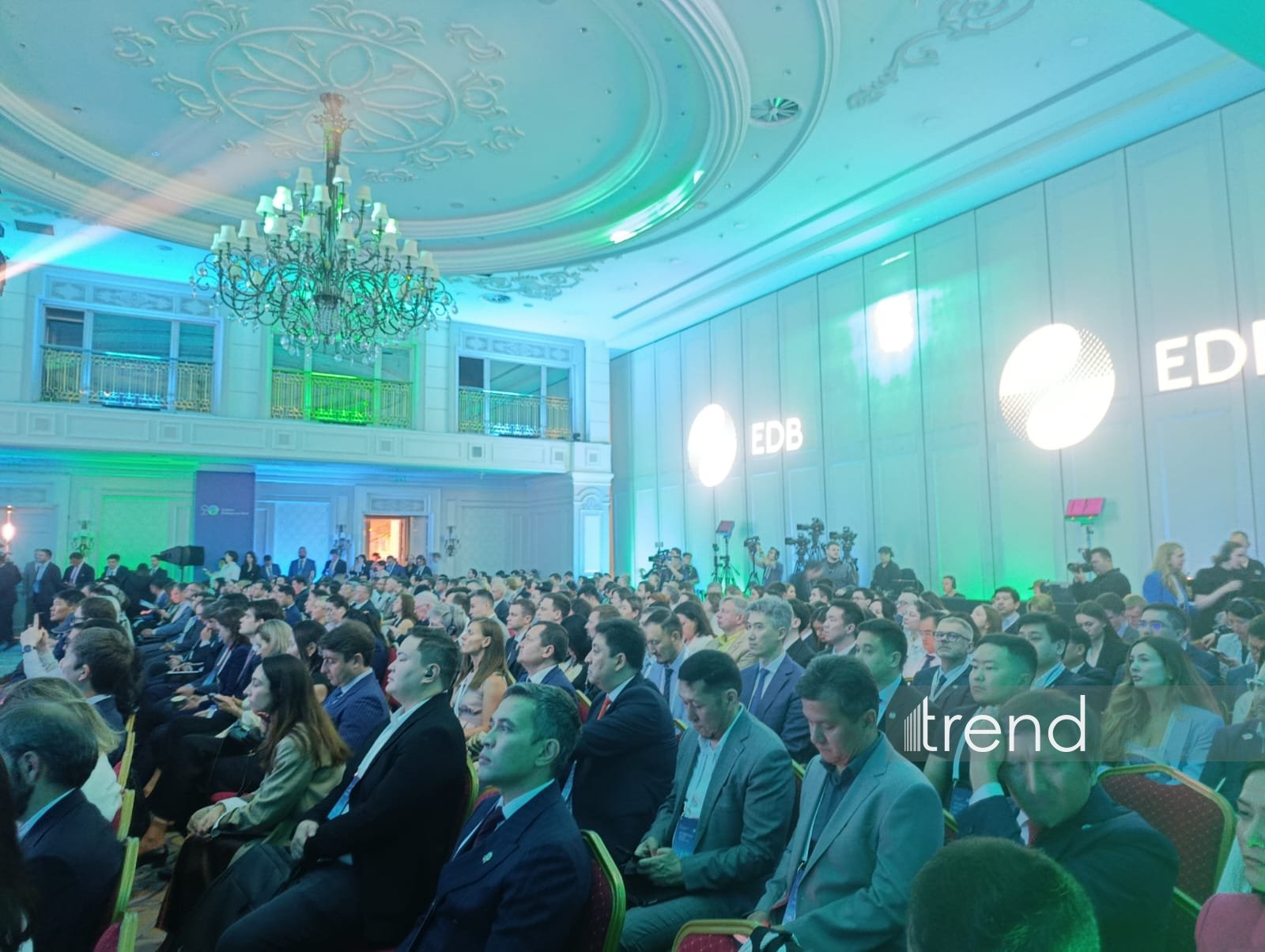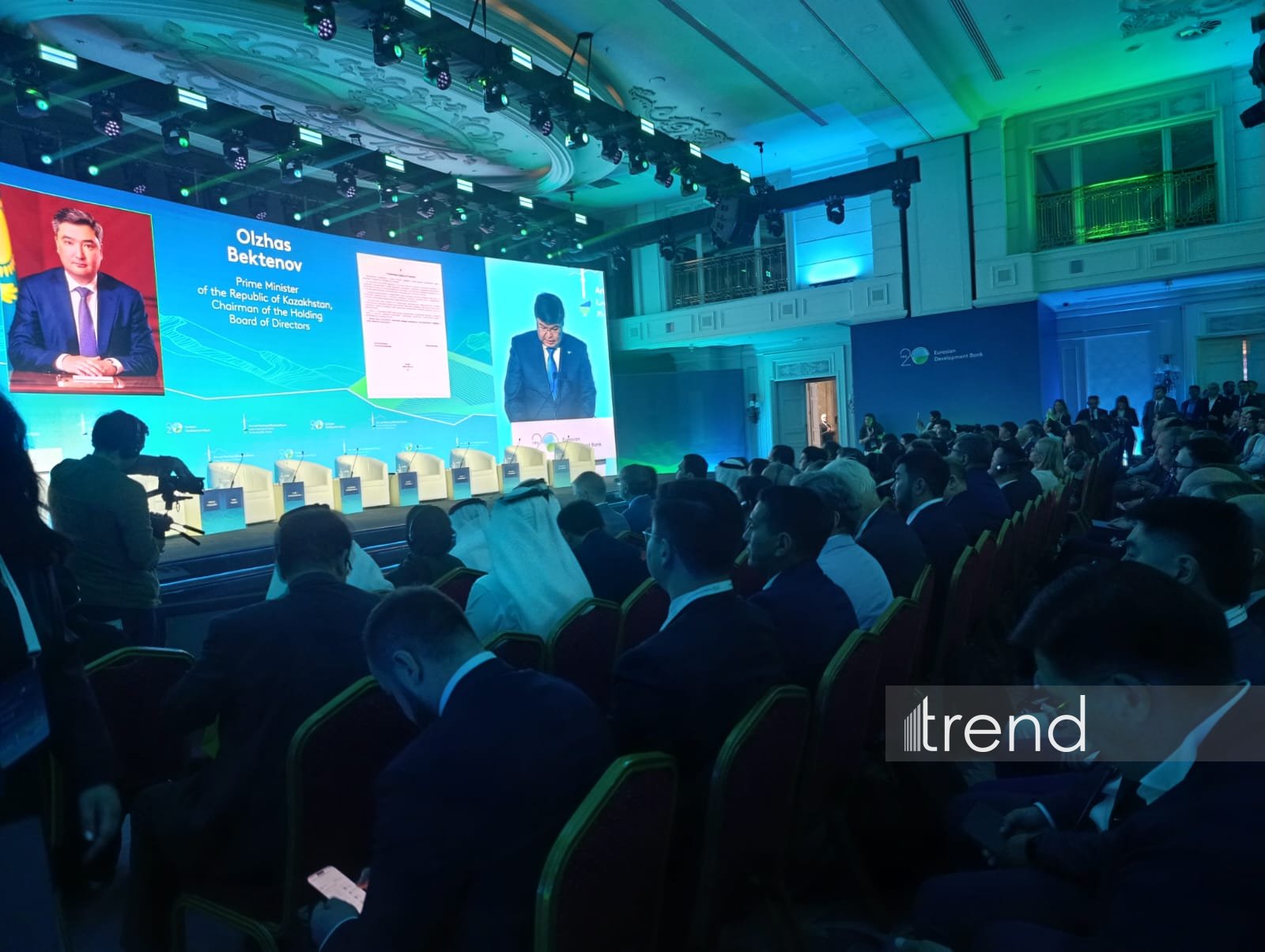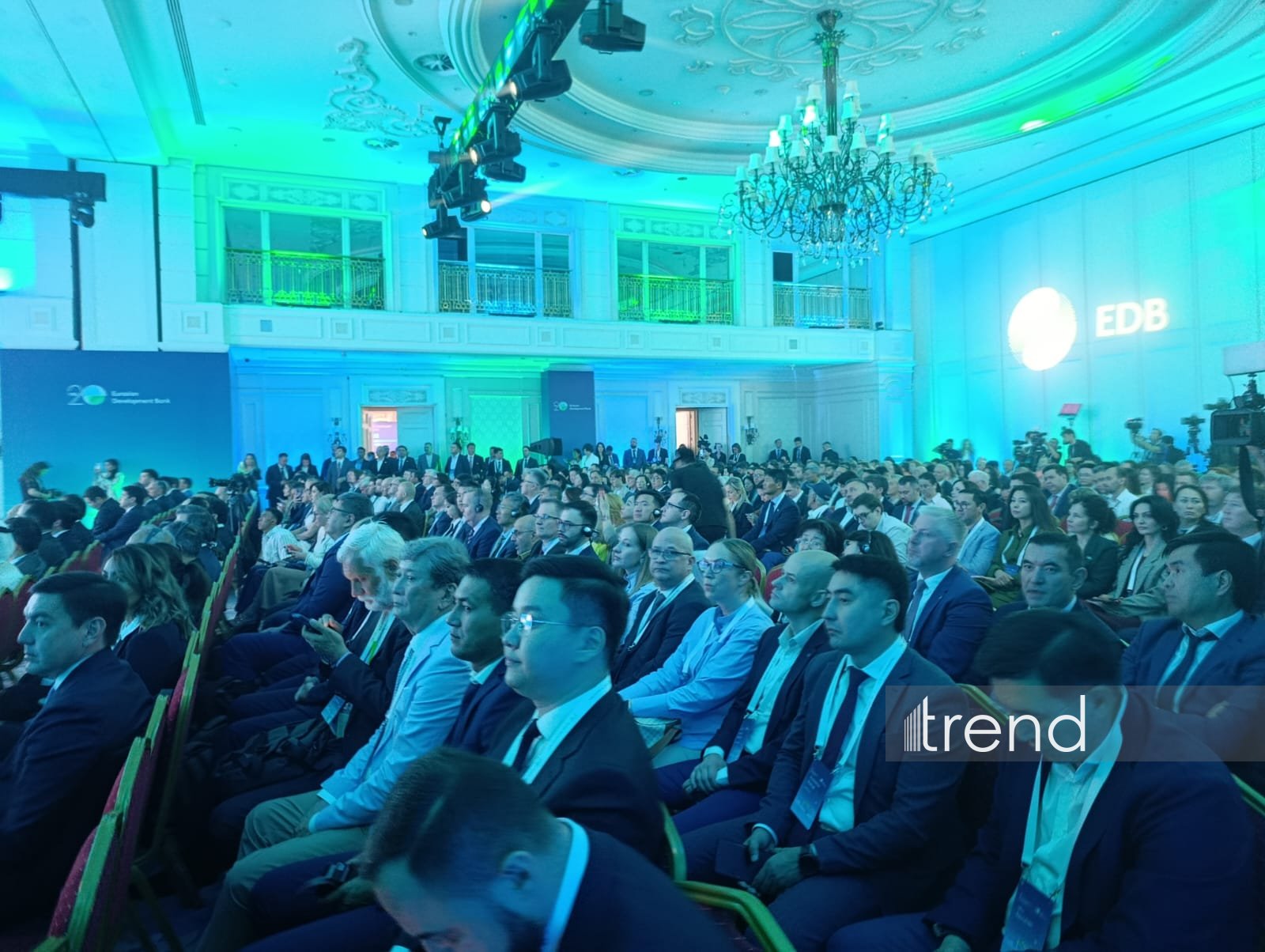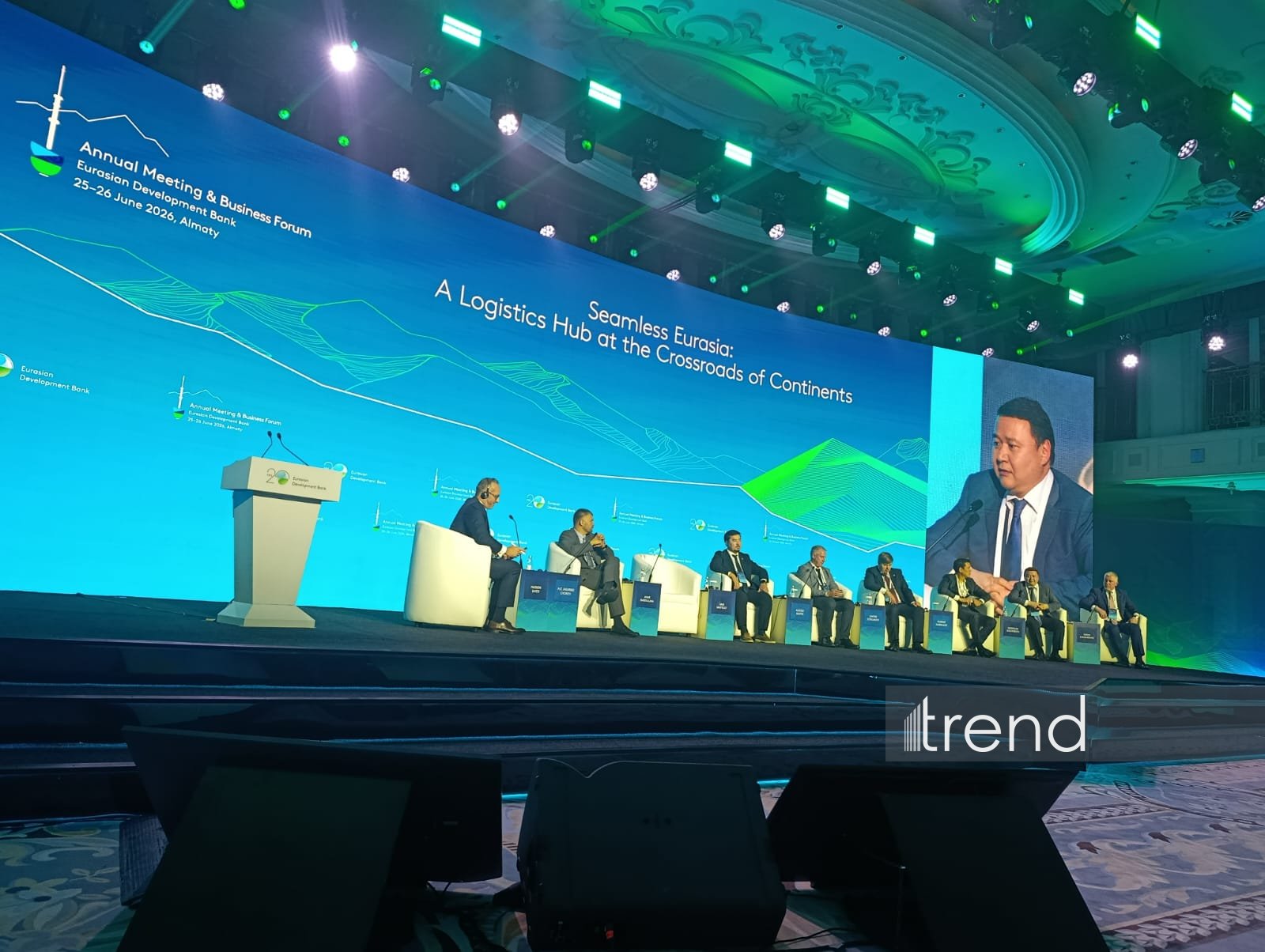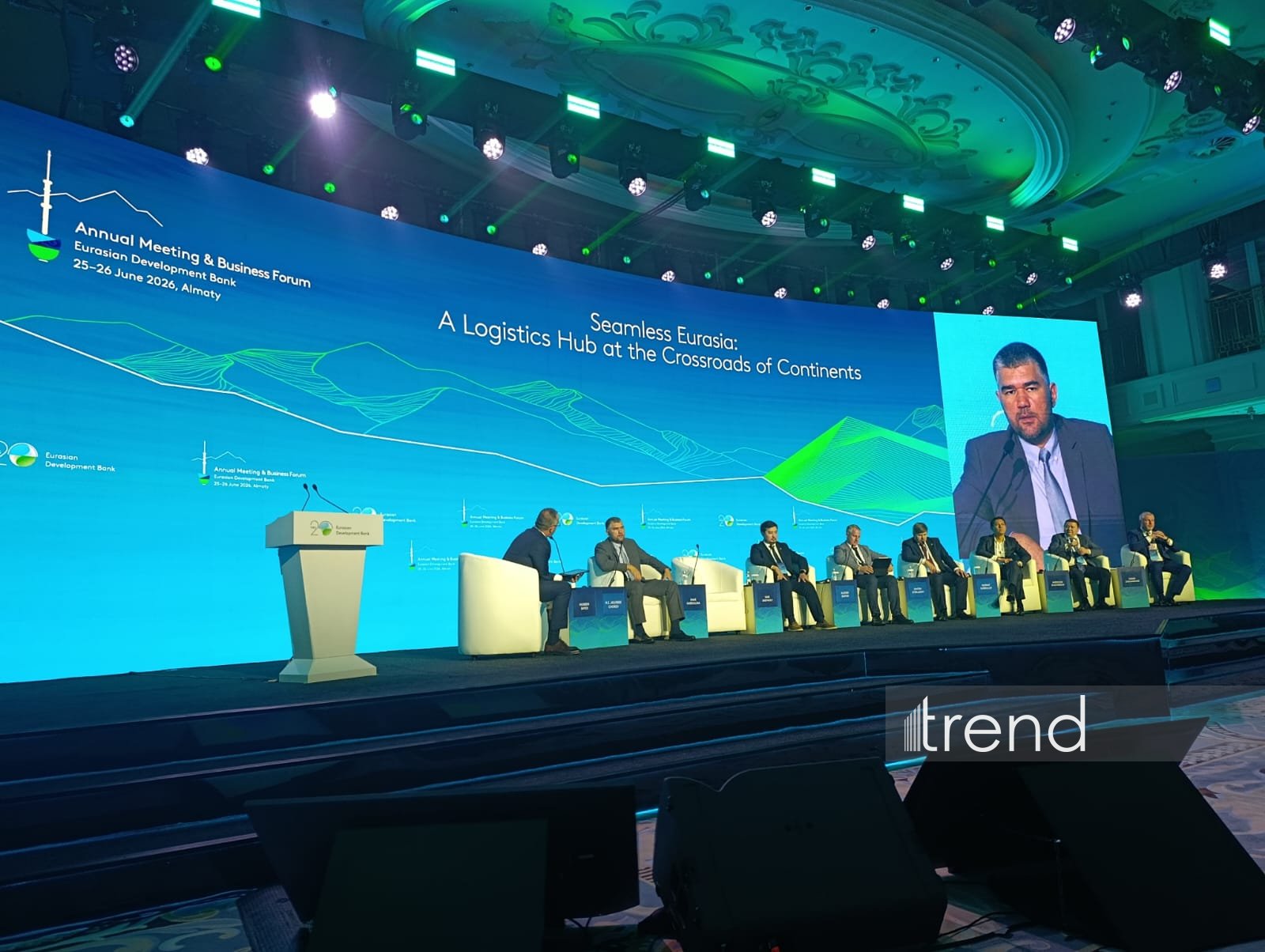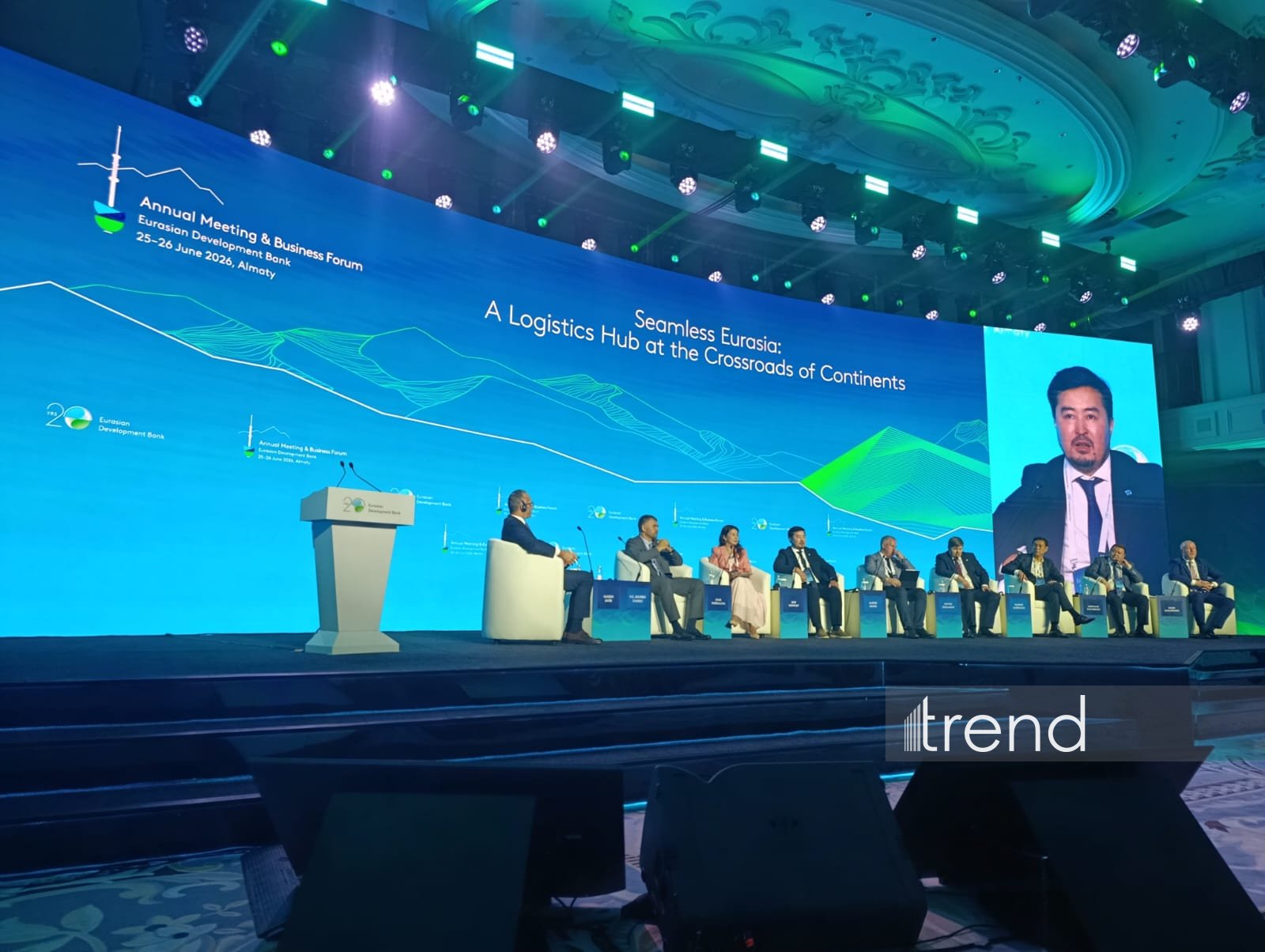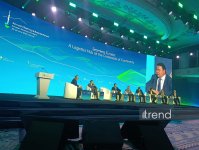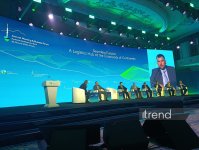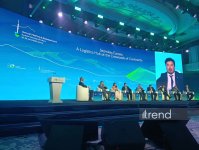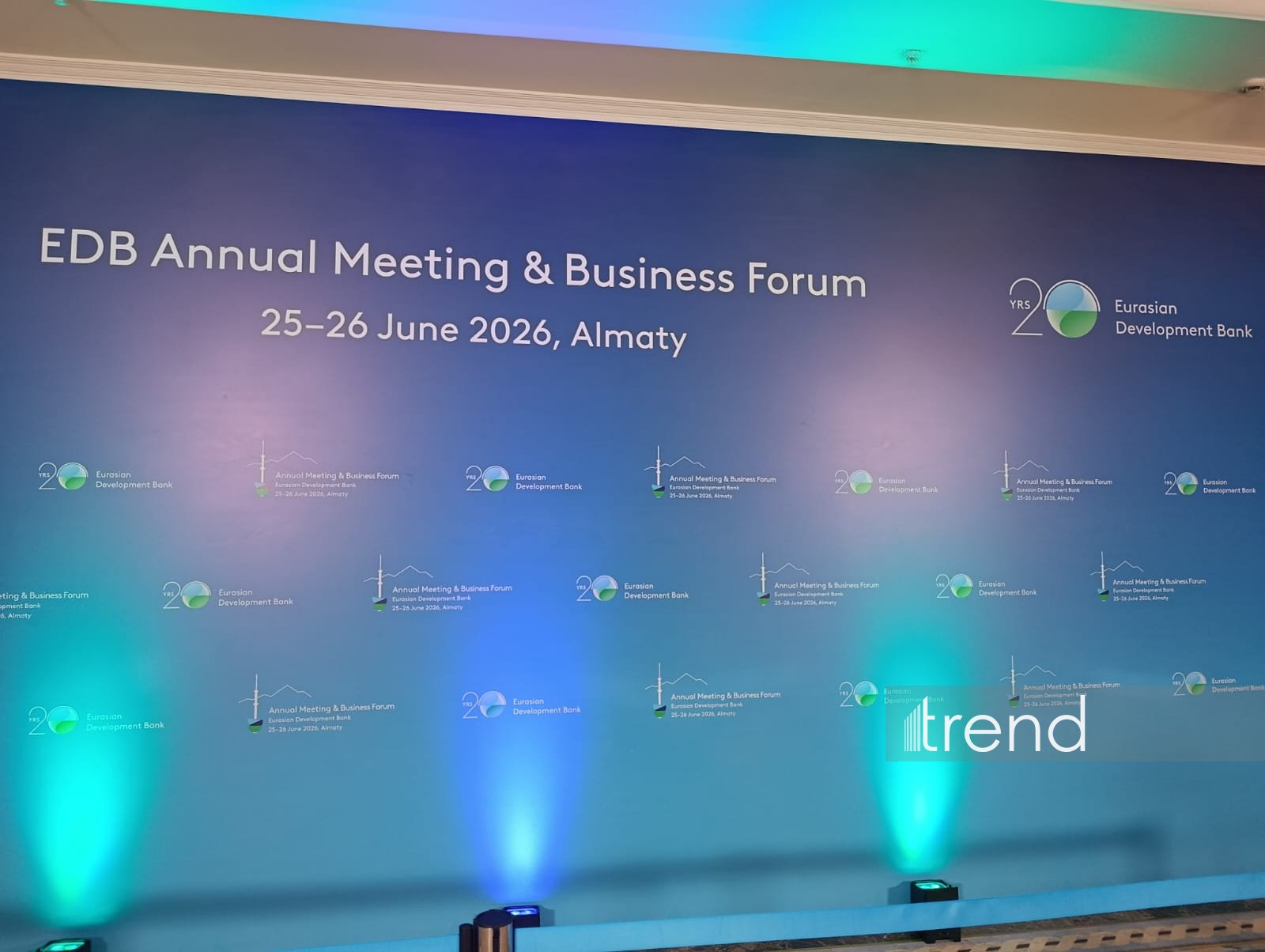
ALMATY, Kazakhstan, June 25. The first day of the Annual Meeting and Business Forum of the Eurasian Development Bank (EDB) concluded in Almaty, Kazakhstan, Trend’s special correspondent reports from the event.
The event marks the 20th anniversary of the EDB and will serve as a platform to discuss key development priorities across the region.
The forum focuseson investment in sustainable development, digital technologies, Islamic finance in Central Asia, and the expansion of transport infrastructure.
The two-day event brings together policymakers, experts and business representatives from across the region.
In his address to participants Kazakhstan's Prime Minister Olzhas Bektenov revealed that Kazakhstan has attracted $5.2 billion in investments from the Eurasian Development Bank (EDB) under the implementation of the bank’s 2022–2026 strategy.
Bektenov said that the total volume of EDB investments under the strategy reached $9.2 billion, with $5.2 billion directed to Kazakhstan’s economy alone — comparable to the amount invested over the previous 15 years.
He noted that cooperation with Kazakhstan offers significant opportunities for investors to implement joint projects, adding that the country’s open-door policy for foreign investment remains a strategic priority.
The prime minister emphasized that this approach is supported by constitutional provisions guaranteeing property rights, freedom of economic activity, fair competition and equality before the law.
“These principles are of key importance for investors and allow for the continuous improvement of business conditions, investment protection and the implementation of long-term projects,” Bektenov said.
He also noted that Kazakhstan’s economy grew by 6.5% last year, nearly twice the projected global growth rate. The country’s GDP exceeded $305 billion, with the private sector acting as the main growth driver. Small and medium-sized enterprises now account for around 40% of the economy.
Deputy Chairman of the EDB and Kazakhstan’s Finance Minister Madi Takiyev said that Sultanate of Oman is expected to join the Eurasian Development Bank (EDB) this year.
Takiyev said negotiations with Mongolia have also begun, noting that the bank is expanding its network of overseas offices, which is expected to open new opportunities for implementing large-scale projects.
“All of this is being done primarily in the common interests of the participating countries,” he said.
He added that the EDB’s cumulative portfolio has reached around $22 billion, covering 326 projects with practical impact for each member state.
The minister also noted that foreign direct investment in Kazakhstan increased by 14.4% to $20.5 billion, while fixed capital investment rose by 13%, reaching a record $43.5 billion.
He said a range of measures is being implemented under the Investment Policy Concept through 2030 aimed at attracting high-quality investment.
“Alongside creating favorable business conditions, Kazakhstan offers investors broad logistics opportunities. As you know, we are located in the heart of Eurasia, with direct access to the markets of China, the European Union and the Middle East,” Takiyev said.
He added that the development of the Middle Corridor and its alignment with China’s Belt and Road Initiative opens additional opportunities for unlocking the potential of North–South and East–West transport corridors.
Kyrgyz Minister of Economy and Commerce Bakyt Sydykov said one of Kyrgyzstan’s key priorities is to maintain high rates of economic growth.
Sydykov said Kyrgyzstan’s GDP grew by 12.2% in January–May 2026, driven by expanding domestic demand, increased investment activity, industrial production, construction, services, and foreign trade.
“This creates a foundation for achieving our long-term socio-economic development goals. Our task for the coming period is to sustain this growth momentum,” he said.
He noted that the country’s National Development Strategy through 2030 sets an ambitious target of maintaining annual growth at no less than 8%.
Sydykov outlined four strategic development vectors: industrial development; establishing Kyrgyzstan as a regional hub for trade, logistics and transit; unlocking the country’s energy potential, including the Kambarata-1 hydropower project; and promoting sustainable tourism and organic agriculture.
He added that key growth areas also include transport and logistics infrastructure, energy, industrial cooperation, agriculture, the digital economy and sustainable development projects.
However, Sydykov stressed that the main challenge is not the lack of ideas but the ability to rapidly transform them into well-prepared investment projects that meet the requirements of international financial institutions and investors.
In this regard, he said the EDB could play an important role, adding that simplifying access for member states to the bank’s financial and expert resources should become one of its key priorities in the coming years.
Khurram Teshabaev, Deputy Minister of Investment, Industry and Trade of Uzbekistan added international development banks play a significant role in Uzbekistan’s economic development.
“The key point for us is that the greatest economic impact is achieved through interregional cooperation, where countries of the region combine resources, markets, and expertise to form integrated production and logistics chains.
That is why Uzbekistan’s economic development is based on a combination of private investment, international financing, and modern technologies. International development banks play a particularly important role in this process. They provide not only financial resources but also international standards, technologies, and management solutions necessary for implementing large-scale interregional projects,” he said.
Teshabaev noted that there are several priority areas for attracting investment where the involvement of development banks is especially important.
According to him, the first priority is strengthening transport connectivity among participating countries. This is a capital-intensive sector that is open to joint financing.
He added that the second priority is industrial cooperation and the development of value chains.
“We are interested in investments that support the creation of joint high value-added production. Our priorities include deeper processing of raw materials and localization of production through the formation of new regional production chains,” he stressed.
The deputy minister said the third priority is the green economy and sustainable energy.
“The fourth direction is the digital economy and artificial intelligence. We are attracting investment into digital infrastructure, data centers, and technology platforms within the framework of our national AI development strategy. We also see strong potential in cross-border e-commerce, AI implementation, and workforce training for the digital economy,” he said.
The EDB is a multilateral development bank operating across the Eurasian space. According to the bank, its cumulative portfolio reached 326 projects worth a total of $19.6 billion by the end of 2025.
Under its 2022–2026 strategy, the EDB is implementing three flagship megaprojects: the Central Asia Water and Energy Complex, the Eurasian Transport Framework, and the Eurasian Commodity Distribution Network.
The event will continue on June 26.