


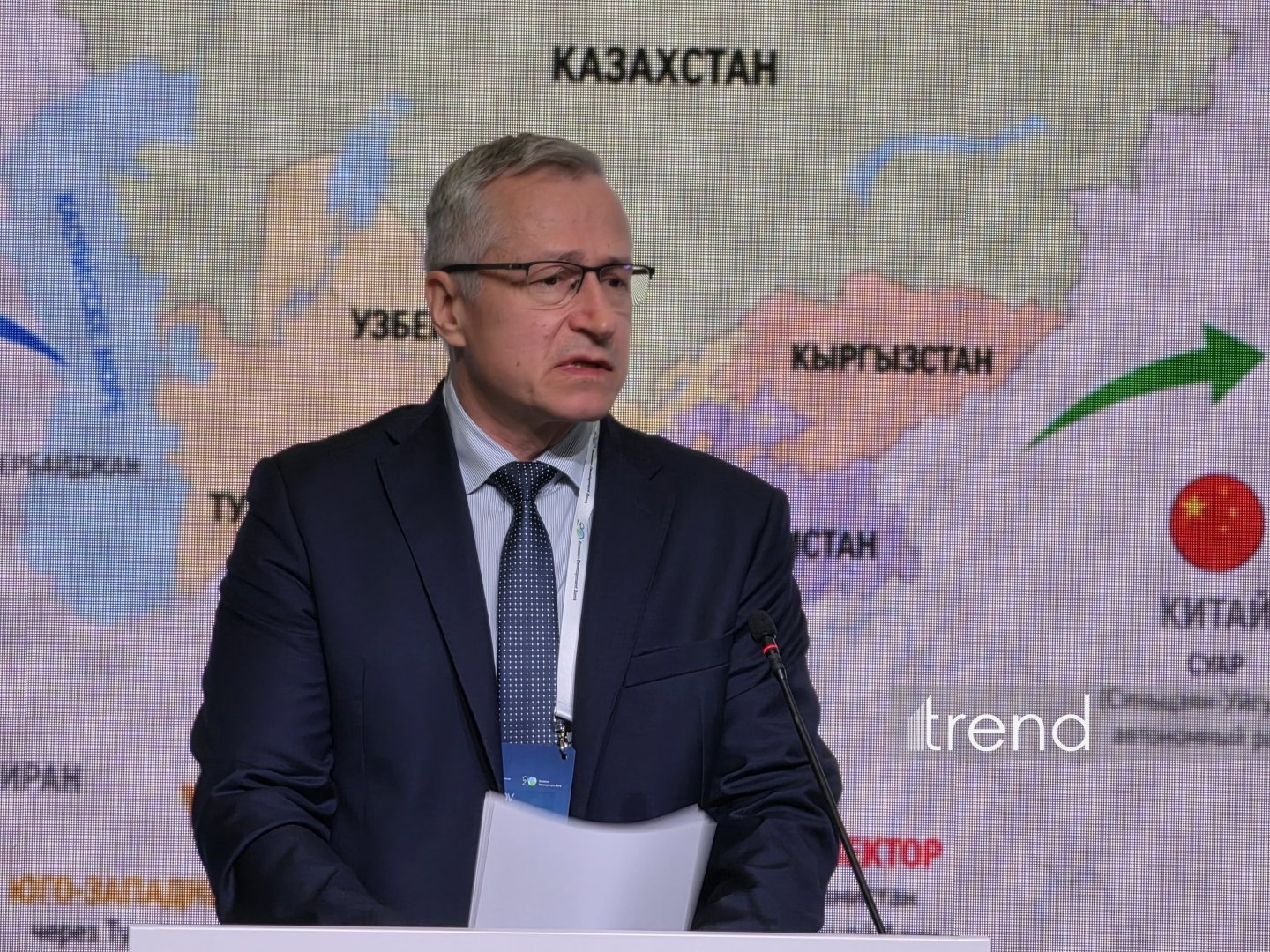
ALMATY, Kazakhstan, June 25. New power transmission projects in Central Asia should be assessed based on whether they increase the overall capacity of the region’s energy systems, Sergey Tulinov, Project Manager at the Secretariat of the United Nations Economic and Social Commission for Asia and the Pacific (ESCAP), said, Trend's special correspondent reports from the event.
He made the remarks during a presentation of analytical reports held as part of the Eurasian Development Bank’s Annual Meeting and Business Forum.
He said that when domestic grids are overloaded — a situation seen in several Central Asian countries, particularly during winter — not only electricity trade is constrained, but also hydro power flows, transit supplies, and emergency support between neighboring countries.
“Therefore, for new grid projects, it is not enough to simply build transmission lines. What matters is whether the project increases transfer capacity, reduces congestion, removes constraints on new renewable energy connections, improves system reliability, and enhances readiness for market-based operation. In other words, each project must deliver a measurable system-wide impact,” Tulinov said.
He added that the economic benefits of regional cooperation go far beyond electricity trade alone, stressing that connectivity is a key issue for the region.
“First, Central Asia is not starting energy integration from scratch. The region has inherited grid infrastructure, experience in parallel operation of power systems, seasonal water-energy exchanges, and resource complementarity. However, the previous architecture was designed for a different economic model. Therefore, many issues now need to be addressed in order to expand electricity trade, strengthen interconnections, and ensure reliability, affordability and environmental sustainability of energy supply,” he said.
Tulinov emphasized that physical interconnections alone are no longer sufficient.
“Modern rules, mechanisms and institutions are required to ensure stable and reliable energy supply,” he added.



