


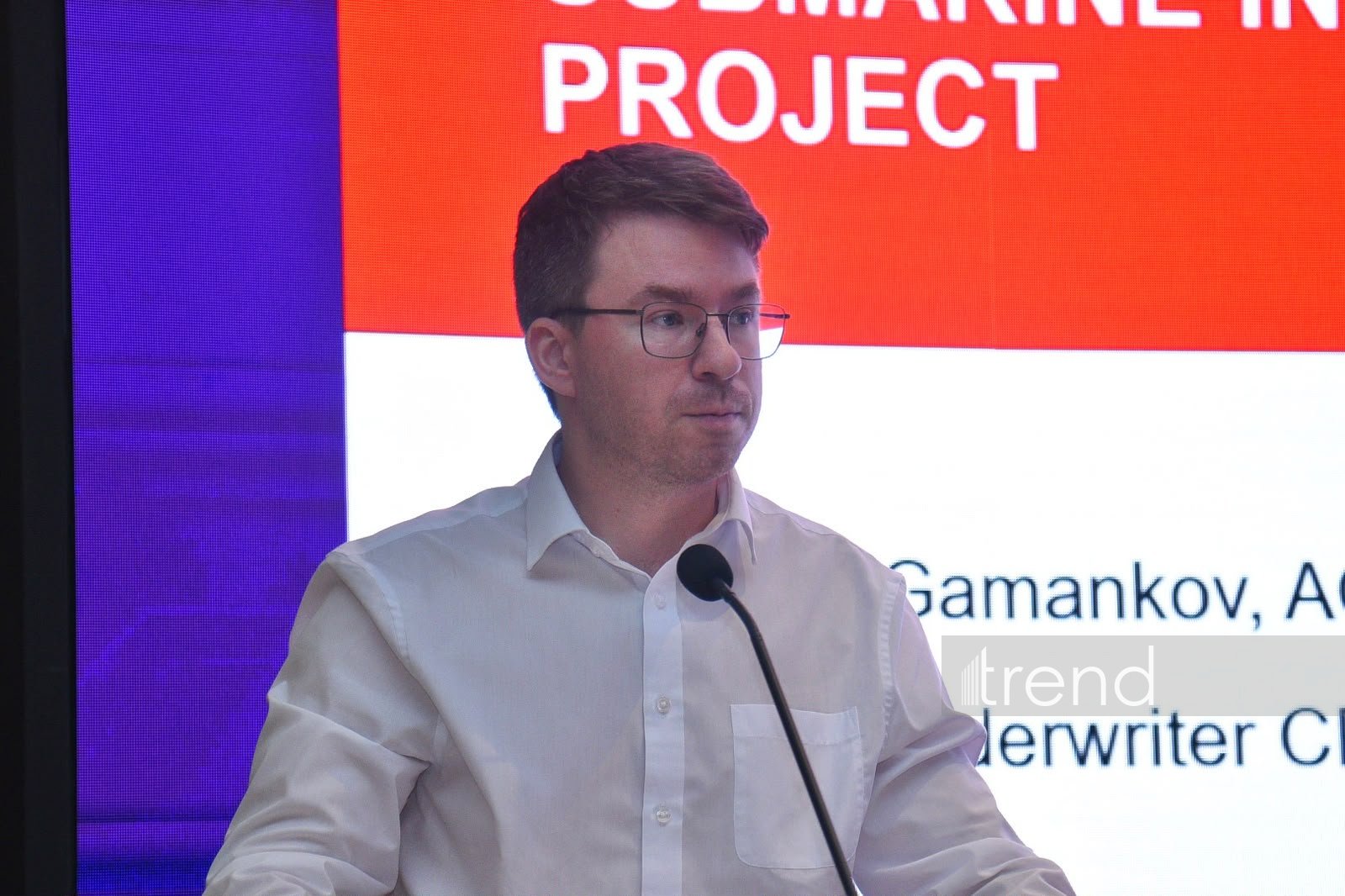

BAKU, Azerbaijan, June 24. Future green energy corridors will be built not only by governments, engineers and investors, but through effective risk management, said Dmytro Gamankov, Senior Underwriter for Central and Eastern Europe and international markets at reinsurance company VIG Re, at the Azerbaijan International Insurance Forum in Baku, Trend’s correspondent reports from the event.
He noted that insurance and reinsurance companies will not be mere bystanders in the development of green energy projects.
"They will determine how risks are identified, structured, assessed and transferred, making such projects investable and bankable. Energy corridor projects represent a far more complex system than simply renewable energy assets and transmission infrastructure. Underwriters view such projects through the lens of interdependencies, asset concentration, cross-border regulation and multinational contractual chains. Corridors must not be assessed in fragments. They need to be treated as a single system," he said.
Gamankov pointed out that the central element of modern energy integration projects is not generating capacity, but interconnecting cable systems.
"The cable is the critical link where the main technical risks, construction complexity and potential for major losses are concentrated. If this element is knocked out, the consequences can extend well beyond technical issues — leading to project launch delays, operational disruptions and a breakdown of trust among project participants," he said.
He stressed that cable infrastructure must be treated as a strategic asset and should be the primary focus of underwriters.
Gamankov outlined that the insurance aspects of projects in the Black Sea and Caspian Sea involve two main phases — construction and operation.
He noted that the construction phase begins long before a facility becomes operational and covers surveys, equipment transportation, cargo storage, cable laying and jointing, testing and the coordination of a large number of contractors.
"Major losses can stem from adverse weather conditions, engineering errors, technical defects, supply chain disruptions or misalignment between onshore and offshore work schedules. In projects of this scale, there are virtually no minor losses. Project complexity amplifies the scale of consequences, large distances extend repair timelines, and the interdependence of participants magnifies the financial impact of any incident," Gamankov said.



