


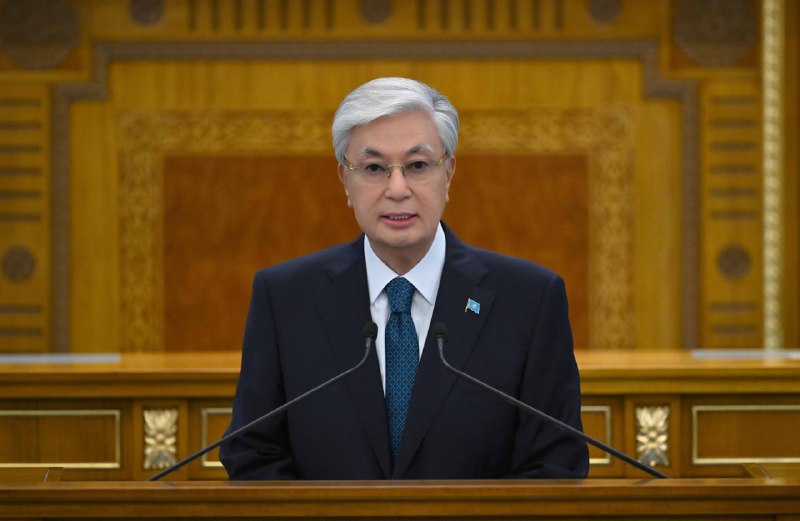

BAKU, Azerbaijan, July 16. We intend to develop Kazakhstan as a leading agro-industrial hub in Central Asia.
This was announced by the press service of the Kazakh president, citing Kassym-Jomart Tokayev's remarks at the meeting with representatives of the Chinese business community in Shanghai.
Speaking to business leaders, President Tokayev noted that Kazakhstan has achieved record grain harvests of 27 million tons for two consecutive years, attributing this success to the integration of modern farming technologies. The country is intensifying its agricultural digitalization efforts, currently employing drones, satellite monitoring for crop health, and precision farming techniques. To date, more than 200 agricultural enterprises operate as "smart farms," with over 650 additional producers transitioning to digital management systems.
The President emphasized that the state is also developing a national digital tracking system to monitor the entire supply chain of agricultural products from the field to the consumer. This initiative aims to boost production volumes and develop a high-value-added food processing industry.
"We intend to develop Kazakhstan as a leading agro-industrial hub in Central Asia," President Tokayev stated, highlighting that the fastest route to this objective lies in adopting AI, robotic systems, and integrated digital supply chains.
The President further noted that the country is developing advanced storage infrastructure, including automated logistics centers and cold storage facilities, and invited Chinese companies to participate in these initiatives to foster mutually beneficial industrial growth.
Meanwhile, Kazakhstan has achieved 80-100% domestic self-sufficiency across its main food categories in H1 2026, with food production volume up 14.7% and beverage output up 4.4% year-on-year.
According to government data, a total of six categories of goods remain vulnerable in terms of their dependence on imports: poultry, fish, sausage products, cheese, sugar, and apples. To keep consumer prices in check and eliminate speculative markups, the government is holding direct working meetings with major retail chains and organizing regular regional farmers’ markets where products are sold directly by producers at prices 15–20% below market rates.



