


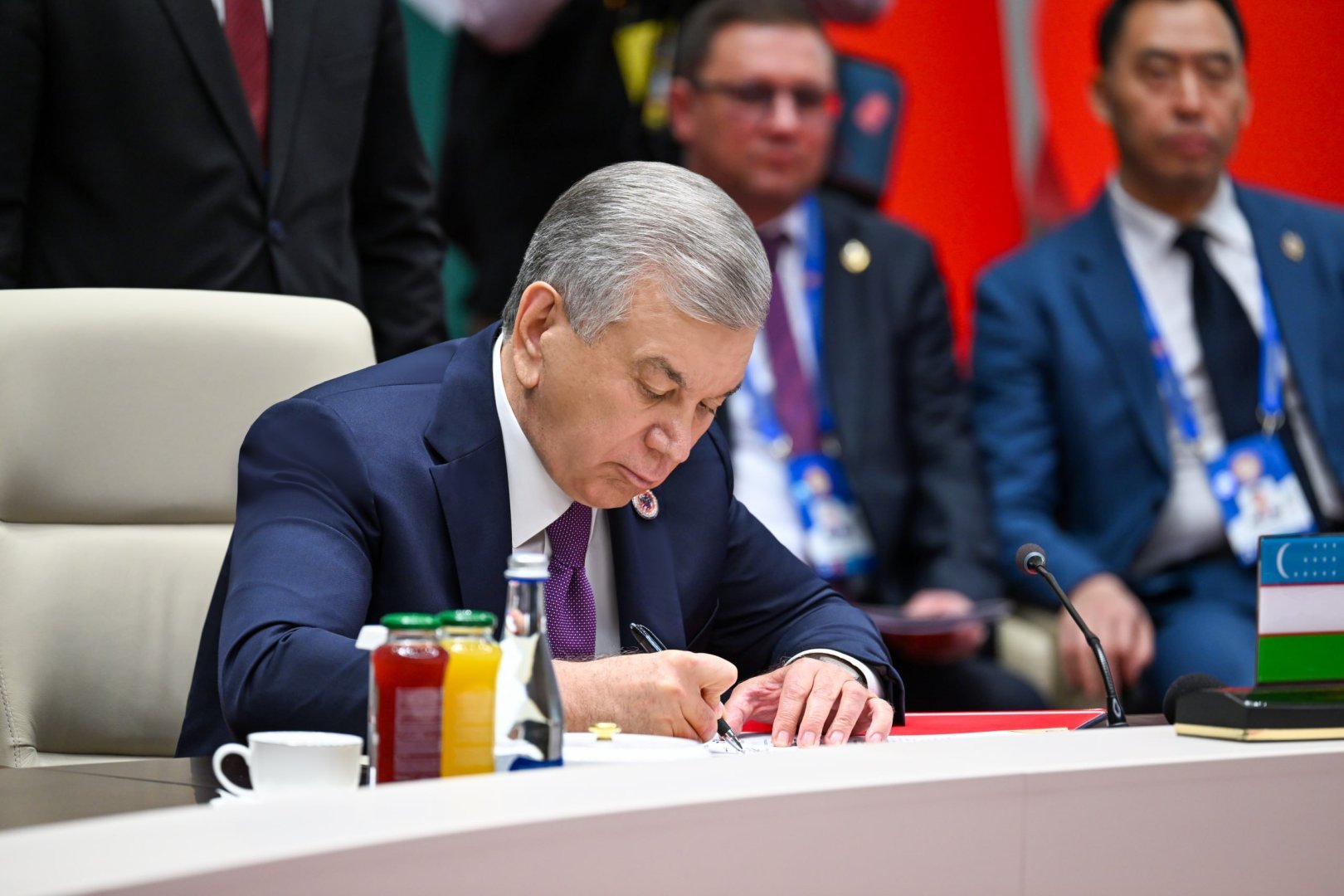

BAKU, Azerbaijan, September 1. Uzbekistan’s President Shavkat Mirziyoyev has proposed creating an SCO Industrial Cooperation Map to connect special economic zones, production facilities, markets and logistics networks across member states, Trend's special correspondent reports.
The proposal was put forward during the Shanghai Cooperation Organization’s 25th-anniversary summit in Bishkek as Uzbekistan called for a stronger economic dimension to the organization’s cooperation.
Mirziyoyev said the proposed map should operate as a unified digital platform for businesses, investors and government agencies, helping identify industrial opportunities, connect producers with markets and facilitate investment projects across SCO countries.
“The main goal should be to create an interconnected and sustainable space where investment, technology and knowledge can move freely, large infrastructure and industrial projects can be implemented, and direct ties between regions, businesses and people can expand,” Mirziyoyev said.
The initiative is part of Uzbekistan’s broader proposal to develop a long-term “SCO–2040” vision aimed at creating a more interconnected and sustainable economic space.
Mirziyoyev also proposed that the SCO Council of Heads of Government begin selecting a portfolio of projects in transportation, energy, industrial cooperation and digital infrastructure for implementation with the practical launch of an SCO Development Bank.
For Uzbekistan, industrial cooperation within the SCO could provide a mechanism to connect its manufacturing base and special economic zones with larger regional markets while attracting additional investment and technology. The country has been strengthening economic ties with SCO members, with investment from SCO countries reaching $17.5 billion in Uzbekistan in 2025.
The proposed industrial map could also help move cooperation beyond individual bilateral projects toward more integrated production and supply chains. This would be particularly relevant for Uzbekistan as it seeks to expand industrial exports, develop regional production hubs and improve connectivity with major markets in China, Russia, India and other SCO economies.
The proposal reflects Tashkent’s broader effort to use the SCO as a platform for practical economic integration, with industrial cooperation, transport connectivity, investment and digital infrastructure increasingly placed alongside traditional areas of regional cooperation.



