


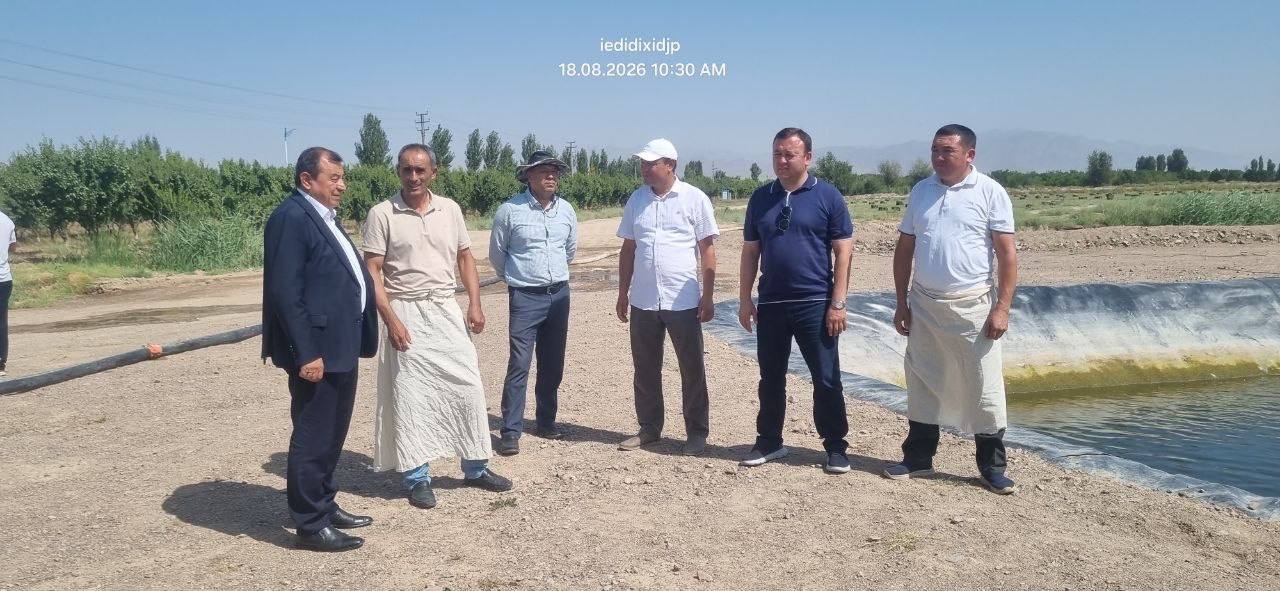

BAKU, Azerbaijan, August 21. Uzbekistan and Tajikistan are expanding scientific and practical cooperation in the field of cotton cultivation, focusing on the assessment of cotton fields, increasing crop yields, and accelerating crop maturation.
This was reflected in the statement by the Uzbek Ministry of Agriculture, following the delegation’s visit to Tajikistan on August 18–19, which included experts from the Uzbek Research Institute of Cotton Breeding, Seed Production, and Agricultural Technologies.
According to the Ministry, the experts assessed cotton fields in the Bobojon Gafurov district of Sughd region, examining crop conditions directly in the field and developing practical recommendations to improve plant development, increase yields and accelerate cotton ripening.
Cotton is being cultivated on a 25-hectare plot in the area using the “Xinjiang” cultivation method. The crops were planted using a double-row system with a 76-by-10 centimeter spacing scheme.
The fields are also equipped with a drip irrigation system provided free of charge by Uzbekistan’s Bukhara Agrocluster.
Particular attention during the field assessment was given to accelerating and ensuring uniform cotton maturation.
In line with recommendations from Uzbekistan’s Agriculture Ministry, specialists provided practical guidance on the use of ethephon and the effectiveness of a three-stage set of agricultural practices designed to promote earlier cotton maturation.
“Timely implementation of agricultural measures in accordance with established schedules and application rates is essential for healthy and rapid cotton development and for improving yields,” the specialists noted.
The Uzbek experts assessed individual agricultural processes directly in the fields and provided scientific and practical recommendations aimed at increasing productivity and improving cotton quality.
The cooperation is expected to support the introduction of advanced agricultural technologies in Tajikistan’s cotton sector while expanding the exchange of scientific and practical expertise between the two countries.
The joint work also provides an opportunity to test cultivation practices under local conditions and adapt recommendations to the specific needs of cotton growers in Tajikistan.



