


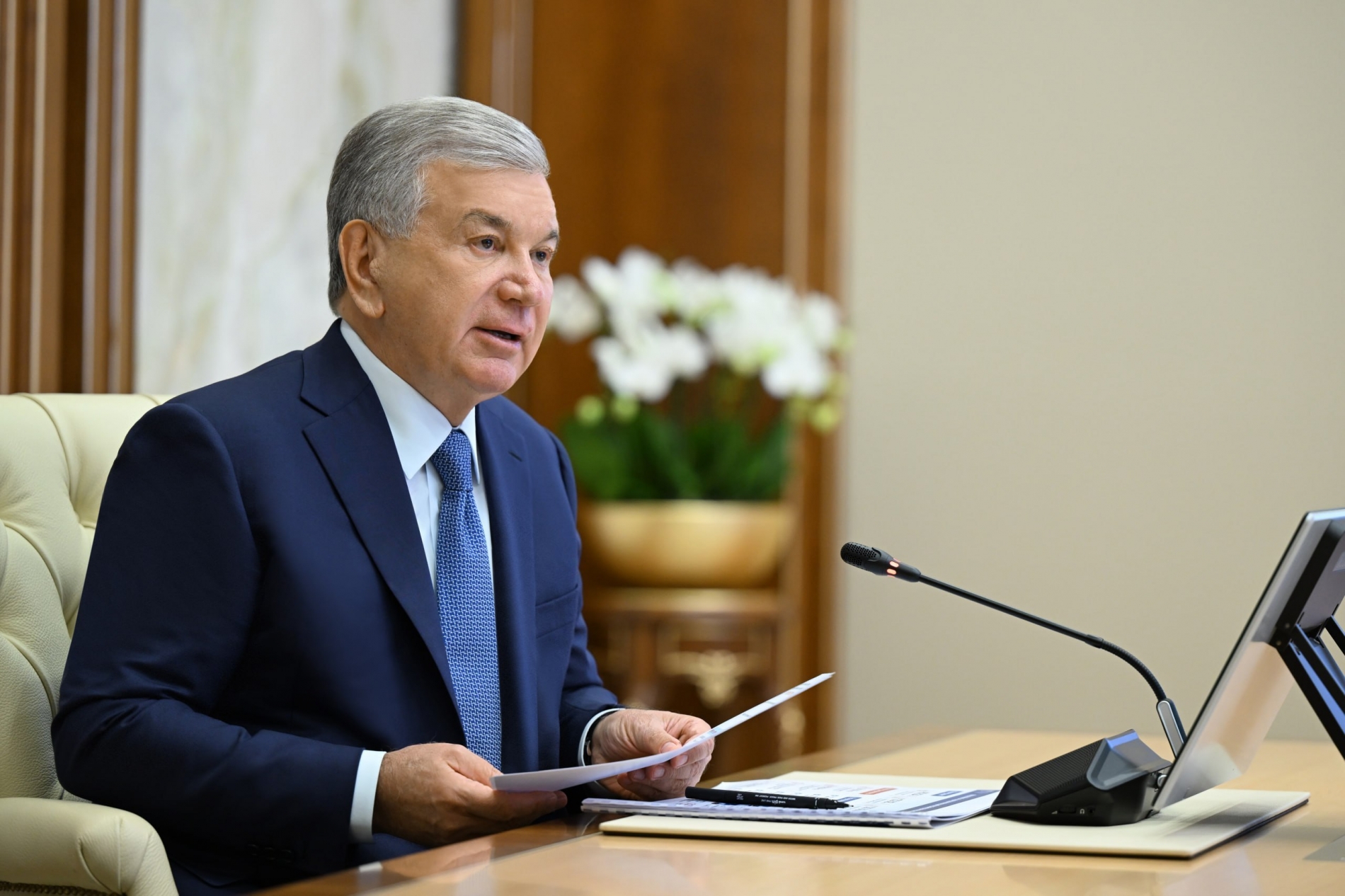

BAKU, Azerbaijan, November 26. Uzbekistan is accelerating efforts to implement agreements reached during recent high-level visits to Oman, Jordan and Türkiye. At a government meeting on November 25, President Shavkat Mirziyoyev called for faster progress on joint investment projects and stronger trade cooperation, while also reviewing preparations for major international events scheduled to take place in Uzbekistan in 2027.
According to the presidential press service, during Mirziyoyev’s state visit to Oman on November 16–17, the two countries signed more than 30 bilateral agreements and documents and established a portfolio of joint projects worth $5 billion. They also agreed to target an increase in bilateral trade to $1 billion.
The parties identified opportunities for cooperation in energy, electrical engineering, chemicals, mining, urban development, agriculture, finance and digital technologies.
During the Uzbek president's November 23–24 state visit to Jordan, the sides signed 19 bilateral documents, including a preferential trade agreement aimed at increasing bilateral trade to $500 million.
Additionally, the countries outlined joint projects in textile manufacturing, critical minerals development, pharmaceutical production, mineral fertilizers and agricultural clusters.
The meeting also reviewed progress in implementing agreements with Türkiye.
Following Mirziyoyev's official visit to Ankara in January and the fourth meeting of the High-Level Strategic Cooperation Council, Uzbekistan and Türkiye set priorities for expanding their comprehensive strategic partnership. These include increasing bilateral trade to $5 billion, strengthening industrial cooperation and expanding ties between regions.
An important step was the establishment of the Uzbekistan-Türkiye High-Level Council for Business Cooperation following talks between the two presidents in Ankara in October.
At the council's first meeting, held in Tashkent on November 19 with representatives of more than 150 Turkish companies, the sides reached investment and trade agreements worth $11.2 billion.
Additional cooperation opportunities were identified in poultry farming, horticulture, healthcare, pharmaceuticals, urban development, geology and tourism.
Mirziyoyev instructed government agencies and regional authorities to accelerate the implementation of signed agreements, advance investment projects, identify financing sources and ensure the necessary infrastructure is in place.
He called for comprehensive roadmaps for each partner country, setting out specific activities, implementation deadlines and responsible officials.
In addition, the president emphasized the importance of translating agreements into practical cooperation in tourism, education, science and culture, while expanding direct air connections and interregional ties.
Ministries, industry leaders and regional administrations were instructed to maintain regular contact with foreign partners, monitor joint projects and promptly address implementation issues.
The meeting also reviewed the implementation of agreements reached during other foreign visits and high-level negotiations held since the beginning of the year.
Officials further discussed preparations for major international events scheduled in Uzbekistan in 2027, including their agendas, proposed initiatives and opportunities to expand multilateral cooperation. Relevant agencies were instructed to coordinate preparations, consult with international partners and ensure the events are organized effectively.
Moreover, the meeting addressed plans to expand Uzbekistan's electrical engineering industry.
By 2030, the country aims to increase industry output to 130 trillion soums (about $10.86 billion), raise exports to $5 billion and build an investment project portfolio worth more than $11 billion.
A total of 164 projects across six priority areas are scheduled for implementation in 2027–2029.
The development strategy focuses on introducing advanced technologies, increasing domestic raw material processing and localization, strengthening the position of Uzbek manufacturers in global supply chains and expanding the presence of national brands in foreign markets.
Workforce development will also be a priority, including through the "1,000 Design Engineers" program, which aims to train highly qualified specialists for the industry.


