


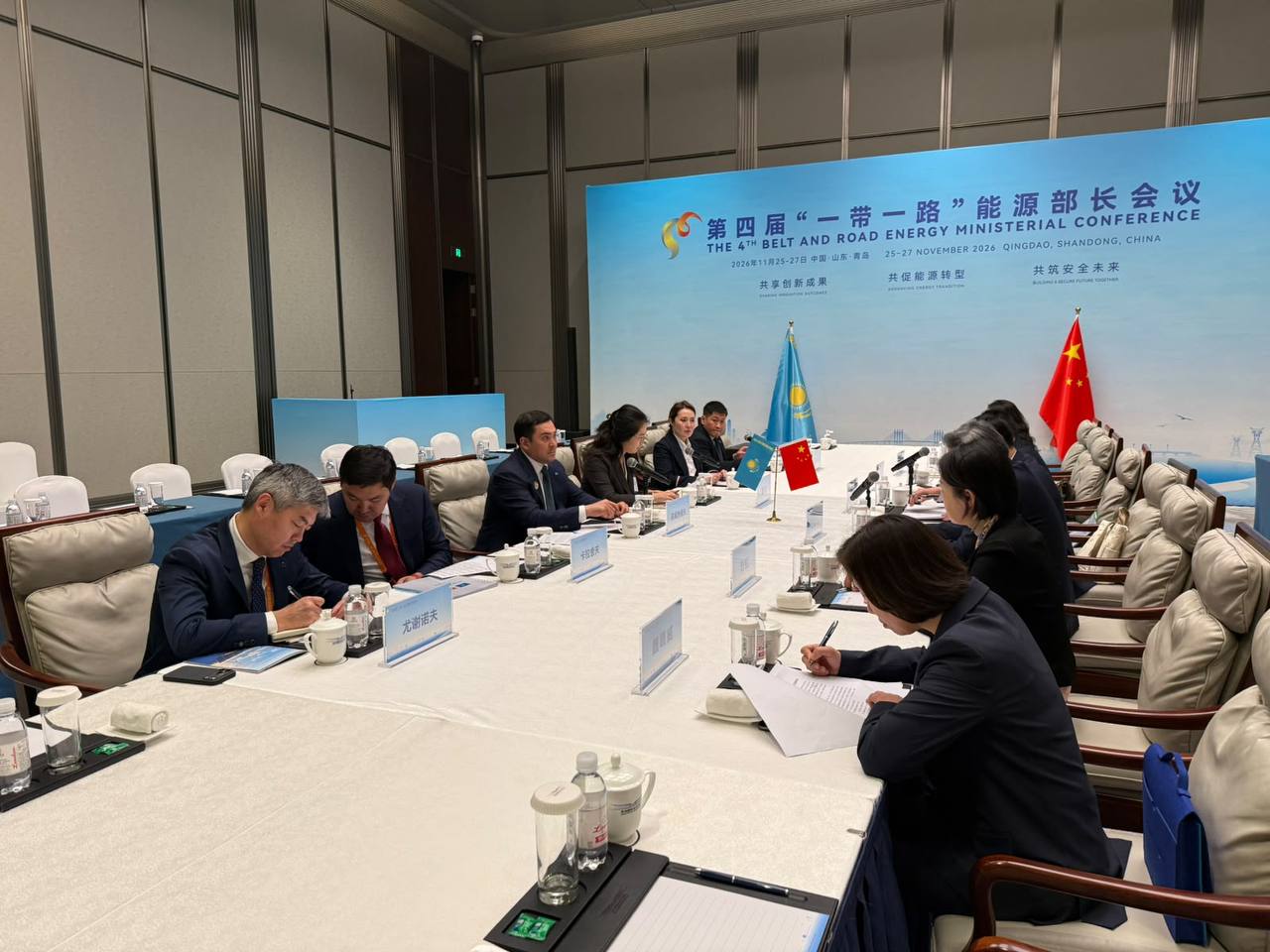

BAKU, Azerbaijan, November 26. Kazakhstan and China have discussed plans to double the annual processing capacity of the Shymkent oil refinery from 6 million to 12 million tonnes as part of efforts to expand bilateral energy cooperation, according to Kazakhstan's Ministry of Energy.
The issue was discussed at a meeting between Kazakh Energy Minister Yerlan Akkenzhenov and China's National Energy Administration (NEA) head Wang Hongzhi in Qingdao, on the sidelines of the 4th Belt and Road Energy Ministerial Conference.
The sides reviewed the completion of the project's feasibility study and its transition to the front-end engineering design (FEED) stage, in coordination with the development of the Kazakhstan-China oil pipeline system.
"Kazakhstan and China are consistently developing cooperation in the energy sector. Alongside the reliable transportation of energy resources, we are focusing on deeper processing of raw materials. This includes the project to expand the Shymkent refinery to 12 million tonnes, the construction of a polyethylene plant, as well as the introduction of coal chemistry and clean coal technologies, drawing on our reserves of 33.6 billion tonnes," Akkenzhenov said.
The talks also covered oil and gas processing, gas transmission infrastructure, renewable energy generation, clean coal technologies, and the reliability of energy transportation.
The sides noted the stable operation of the Atasu-Alashankou oil pipeline, which transported 9.5 million tonnes of crude oil in January-October 2026. They also emphasized the importance of long-term agreements to ensure guaranteed pipeline capacity utilization and transit flows to China through 2034.
Regarding natural gas, the discussions focused on developing gas transportation infrastructure, strengthening regional transit potential, and coordinating cross-border routes.
The sides also reviewed renewable energy projects under an intergovernmental agreement between Kazakhstan and China, which provides for the construction of solar and wind power plants with a combined capacity of 1.8 GW. They discussed the possibility of expanding the portfolio of joint green energy projects by a further 1 GW.
Renewable energy sources account for 8.5% of Kazakhstan's electricity generation.
Following the meeting, the heads of the two countries' energy authorities agreed to maintain regular working contacts to promptly address issues related to joint projects.


