


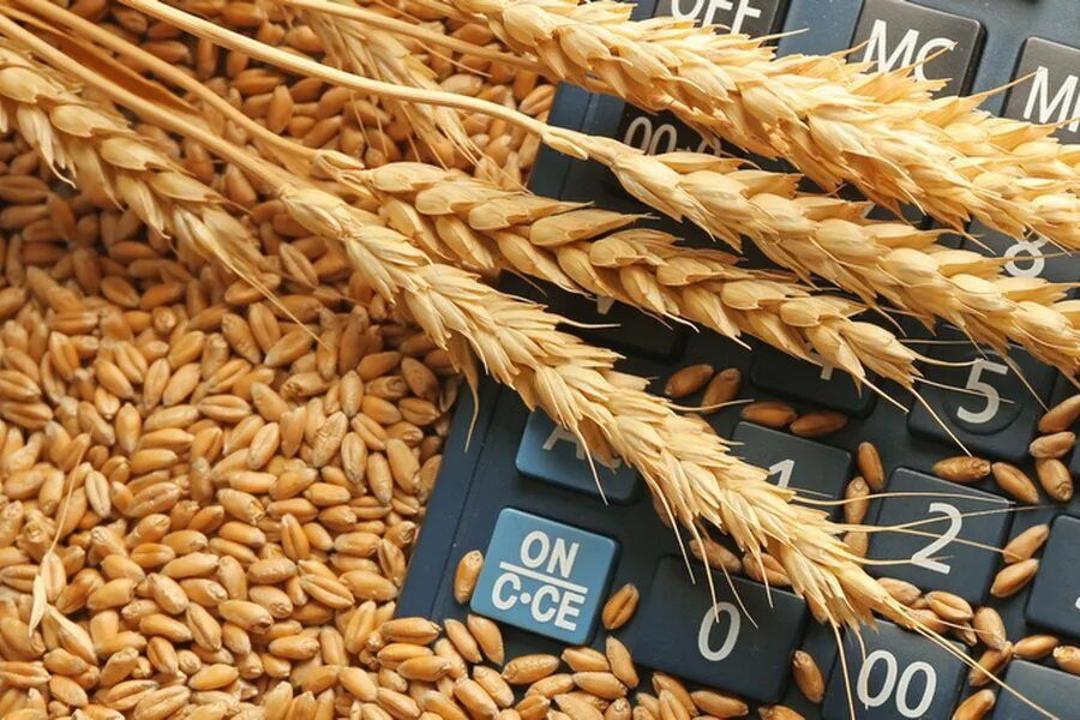

BAKU, Azerbaijan, July 20. Kazakhstan has expanded its total sown area to 23.8 million hectares in 2026, up 180,000 hectares from the previous year, with oilseed crops occupying 4.3 million hectares, the government's report says.
According to the report, grain and legume crops account for 15.8 million hectares, or 66.4% of the total sown area. Oilseed crops cover 4.3 million hectares (18.1%) and fodder crops 3.3 million hectares (13.9%). In the livestock sector, cattle numbers rose 5.8% to 9.3 million head, horses grew 7.4% to 5 million, and camels increased 3.6% to 312,000. Meat production in carcass weight grew 5.5% to 559,000 tonnes, cow's milk output rose 2.4% to 1.9 million tonnes, and egg production grew 7.9% to 2.4 billion units.
Trend's analysis shows that the expansion of oilseed area to 4.3 million hectares reflects a structural shift in Kazakhstan's cropping pattern that has accelerated sharply over the past four years. In 2025, Kazakhstan ranked as the world's sixth-largest exporter of sunflower oil and the second-largest supplier to the Chinese market, with oilseed export revenues reaching a record $963 million - four times the 2021 level. The government's 2026–2028 roadmap for the oil and fat industry targets a further 60% increase in export revenues, aiming to exceed $1.5 billion and break into the global top three for sunflower oil exports. Sunflower oil output has already increased 2.3 times compared to 2021, surpassing 752,000 tonnes in 2025.
Kazakhstan's annual oilseed processing capacity stands at five million tonnes, and the country ranks among the top three suppliers of sunflower meal to the EU and is among the world's top ten exporters of sunflower oil. It is also the EU's second-largest supplier of durum wheat. The 4.3 million hectares under oilseeds in 2026 represents roughly 86% of the total processing capacity utilization ceiling - meaning further expansion of processing investment, such as the $1.5 billion Fufeng corn deep-processing plant and the $650 million Dalian Hesheng grain facility announced under the 2026–2028 agri-investment roadmap, will require continued acreage expansion to remain fully supplied with domestic raw materials.
The livestock data show a broad-based expansion rather than concentration in any single species. Horses growing 7.4% - the fastest rate in the dataset - is notable: Kazakhstan has the world's largest horse population relative to its size, and horse meat and kumys (fermented mare's milk) are significant export categories to Central Asian and Russian markets. The 5.5% growth in carcass-weight meat production, combined with growing pig (10.3%) and poultry (1.3%) numbers, points to a diversifying protein supply base. However, 60% of meat and 80% of milk production still come from household and family farms - a structural fragmentation that limits productivity gains and export competitiveness. The government is developing new agricultural cooperation legislation to encourage farmers to consolidate into cooperatives, which would enable closer integration with large anchor export projects and improve the throughput of small farms into formal processing chains.
Additionally, investments from international financial organizations could significantly contribute to the overall trend. In a meeting with President Kassym-Jomart Tokayev in Astana, EBRD President Odile Renaud-Basso announced that the EBRD expects its total investment in Kazakhstan to reach 1.3 billion euros this year.
"Kazakhstan is one of the EBRD's most important countries of operation. This year, we are seeing a very high level of investment activity. We have already signed agreements for projects worth more than $1 billion. Taking into account the projects currently under preparation, we expect our total investment this year to reach 1.3 billion euros. This will be the highest annual investment volume in the history of the EBRD's operations in Kazakhstan," Renaud-Basso said.
Meanwhile, EBRD Director and Head of Energy Eurasia (covering Türkiye, the Caucasus, Central Asia, and Mongolia), Sule Kilic, said in an exclusive interview with Trend that the bank has mobilized 4.2 billion euros for Central Asia's energy sector and financed more than 6.5 GW of renewable energy capacity across the region, helping integrate solar and wind generation into national power systems.
Speaking about Kazakhstan, Kilic said the country's national grid operator, KEGOC, remains one of the EBRD's key partners.
"Since the 1990s, we have supported seven KEGOC projects, most recently the Integration of the West Zone Project, which connects the previously isolated western power zone with the rest of the country via more than 600 kilometres of high-voltage transmission lines," she said.



