



BAKU, Azerbaijan, December 6. Uzbekistan is developing rapidly, and along with this growth, the pressure on its energy system continues to rise. Economic expansion, the launch of new industries, the development of digital projects, and population growth are steadily increasing electricity demand year by year. The previous energy supply model, formed decades ago, can no longer fully meet these growing needs. Under these conditions, it has become critically important for the country not only to expand capacity but also to transition to a more sustainable and modern energy system.
According to forecasts, Uzbekistan’s population will exceed 41 million by 2030, while the volume of the economy is expected to reach $200 billion. Government estimates show that electricity consumption in the country may reach around 120–130 billion kilowatt-hours by 2035. At the same time, despite an increase in power generation from 60 billion kWh in 2017 to around 85 billion kWh this year, the existing generation system is already operating at near-maximum capacity. More than 80 percent of electricity is produced at gas-fired power plants, making the system vulnerable to any fuel supply disruptions or seasonal demand peaks.
Addressing the challenges of this model, President Shavkat Mirziyoyev has repeatedly emphasized the need for a transition to a more sustainable energy system.
“If we continue to rely on natural gas and coal, their reserves may be depleted over time. This would be an unforgivable mistake for future generations,” the head of state noted, calling for accelerated reforms and expanded use of renewable energy sources.
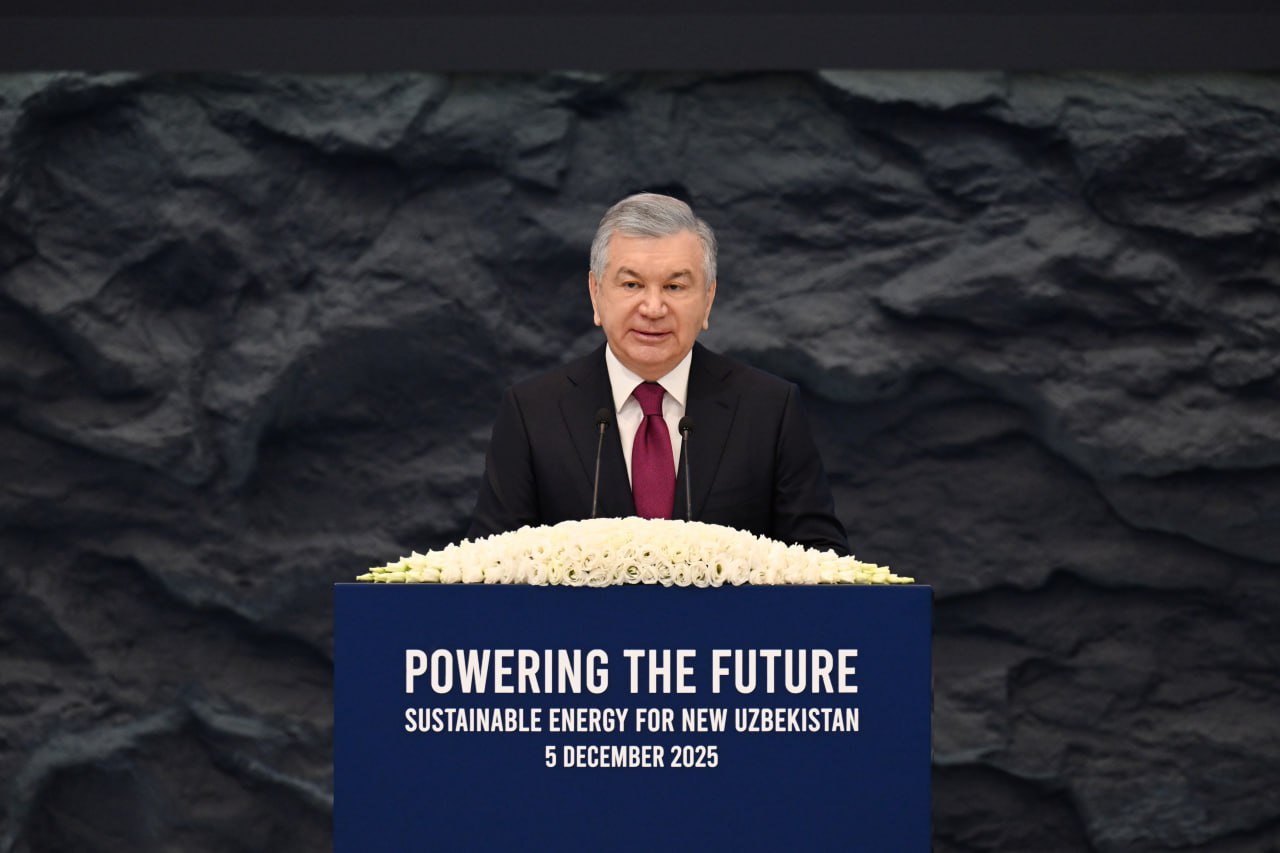
Against this backdrop, Uzbekistan has moved toward shaping a new energy course. Another confirmation of this shift was the conference “Sustainable Energy – a Confident Step into the Future of New Uzbekistan,” held recently in Tashkent. The event became an important milestone in updating the country’s energy policy.
Speaking at the conference, President Shavkat Mirziyoyev stated: “We have identified two key goals: to ensure reliable and uninterrupted energy supply for all sectors and regions, and to achieve this primarily through modern, environmentally friendly, and renewable energy sources.” This clearly outlined a strategy focused not only on increasing capacity but also on changing the structure of power generation.
Projects worth about $11 billion were presented at the conference, covering 42 facilities ranging from modern solar and wind power plants to energy storage systems and new transmission lines. The total capacity of renewable energy facilities under construction stands at 3.5 GW, and their commissioning will allow Uzbekistan to generate up to 15 billion kWh of green electricity annually. This will significantly reduce the burden on gas-based thermal power plants, strengthen energy system stability, and create a solid foundation for industrial growth and export expansion.
At the same time, the government is actively modernizing energy infrastructure. The construction of new substations and power lines, the development of storage systems, and the digitalization of grids help reduce losses and distribute loads more evenly across regions. In recent years, Uzbekistan has already commissioned about 9,000 MW of new capacity, attracted over $35 billion in energy investments, and formed a green certificate market, with more than 350,000 certificates already sold to enterprises. This indicates that the energy reform has taken on a sustainable and long-term character.
Overall, Uzbekistan has set highly ambitious targets. By 2030, the country plans to commission more than 17,000 MW of additional renewable energy capacity and increase the share of green energy in total power generation to 54 percent.
For comparison, Uzbekistan is pursuing its own energy transition path. Kazakhstan, the one of the largest economy in Central Asia and key regional energy players, is moving toward energy transition more gradually due to the high share of coal-based generation and the complexity of its energy system. According to expert estimates, the share of renewables in Kazakhstan’s energy mix may reach about 15 percent by 2030. Uzbekistan, in contrast, aims to reach 40–54 percent much faster, relying on a more flexible regulatory environment, active use of public-private partnership mechanisms, and strong investment inflows – nearly $6 billion has already been attracted into renewable projects in recent years. In practice, the two countries are following different energy transition models: Kazakhstan through a gradual transformation of its coal base, and Uzbekistan through an accelerated shift toward renewables.
Another strategic direction is Uzbekistan’s entry into global capital markets. The establishment of Uzbekneftegaz’s subsidiary in the UAE, Orient Energy Limited (UNG Overseas), has enabled the country to access new investment platforms. A recent agreement with the American corporation Cargill to attract up to $3 billion, with the possibility of increasing it to $5 billion, helps ease pressure on the state budget and accelerate the construction of new capacities. Essentially, this marks a transition to a new model of energy financing based on global financial instruments.
It is precisely this active engagement with international investors that gives Uzbekistan real potential to implement its large-scale energy transformation. According to a recent Boston Consulting Group (BCG) study, Uzbekistan faces a unique “window of opportunity” over the next 5–10 years to attract major investments and accelerate economic growth. As noted by BCG Managing Director Andrey Navitski, Uzbekistan was among the first countries in the region to open its economy to international partners, which has already provided a noticeable boost to GDP growth.
The implementation of these plans is further confirmed by concrete investors. Saudi company ACWA Power remains one of the most active players in Uzbekistan’s energy sector. “Uzbekistan’s energy balance is becoming more and more environmentally friendly each year,” said John Zaidi, the company’s head in the country. “This year alone, we added more than 2,500 megawatts to the grid, and the Vision 2030 target of achieving 54 percent renewable energy is extremely important for us.”
As a result, energy is becoming one of the key pillars of Uzbekistan’s further economic growth. The rapid commissioning of new capacities, the development of renewable energy, and the steady inflow of investment are creating a solid foundation for the country’s sustainable development.
In the coming years, stable energy supply will largely determine the pace of industrial development, the digital economy, and export-oriented industries. If current trends continue, Uzbekistan is steadily strengthening its position as one of the most dynamic energy markets in the region.



