


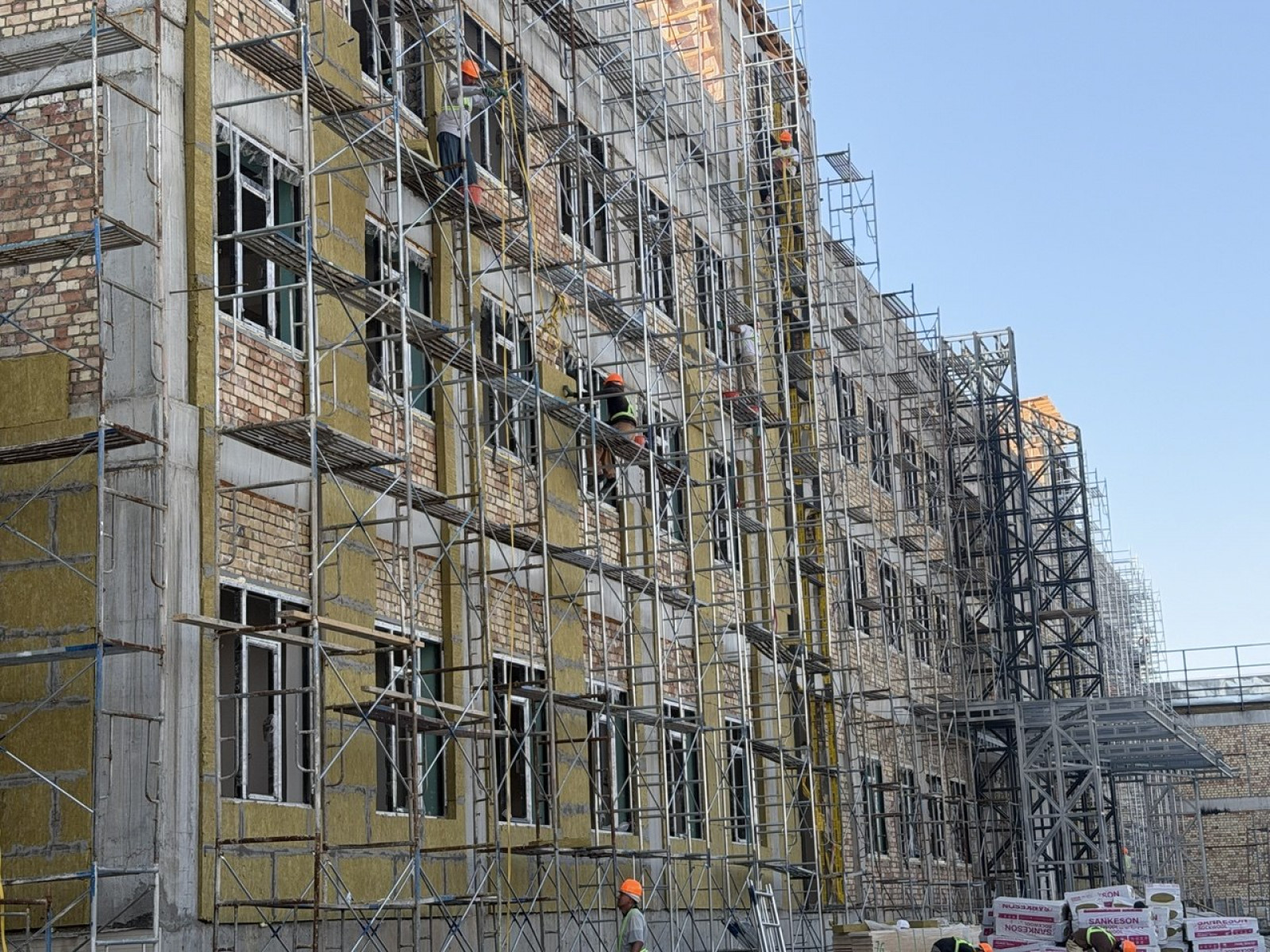

BAKU, Azerbaijan, July 29. Georgia's Residential Property Price Index rose 4.9% year-on-year in Q2 2026, with prices now 63.8% above the 2020 average, the National Statistics Office shows.
The RPPI covers the new residential property market in Tbilisi, including both flats and detached houses. On a quarter-on-quarter basis, the index rose 0.9% from Q1 2026. Flats rose 4.8% year-on-year and 0.9% quarter-on-quarter; detached houses gained 5.5% year-on-year and also 0.9% on the quarter.
Trend's analysis shows that the 4.9% annual growth rate continues a pattern of deceleration from the sharp price spikes of 2022-2023, when Tbilisi's new-build market absorbed a large wave of Russian and Belarusian buyers following the onset of the conflict in Ukraine. Annual growth in that period is estimated to have peaked at 35-40% in 2022 before moderating to 15-20% in 2023 and 8-10% in 2024. The Q2 2026 figure of 4.9% represents an approximate normalization toward a sustainable growth range, though Trend's calculation shows this is still meaningfully above Georgia's consumer price inflation - currently running at approximately 3.2% - meaning new-build property continues to appreciate in real terms, at roughly 1.7% per year after inflation.
0.9% QoQ annualizes to approximately 3.6%, which is below the 4.9% annual rate. This means the pace of price growth in recent quarters has been slower than the year-ago average - confirming that deceleration is ongoing rather than having bottomed out.
Based on the 63.8% cumulative increase since 2020, Trend's calculations imply that Tbilisi new-build prices that averaged approximately $950 per square meter in 2020 would now be in the range of $1,550-1,560 per square meter for the index-covered segment - consistent with market data showing central Tbilisi new developments priced at $1,200-2,500 per square meter depending on location and specification. The compound annual growth rate since 2020 is 8.6%, which over six years has produced a 63.8% cumulative appreciation.
Detached houses outpacing flats on the annual comparison (5.5% vs 4.8%) is a nuanced signal. In a normalizing market, house prices typically show more volatility because the segment is thinner and more sensitive to the composition of transactions in any given quarter. However, sustained house-price outperformance can also reflect demand from wealthier buyers - including foreign investors - seeking larger family units, a segment where Tbilisi has seen growing interest from Middle Eastern and diaspora buyers as the Russian buying wave has subsided.
The overall picture is of a market that has absorbed a large external demand shock, repriced significantly, and is now settling into a steadier appreciation trend anchored more by domestic income growth and tourism-driven rental demand. Rental yields in Tbilisi for short-term accommodations remain attractive at 6-8% gross, supported by strong growth in inbound tourism, which creates a floor under investor demand for new-build units even as the pace of price appreciation moderates.



