



TASHKENT, Uzbekistan, March 13. Uzbekistan and Kazakhstan engaged in detailed discussions on key aspects of their bilateral cooperation concerning water resources, Trend reports via the Kazakh Embassy in Tashkent.
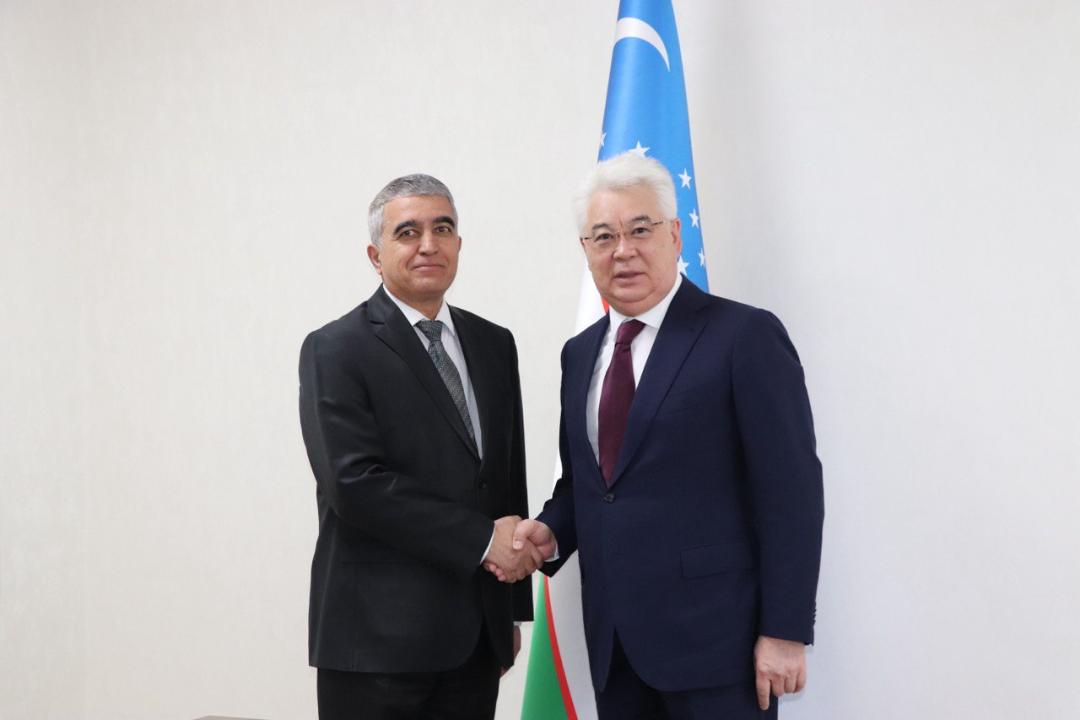
The meeting was held between Uzbekistan’s Minister of Water Management, Shavkat Khamraev, and Kazakhstan’s Ambassador to Uzbekistan, Beybut Atamkulov. Topics included preparations for the Regional Environmental Summit and the upcoming session of the Heads of State of the International Fund for Saving the Aral Sea.
The participants commended the signing of the agreement on the joint management and rational use of transboundary water bodies, stressing its significance for regional cooperation. Additionally, they underscored the importance of launching the task force on forecasting the flows of transboundary rivers, which was established following the second meeting of the High Intergovernmental Council of Kazakhstan and Uzbekistan in November 2025.
Special emphasis was placed on Kazakh President Kassym-Jomart Tokayev's initiative to establish an International Water Organization under the UN, designed to coordinate the efforts of all UN bodies working on water resource management.
Minister Shavkat Khamraev reaffirmed Uzbekistan's commitment to participating in the Regional Environmental Summit and sessions of the International Fund for Saving the Aral Sea, expressing full support for Kazakhstan’s initiatives in these areas.
Simultaneously, Uzbekistan completed its domestic procedures for ratifying the 2025 agreement with Kazakhstan on the joint management and sustainable use of transboundary water bodies. Signed on November 15, 2025, the agreement aims to bolster systemic cooperation, improve inter-agency coordination, and enhance the efficient use of water resources for sustainable socio-economic development.
The formal ratification was completed through a presidential decree issued on March 6, 2026. The effective management of transboundary water resources, based on mutual understanding, ongoing collaboration, and shared responsibility, positions the Kazakh-Uzbek partnership as a model of constructive regional cooperation.



