



ASTANA, Kazakhstan, February 12. The state loses about 800 billion tenge ($1.6 billion) annually in income tax due to business fragmentation because of the high threshold for VAT registration, said Kazakhstan's Deputy Minister of National Economy Azamat Amrin during a meeting with business representatives in Almaty, Trend reports.
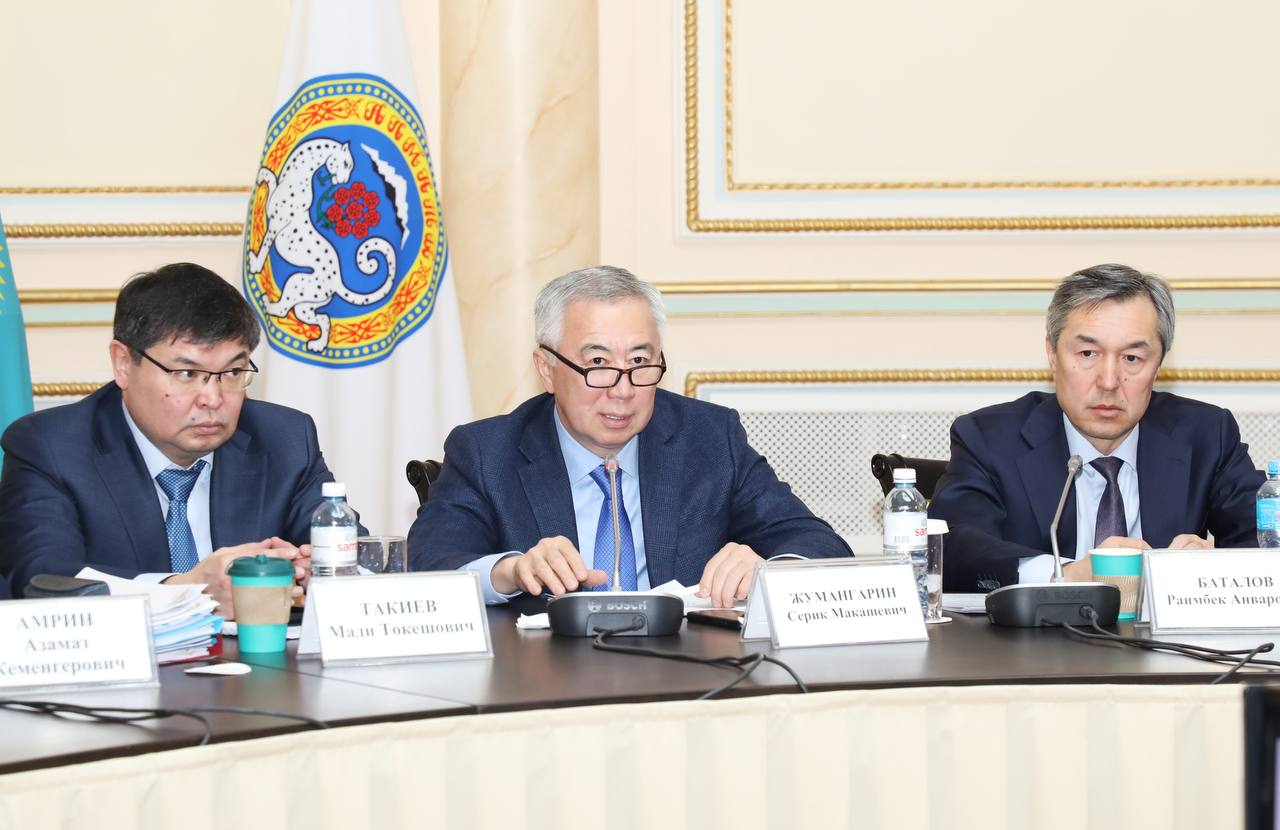
Deputy Prime Minister - Minister of National Economy Serik Zhumangarin met with business representatives in Almaty. The meeting was also attended by Finance Minister Madi Takiyev, Deputy Minister of National Economy Azamat Amrin, Chairman of the Board of the Atameken National Chamber of Entrepreneurs Raimbek Batalov, over 50 representatives of large and small businesses, the Light Industry Association, tourism companies, and other business industry associations, as well as independent experts.
Reducing the VAT registration threshold to 15 million tenge ($26.900) and narrowing the scope of activities under the special B2C regime were the key issues raised by entrepreneurs during the meeting. The thresholds set under the reform for registering taxpayers could become a barrier to the further operation of small businesses, leading entrepreneurs to either fragment their businesses or hide part of their activities to avoid taxation.
“In practice, we have medium-sized businesses, but legally we don’t. The introduction of these mechanisms - reducing the VAT registration threshold and simplifying the special B2C regime – is not a fight against entrepreneurship but a fight against the shadow economy. Those who pay taxes cannot compete fairly with those who do not. Without massive business support in the pursuit of fair taxation, government agencies will not be able to effectively fight the shadow economy,” Azamat Amrin stated.
Answers were also provided regarding the reduction of the labor fund (wages) burden. It was noted that the previously proposed reform regarding the cancellation of social tax payments and mandatory pension contributions by employers could take place if the VAT rate were raised to 20 percent. This would allow the state to collect revenues to cover social contributions instead of employers. However, with the proposed 16 percent VAT rate, social contributions are proposed to remain unchanged.
Representatives of various industries – including sports clubs, information security, medicine, light industry, tourism, and others – spoke at the meeting. At the conclusion of the meeting, Serik Zhumangarin thanked all participants for their constructive dialogue, noting that all proposals would be reviewed in working groups within the Government before the tax reform project is submitted to the Majilis for consideration.
It is also worth mentioning that today it became known that the Ministry of Finance of Kazakhstan is considering issues regarding the reduction of ineffective tax benefits and the differentiation of personal income tax (PIT) depending on individuals' income.
Earlier, Kazakhstan considered increasing the VAT rate from 12 percent to 20 percent, with the intention of reducing the burden on the labor fund to 30 percent. Additionally, Deputy Prime Minister – Minister of National Economy Serik Zhumangarin proposed lowering the VAT threshold to 15 million tenge ($26.900). During a meeting with business representatives on January 28, 2025, President Kassym-Jomart Tokayev stated that any new initiatives must be based on thorough analysis and a well-thought-out strategy, instructing the government to further explore the VAT rate issue.
On February 11, 2025, Serik Zhumangarin, during a government meeting, said that the VAT rate would be differentiated: 16 percent, 10 percent, 0 percent, and exemptions from VAT. It was also reported that a social infrastructure payment (SIP) instead of VAT is planned to be introduced in the construction sector. Prime Minister Olzhas Bektenov instructed to submit the Tax Code draft to the Majilis by February 20, 2025.



