


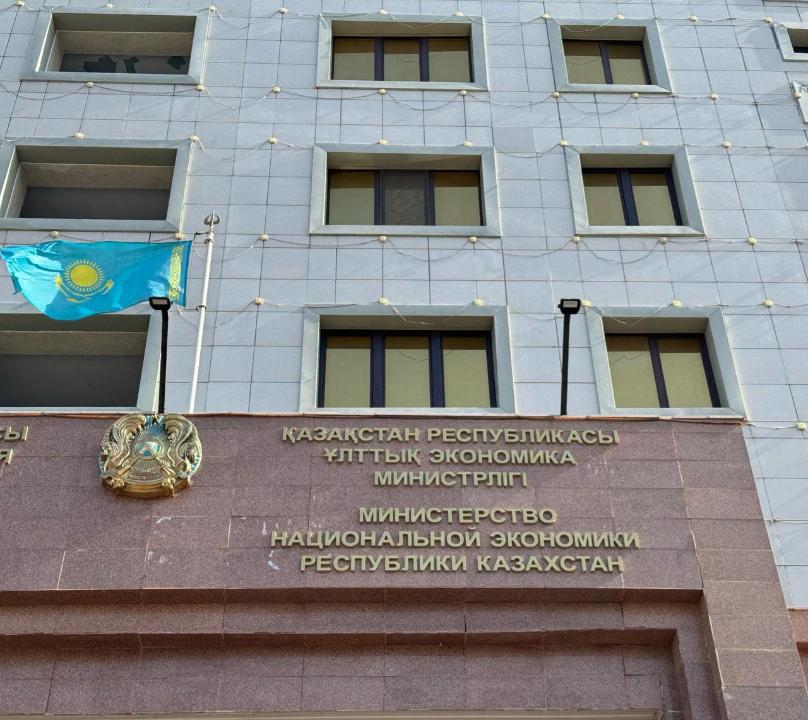

ASTANA, Kazakhstan, April 26. On April 25, the Ministry of National Economy of the Republic of Kazakhstan submitted the second package of amendments to the new and current Tax Code to the Mazhilis (Lower House of Parliament) of the Republic of Kazakhstan, Trend reports.
One of the key provisions of the amendments concerns the introduction of differentiated individual income tax rates depending on workers' earnings. Citizens of Kazakhstan with lower incomes will pay individual income tax (IIT) at a lower rate compared to higher-paid workers.
“The proposal includes optimization of deductions that citizens can make for expenses related to medicine, education, social contributions, and so on. A unified basic deduction of 30 MCI (minimum calculation indicator) per month is introduced instead of the current 14 MCI. Additionally, all other deductions are eliminated, simplifying the work for accountants and reducing the need for individuals to collect unnecessary supporting documents for tax authorities,” the press service of the Ministry of National Economy of Kazakhstan stated.
Moreover, there are also plans to introduce taxation on income from government and quasi-government securities. This will serve as an additional source of revenue for the state budget.
The ministry noted that, in line with international practices, excise taxes are being introduced on energy drinks as part of an effort to improve public health.
Meanwhile, as part of the reform of the tax system in the oil sector, a "tax maneuver" is being proposed, which involves redistributing the tax burden from export payments, including the rent tax, to a tax paid during oil extraction. This should simplify the system and stabilize tax revenues for the budget.
A separate block of amendments is focused on strengthening tax administration, including the revision of the control functions of tax authorities and clarifying mechanisms for collecting and monitoring tax obligations.
“Furthermore, the second package includes changes to several related laws, including those concerning housing and utilities, investment policy, and the procedures for social payments. It is also proposed to strengthen responsibility for violations in the areas of mandatory social and medical insurance, as well as when applying special tax regimes. This is part of a broader strategy to enhance tax discipline in the country,” the ministry added.
In total, the government has proposed 71 amendments to the draft new code and related legislation, as well as 67 amendments to the current Tax Code of Kazakhstan in both packages.



