


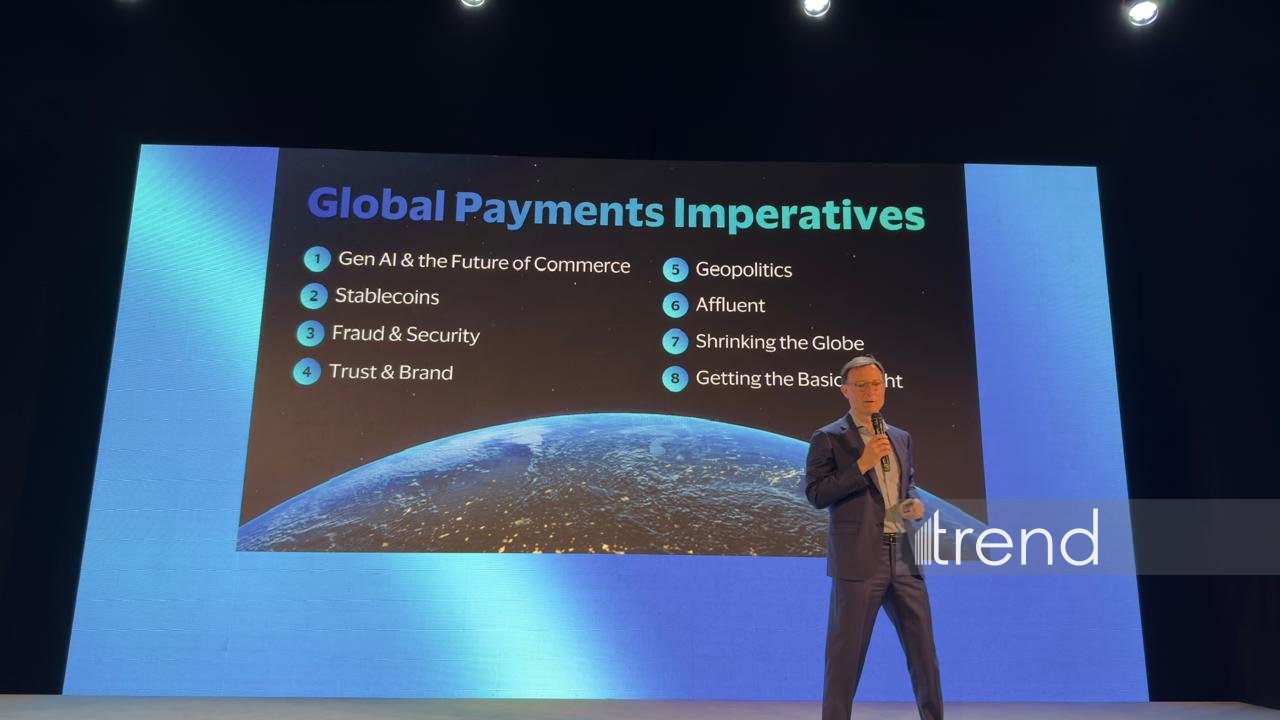

PARIS, France, June 30. Visa predicts AI agents to drive next wave of digital commerce.
"Agentic commerce, in which AI agents will make purchases on behalf of users, will be the next stage in the development of digital commerce and payments," Visa's Group President Oliver Jenkyn said at a briefing held as part of the Visa Payments Forum in Paris, Trend's special correspondent reports from the event.
According to him, artificial intelligence has the potential to significantly accelerate the digitization of payments worldwide, though a high degree of uncertainty still surrounds generative AI.
“During closed-door meetings with executives from major companies around the world, I constantly hear the same questions. Companies are afraid of falling behind in the development of artificial intelligence; they’re trying to understand where it actually delivers economic benefits; they’re interested in the extent to which Visa’s solutions already use AI; and, finally, they’re asking how to prepare for the era of agent-driven commerce,” Jenkyn said.
In his view, intelligent agents will be able to make purchases independently on behalf of both consumers and businesses in the very near future.
“I am absolutely convinced that in the coming years, agents will purchase goods and services on our behalf. It is not yet clear who exactly will develop such solutions, on which platforms they will operate, or which categories of purchases they will cover first. But this area will develop rapidly,” he noted.
As an example, Jenkyn described a possible scenario for using such services. According to him, users will be able to provide the AI with secure payment data, information about their preferences, purchase history, and loyalty programs, as well as set restrictions — for example, specifying approved merchants or spending limits. This will allow artificial intelligence to make decisions that take the owner’s individual preferences into account.
At the same time, Jenkyn emphasized that the widespread adoption of agent-based commerce will require resolving several technological, behavioral, and legal issues.
“Today, the internet is designed for people, not for AI agents. We need new standards, protocols, and interfaces that will allow agents to interact safely with digital commerce. In addition, users will need time to get used to the idea that artificial intelligence can make purchases. It is equally important to define liability rules in cases where AI makes a mistake while making a purchase,” he said.
Despite the existing challenges, Jenkyn expressed confidence that agency commerce will become just as significant a milestone in the industry’s development as e-commerce and mobile commerce were in the past.
“It’s inevitable. Agency commerce will radically change how consumers interact with digital commerce. If the industry starts investing in the necessary technologies and infrastructure now, these changes will benefit all market participants,” he concluded.



