


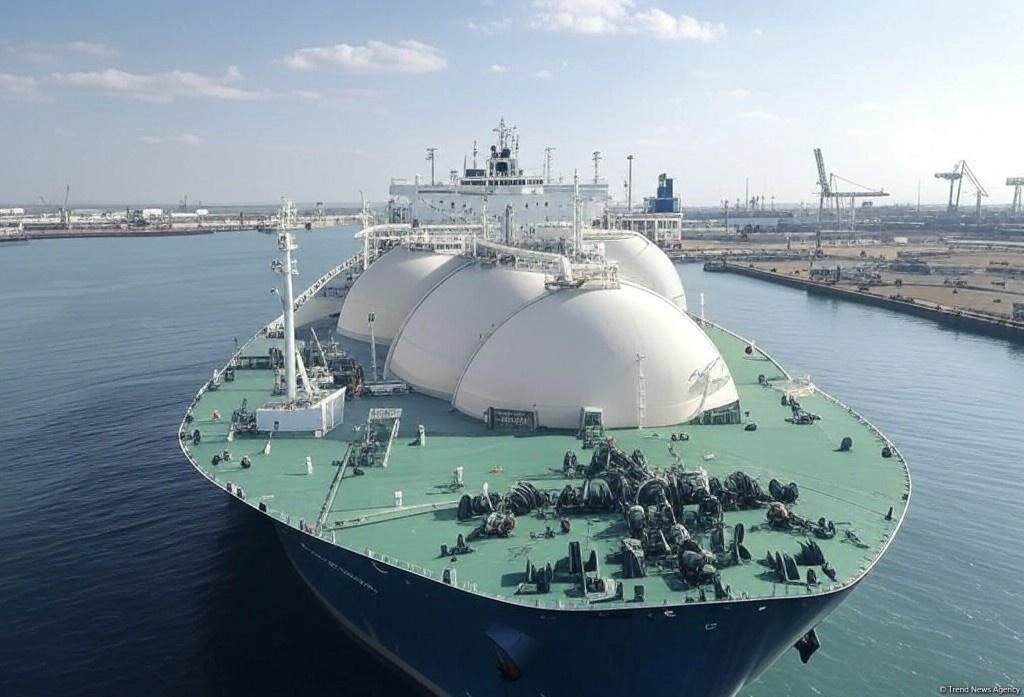

BAKU, Azerbaijan, July 23. OECD Europe’s primary natural gas supply rose by an estimated 5% year-on-year in the first half of 2025, driven largely by a surge in LNG imports that offset declines in piped gas deliveries, according to the latest outlook from the International Energy Agency (IEA), Trend reports.
LNG shipments to Europe increased by 25%, reaching a record 92 billion cubic meters (bcm), boosting LNG’s share in Europe’s gas supply from 33% to nearly 40%.
The United States solidified its position as Europe’s leading LNG supplier, increasing deliveries by 45% and accounting for nearly 60% of Europe’s LNG imports in this period. Russian LNG imports to Europe fell slightly by 4%, though Russia remained the second-largest LNG supplier, mainly serving Belgium, France, and Spain.
Piped gas supplies from Norway declined by 4.5% amid unplanned outages and maintenance, while non-Norwegian domestic gas production stayed largely flat. The UK’s output fell by about 6% due to aging North Sea fields, but this was offset by strong production growth in Denmark, Italy, and Türkiye. Denmark’s output surged 70% following redevelopment of the Tyra field, while Türkiye saw a similar increase driven by the Sakarya field.
Russian piped gas exports to the European Union dropped 45% due to the halt of transit via Ukraine, with the share of Russian piped gas in Europe’s total demand falling below 8%. Pipelines from North Africa remained steady, though Azerbaijani gas flows via the TAP pipeline declined by 7.5%.
The IEA outlook assumes no restart of Russian gas transit through Ukraine, translating into a 13 bcm reduction in Russian piped deliveries to the EU compared to 2024. Lower supplies from Russia and Norway, combined with increased storage needs, are expected to push Europe’s LNG imports up by around 25% in 2025. In 2026, LNG imports are forecast to decline slightly as demand eases and Norwegian piped gas deliveries rise.



