


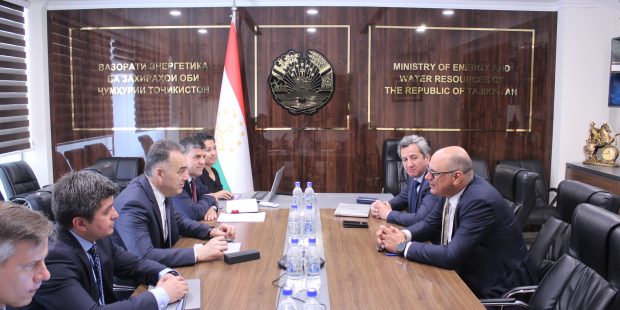

BAKU, Azerbaijan, July 9. Tajikistan and the EBRD discussed financing for projects to reduce electricity losses and improve energy efficiency.
This was announced in a statement published by the press service of the Tajik Ministry of Energy and Water Resources, following the meeting between minister Daler Juma and EBRD Head of Office in Tajikistan Holger Wiefe.
"The sides discussed attracting concessional financing for projects aimed at reducing electricity losses and improving the efficiency of the country's energy system," the ministry said.
According to the ministry, the meeting also focused on expanding cooperation in the energy sector and implementing key infrastructure projects.
Meanwhile, the EBRD has been one of Tajikistan's largest institutional investors since beginning operations in the country in 1992. To date, the bank has invested more than €1 billion through over 190 projects, with sustainable infrastructure, energy security and private sector development among its main priorities. In the energy sector, the EBRD has financed electricity transmission and distribution upgrades, hydropower rehabilitation and projects aimed at improving the efficiency of the national grid.
In April 2026, the EBRD approved a financing package of nearly €50 million to support electricity loss reduction in Tajikistan. The project includes an EBRD sovereign loan co-financed with a €15 million European Union grant under the Asia Pacific Investment Facility and targets modernization of power distribution infrastructure, installation of modern equipment and improvements in grid reliability. The bank is also preparing the Kulob Distribution Grid Reinforcement project, which builds on earlier investments in Khatlon Region to improve voltage stability and further reduce technical losses.
Improving electricity efficiency has become increasingly important for Tajikistan as domestic demand continues to grow alongside major hydropower and transmission investments. While the country generates almost all of its electricity from hydropower, the government is prioritizing upgrades to aging distribution networks to reduce losses, improve supply reliability and strengthen the power system ahead of increased regional electricity trade through projects such as CASA-1000.



