


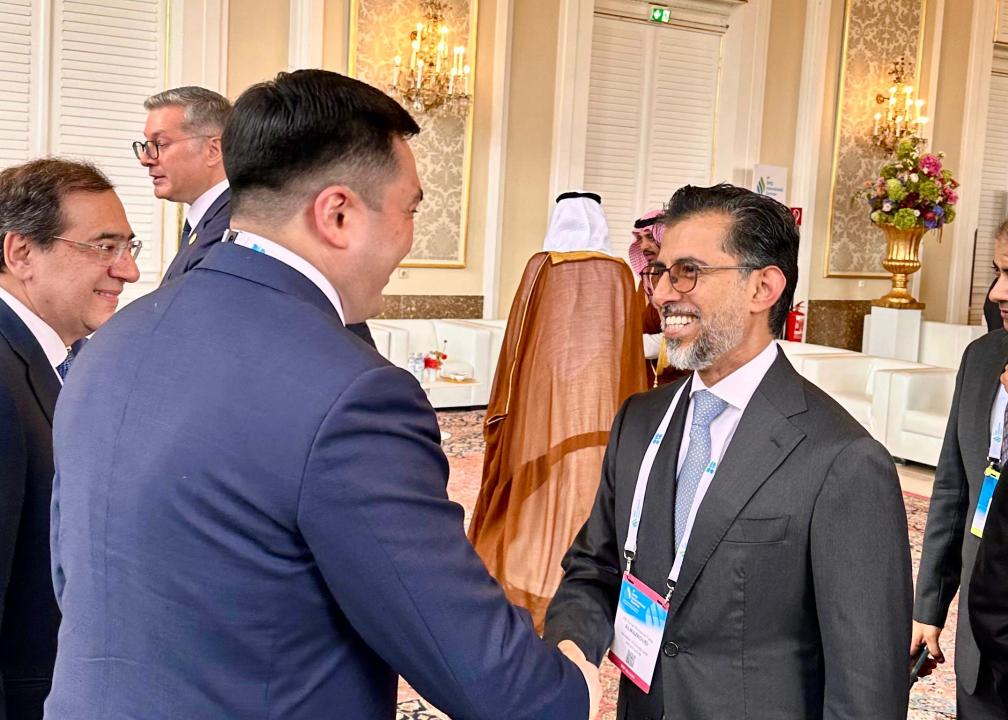

ASTANA, Kazakhstan, July 10. On the sidelines of the OPEC International Seminar, a meeting took place between Kazakhstan’s Minister of Energy Yerlan Akkenzhenov and the UAE Minister of Energy and Infrastructure Suhail Al Mazrouei, Trend reports, citing the Ministry of Energy of Kazakhstan.
The ministers expressed profound appreciation for the synergies inherent in bilateral cooperation, characterizing it as a paradigm of excellence. The focal point of the discussions revolved around the advancements in executing the premier collaborative initiative—the establishment of a 1 GW wind energy facility in the Zhambyl region, featuring the involvement of the prominent Emirati enterprise Masdar.
In the course of the meeting, Akkenzhenov emphasized that the Government of Kazakhstan is providing and will continue to provide comprehensive support to this strategic project, which enjoys unprecedented preferences. As an example, he noted the ratification of the intergovernmental agreement on the project in the shortest possible time, which is clear evidence of Kazakhstan’s commitment to its obligations.
Al Mazrouei, in turn, expressed gratitude for the favorable conditions created and confirmed Masdar’s intention to implement the project according to the approved schedule.
“Our partnership with the UAE and specifically with Masdar is a story of great success and trust. This project is the largest in the field of renewable energy in our region and lays the foundation for further deepening cooperation in ‘green’ energy. We consider the UAE as our key strategic ally in achieving our goals of decarbonizing the economy,” said Yerlan Akkenzhenov.
The UAE-based company Masdar is implementing a large-scale project in Kazakhstan to build a 1 GW wind power plant in the Zhambyl region. The project includes a 300 MWh energy storage system and involves investments of $1.4 billion. The plant is expected to generate up to 3.4 billion kWh of electricity annually, which will allow reducing CO₂ emissions by 2 million tons each year. Construction will begin in 2026, with commissioning planned for 2028.



