


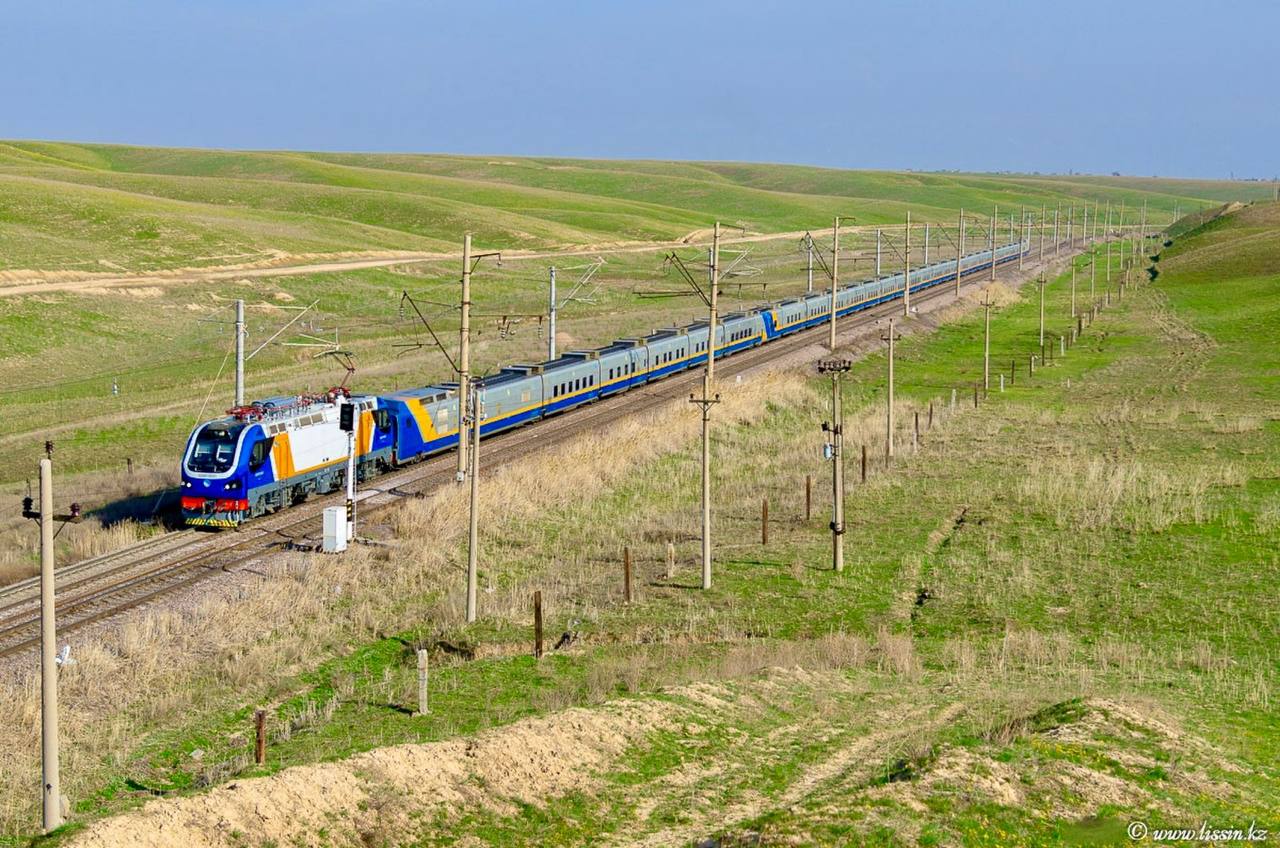

ASTANA, Kazakhstan, August 20. Kazakhstan Railways held a meeting with the country's largest freight shippers, including Bogatyr Komir LLP, ERG, Shubarkol Komir JSC, Qarmet JSC, Shubarkol Premium LLP, Tranco PL LLP (Kazakhmys), Kazphosphate LLP, and other companies, Trend reports via Kazakhstan Railways.
The participants discussed transportation results for the first half of the year and plans for the remainder of 2025.
In the course of the meeting, it was mentioned that transport volumes showed growth in the first half of the year in Kazakhstan. Export volumes increased for coal (+1.9 million tons), grain (+2 million tons), fertilizers (+105,000 tons), oil (+67,000 tons), and other goods (such as compound feed, vegetable oil, and asbestos) (+745,000 tons).
A key topic of the meeting was the pilot implementation of the GU-12 application verification project within the ASU DKR system (Automated System for Contractual and Commercial Operations), which began on June 20. Full-scale implementation of the system is expected to improve transparency and efficiency in the use of the railcar fleet. All operators and railcar owners are expected to be connected to the project.
Stakeholders were subsequently briefed on strategic blueprints
for expansive infrastructural undertakings: the augmentation of
rail pathways on the Aksu-Degelen corridor, the deployment of
automated block signaling systems along the
Zhezkazgan-Saksayulskaya route, the establishment of overtaking
loops on the Aiteke Bi-Tobol segment, and comprehensive
refurbishments across various network segments.
Kazakhstan Railways underscored its commitment to ongoing strategic
partnerships with freight logistics providers.
During the initial semester of 2025, the domestic freight logistics
landscape in Kazakhstan experienced a notable uptick in throughput
metrics across various commodities. Specifically, oil saw an
augmentation of 49,000 tons, while petroleum products surged by
685,000 tons. The construction materials sector reported an
increase of 496,000 tons, and grain volumes escalated by 540,000
tons. Additionally, the chemicals segment expanded by 44,000 tons,
fertilizers witnessed a rise of 373,000 tons, and non-ferrous
metals experienced a growth of 14,000 tons.



