


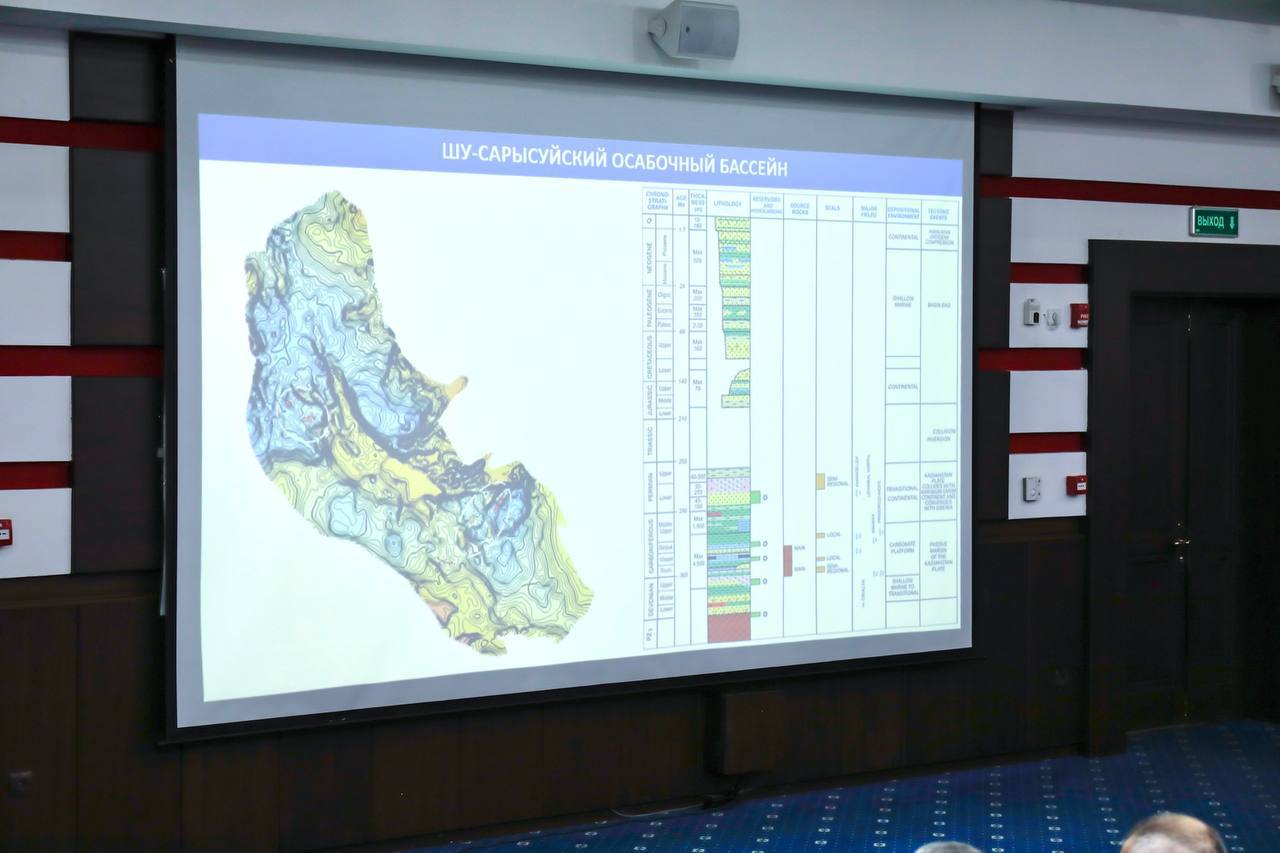

ASTANA, Kazakhstan, May 2. A geological and technical meeting was held in Kazakhstan’s Kyzylorda to discuss the results of drilling the first exploration well, PZ-1, at the "Turgai Paleozoic" site, Trend reports.
The meeting covered the current results of the study of the Paleozoic complex of the South-Turgai sedimentary basin, as well as the prospects for further geological exploration work.
According to KazMunayGas, the drilling results confirmed the presence of the Paleozoic sedimentary complex beneath the rocks historically considered as the surface of the "foundation" (gneisses), primarily revealing carbonate fractured reservoirs with interbedded shales, with a total thickness of about 2500 meters, which represents an important scientific discovery.
"The project to study the deeply buried deposits of the South-Turgai Basin is being implemented by KazMunayGas using its resources. The PZ-1 well is the first in the region aimed at exploring the potential of the sub-thrust deposits of the pre-Mesozoic complex. The drilling was carried out under complex geological and technical conditions and reached the designed depth of 5500 meters, with a final depth of 5585 meters," stated KazMunayGas.
Upon completion of the geochemical studies of the data obtained from the PZ-1 well, in conjunction with existing geological and geophysical data, a further program for geological exploration work will be determined, possibly including the study of the northern part of the South-Turgai, as well as the territory of the North-Turgai sedimentary basins.
In general, KazMunayGas will continue geological exploration work in the region, taking into account the confirmation of sedimentary rocks in the Paleozoic complex.
The Turgai Basin is a large geographical and geological structure that encompasses parts of Central Kazakhstan and Western Kazakhstan. During the Paleozoic period, this area was subjected to various geological processes that left a trace in the rocks and formations of the region.



