


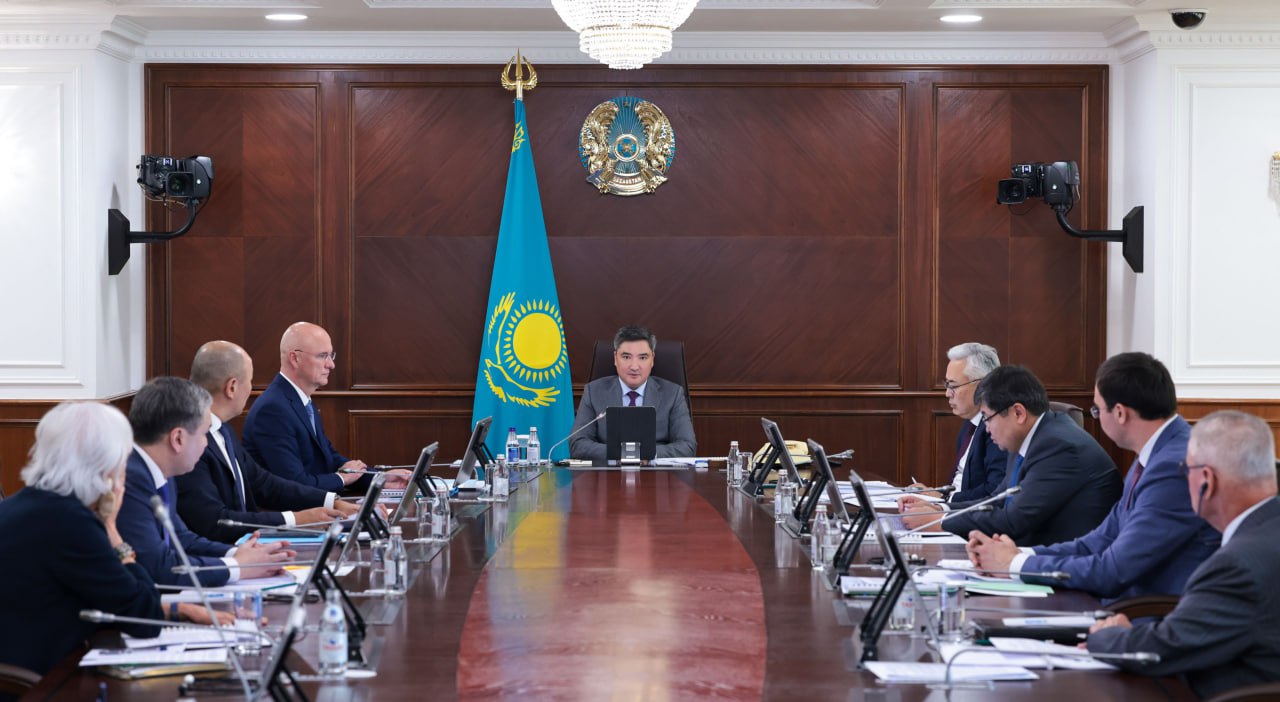

ASTANA, Kazakhstan, August 21. Under the chairmanship of Kazakhstan’s Prime Minister Olzhas Bektenov, the Board of Directors of National Managing Holding Baiterek held a meeting, Trend reports via the press service of the Prime Minister of Kazakhstan.
According to the Holding, over the seven months of 2025, Baiterek provided support to entrepreneurs totaling more than 4 trillion tenge (approximately $7.6 billion), which is 50 percent of the annual plan of 8 trillion tenge (approximately $15.2 billion).
Of this amount, 1.95 trillion tenge ($3.7 billion) was allocated to the development of small and medium-sized businesses (SMBs), including 657.5 billion tenge ($1.25 billion) for the agro-industrial complex; 1.64 trillion tenge ($3.1 billion) was directed to support large businesses that create a cluster of related small enterprises around them; and 414 billion tenge ($787 million) was allocated to exporters.
“As part of the Holding’s activities, by the end of the first quarter of 2025, the volume of purchases amounted to 6.8 billion tenge (approximately $12.9 million), of which 5.7 billion tenge ($10.8 million, or 84 percent) accounted for domestic manufacturers. This made it possible to prioritize national suppliers and support the development of the domestic market,” the statement said.
The Baiterek Holding has also been designated as the operator of the project to create the world-class Almaty Superski ski resort, which will become a new tourist attraction. The project will contribute to the diversification of the country’s economy and increase Kazakhstan’s competitiveness in the international tourism market.
Moreover, the Board of Directors approved the Holding’s development indicators for the period 2025 - 2028. The document provides for revenue growth, expansion of investment programs, and participation in new projects, including the development of tourism and infrastructure, which will help diversify the economy and create additional opportunities for business.
The implementation of new corporate governance standards, increased transparency in procurement procedures, and measures to prevent corruption risks contribute to strengthening the institutional sustainability of the Holding and improving the efficiency of the quasi-state sector system.



