


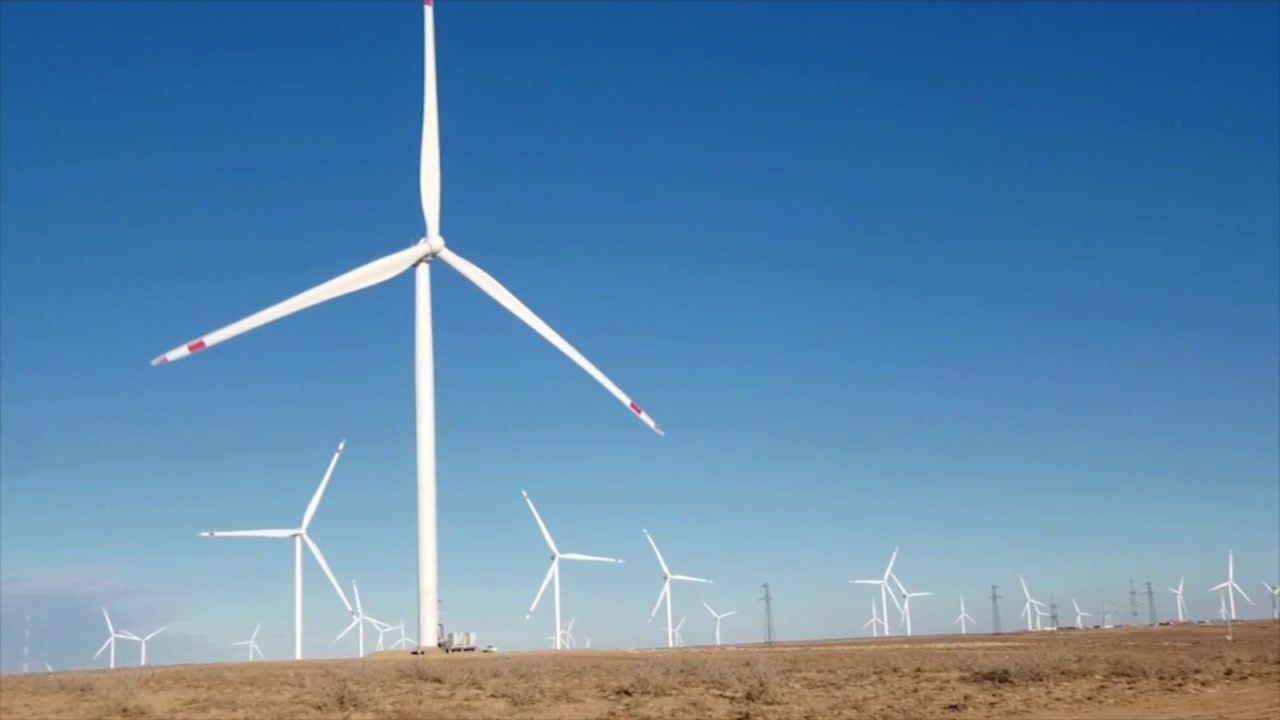

TASHKENT, Uzbekistan, June 2. In May 2025, Uzbekistan’s solar and wind power plants generated a record-breaking 1.104 billion kilowatt-hours (kWh) of electricity, marking the highest monthly output to date, Trend reports, citing the Ministry of Energy of Uzbekistan.
This accounted for 17 percent of the country’s total electricity generation for the month.
Uzbekistan currently operates 11 solar photovoltaic power plants and 3 wind power plants with a combined capacity of 4,067 megawatts, distributed across 10 regions.
This milestone is particularly notable given that in 2022, just two solar power plants produced 434 million kWh annually, rising to 576.9 million kWh in 2023. Overall, solar and wind power plants generated 4.86 billion kWh of electricity across Uzbekistan in 2023.
In May 2025, of the total renewable energy generated, 712 million kWh came from solar power plants and 392.1 million kWh from wind power plants.
As a result of this renewable energy output:
-
335.8 million cubic meters of natural gas were saved;
-
Emissions of more than 638,000 tons of carbon dioxide, 537 tons of nitrogen oxides, 6.7 tons of sulfur dioxide, and 100 tons of carbon monoxide were avoided.
Furthermore, combined generation from hydropower, solar, and wind plants in May reached 1.813 billion kWh, accounting for 28 percent of the month’s total electricity production.
This combined renewable generation led to:
-
Conservation of 551.4 million cubic meters of natural gas;
-
Prevention of emissions, including 1.048 million tons of carbon dioxide, 882.3 tons of nitrogen oxides, 11 tons of sulfur dioxide, and 165 tons of carbon monoxide.
To contextualize this data point, the generated electricity has
the capacity to energize roughly 1.813 million residential units
for a duration of five months or sustain 755,416 households over
the course of a full year, predicated on normative consumption
metrics.
As of May 12, 2025, the cumulative energy output from Uzbekistan's
photovoltaic and wind energy facilities since the commencement of
the fiscal year has achieved a milestone of 3 billion
kilowatt-hours.



