


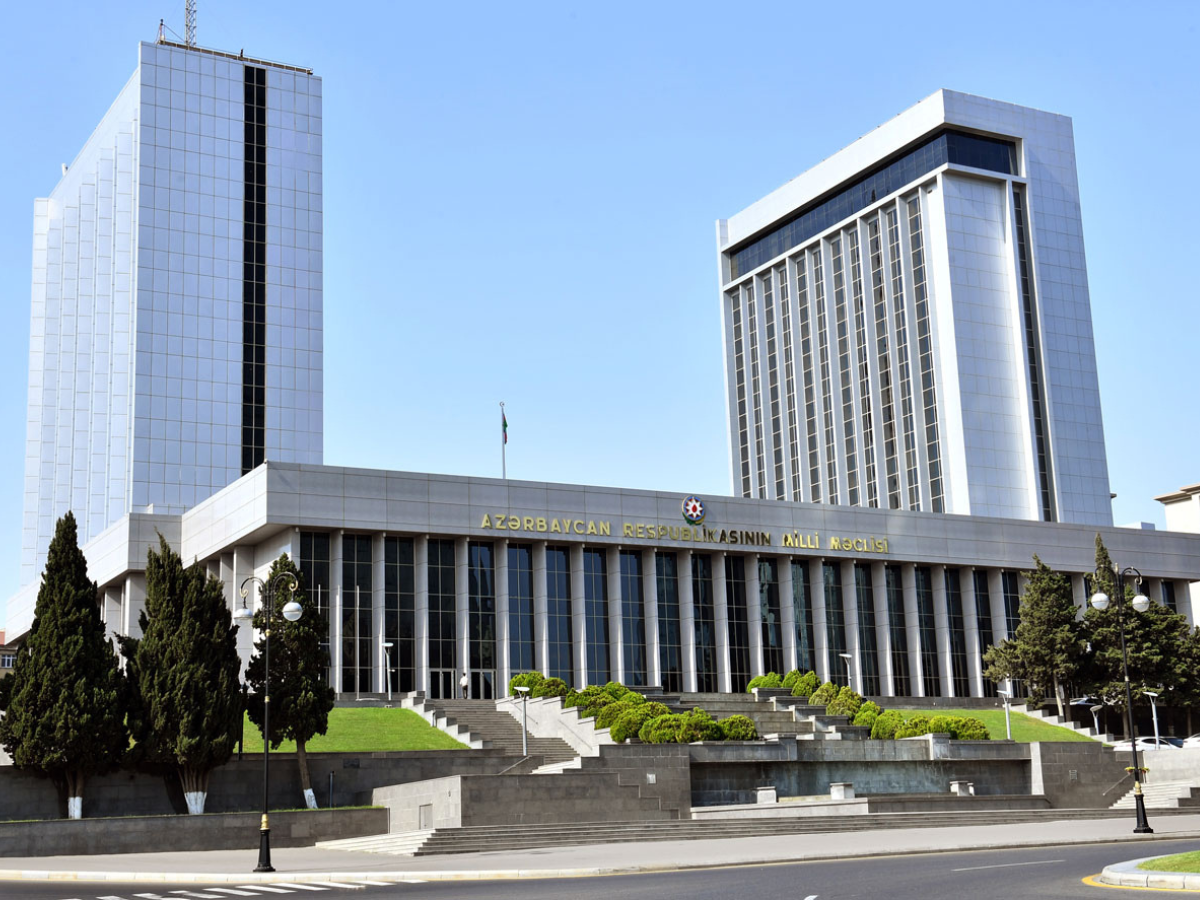

BAKU, Azerbaijan, December 8. The Azerbaijani Parliament's Committee on Natural Resources, Energy, and Ecology has held a scientific-practical conference on "The role of artificial intelligence in the fight against climate change," Trend reports.
Opening the event, Committee Chair Sadig Gurbanov spoke about the impact of energy production, transportation, industry, agriculture, and other factors on climate change. He emphasized that artificial intelligence (AI) is a powerful tool in reducing these impacts and highlighted the importance of studying AI’s influence on climate, its advantages, and further prospects.
Gurbanov noted that developing AI in Azerbaijan is a state-level priority and stressed the significance of implementing the Artificial Intelligence Strategy of the Republic of Azerbaijan for 2025–2028 (AI Strategy). He underlined that President Ilham Aliyev has consistently emphasized the leading role of science, innovation, high technologies, and AI in the country’s modernization. According to him, the AI Strategy is vital for strengthening research, improving information technologies and management mechanisms, ensuring infrastructure accessibility, and preparing qualified professionals.
Expressing gratitude to Speaker of Parliament Sahiba Gafarova for supporting the organization of the conference, Gurbanov discussed the role of the parliament in implementing the AI Strategy and its legislative initiatives in this sphere. He stated that the parliament plays an essential role in institutional development, shaping state policy, and fostering innovative governance. In the era of global competition, climate challenges, and digital transformation, he stressed the importance of a flexible and up-to-date legislative framework.
He noted that reforms in the AI sector, including the effective implementation of the AI Strategy for 2025–2028, require consistent and result-oriented work from the legislative branch. He emphasized the need for a modern legal framework regulating AI application, data management, ethical standards, cybersecurity, and environmental and climate-related responsibilities.
Speakers at the event included parliamentary committee chairs Zahid Oruj and Arzu Naghiyev, deputies Nigar Arpadarai, Rashad Mahmudov, Nigar Mammadova, Asif Asgarov, Azer Allahveranov, as well as Deputy Minister of Energy Elnur Sultanov, Deputy Minister of Digital Development and Transport Samaddin Asadov, Deputy Minister of Science and Education Firudin Gurbanov, Deputy Minister of Agriculture Ilhama Gadimova, Deputy Minister of Ecology and Natural Resources Vugar Karimov, academician and Vice-President of ANAS (Azerbaijan National Academy of Sciences) Arif Hashimov, academician Adil Garibov, Deputy Chair of the State Agency for Public Service and Social Innovations Jeyhun Salmanov, and Head of the Agricultural Artificial Intelligence Project of the Ministry of Agriculture Surkhay Novruzov.
Speakers noted that AI technologies have rapidly advanced in recent years and possess enormous potential in addressing climate change. They discussed innovations in early analysis of climate impacts, reducing natural disaster risks, protecting ecosystems, lowering carbon emissions, increasing energy efficiency, improving forecasting, and enabling sustainable agriculture. They also highlighted AI’s growing role in industrial transformation and climate action, including improving water and energy efficiency, predicting weather conditions, and reducing pollution.
Discussions covered international experience in AI applications and stressed the importance of establishing an Artificial Intelligence Academy in Azerbaijan. Participants spoke about forming AI-related data and infrastructure, the role of human expertise, data management, infrastructure improvement, and expected outcomes from applying AI models.
The importance of the AI Strategy was emphasized throughout the event, with speakers calling attention to awareness-raising efforts and public engagement regarding AI’s potential and risks.
Members of Parliament, representatives of the parliamentary administration, and officials from relevant institutions attended the conference.



