


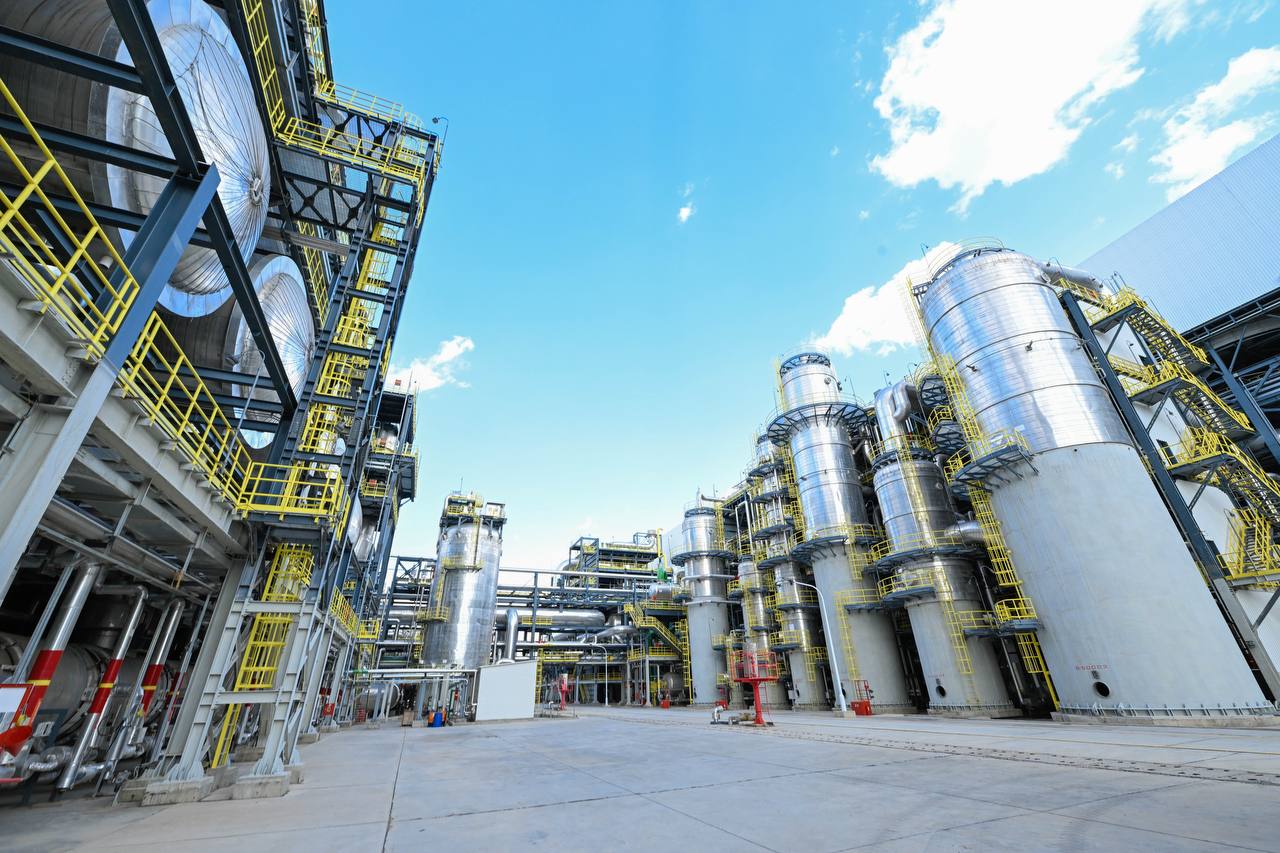

ASTANA, Kazakhstan, July 25. KMG PetroChem and Kazakhstan Petrochemical Industries Inc. have formalized key terms to advance propane transportation from the Tengiz field to a polypropylene plant, laying the groundwork for a long-term contract, Trend reports via KMG PetroChem.
The document is signed by Diaz Diyanov, Deputy Chairman of the Management Board for Business Development at KMG PetroChem, and Damir Ashimov, General Director of KPI Inc.
"This agreement secures the key commercial and technical parameters of cooperation between the parties regarding the transportation of propane from the Tengiz field to the polypropylene production plant and will serve as the basis for the subsequent conclusion of a long-term contract," the statement says.
The document was signed within the framework of implementing KMG PetroChem’s infrastructure project for the construction of trunk pipelines for the transportation of ethane and propane. The company acts as the project operator, which includes laying two parallel pipelines with a total length of about 210 km. The capacity is up to 1.6 million tons of ethane and up to 1 million tons of propane (taking into account volumes produced by both Gas Separation Complex and Tengizchevroil) annually. Commissioning is planned for 2028.
LLP "KMG PetroChem" is a 100 percent subsidiary of "NC "KazMunayGas". The company implements and coordinates projects in the petrochemical sector within the KMG group. The scope of "KMG PetroChem" includes the design of propane and ethane pipelines, a polyethylene production plant, a gas separation complex, as well as other petrochemical projects (urea).
LLP "Kazakhstan Petrochemical Industries Inc." (KPI) is a subsidiary of JSC NC KazMunayGas. The plant produces polypropylene and is the first project in the Republic of Kazakhstan for processing raw materials from the Tengiz field. To date, the plant has mastered the production of 13 grades of polypropylene, which are used in construction, medicine, food, and textile industries. Overall, the product range currently includes 15 grades of polypropylene (2 grades are undergoing homologation - verification of compliance with technological and technical consumer requirements).



